

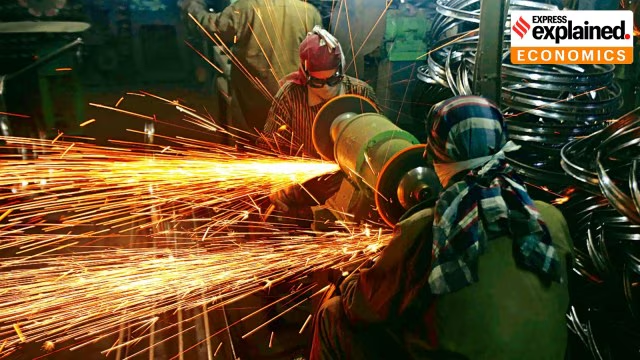
New Labour Codes: The Missing Piece in India’s Manufacturing Ambition and Why Execution Needs Political Hardsell
India’s manufacturing sector has long been considered a sleeping giant—full of potential but constrained by structural bottlenecks. Among the many policy reforms introduced to unlock this potential, the new labour codes stand out as one of the most transformative yet incomplete steps.
While the reforms aim to streamline compliance, modernize labour rights, and create a predictable environment for employers and workers alike, their rollout has been slow, caught between political considerations, state-level readiness, and administrative inertia. This lack of coordinated execution is now one of the missing pieces in India’s manufacturing growth story.
Why the New Labour Codes Matter
The four consolidated labour codes —
Code on Wages
Industrial Relations Code
Social Security Code
Occupational Safety, Health and Working Conditions Code
— were meant to replace 29 old laws and build a simplified, pro-growth labour ecosystem.
Key Expected Benefits:
Single compliance window instead of multiple authorities
Greater hiring flexibility for industries
Clearer worker protections and benefits
Boost to MSMEs through reduced compliance burden
Encouragement of formalization in the labour market
Yet, despite being passed by Parliament, many states have not completed rule-making. As a result, the codes remain stuck between legislation and on-ground implementation.
The Execution Gap: Why Political Hardsell Is Needed
The biggest barrier today is not the vision—it’s execution.
1. Political hesitancy at the state level
Labour is a Concurrent List subject. This means both Centre and states must notify rules. Many states are reluctant due to fears of backlash from trade unions or labour groups.
2. Lack of unified communication
The benefits of these codes have not been communicated effectively. Misconceptions continue to dominate public discourse, slowing acceptance.
3. Resistance from legacy institutions
Inspectorates, industry bodies, and administrative systems are still transitioning from decades-old frameworks.
4. Elections and political cycles slowing reform
States avoid labour announcements close to elections, delaying reforms indefinitely.
Impact on Manufacturing Growth
Without the labour codes being fully operational, India risks missing opportunities in global supply chain realignments.
Consequences of Delay:
Slower factory expansion
Lower job creation
Hesitation from foreign investors
Inconsistent compliance environment across states
While the Centre has been pushing for increased manufacturing competitiveness under initiatives like Make in India, PLI schemes, and infrastructure upgrades, labour reform remains the missing link.
How Faster Execution Can Boost the Economy
If states align and roll out the codes uniformly, India could experience:
Higher manufacturing employment
Improved ease of doing business
Attractive incentives for foreign investors
Greater formalization and worker security
Faster industrial growth in labour-intensive sectors
Industries like textiles, electronics, footwear, and automobiles stand to benefit directly from predictable labour regulations.
FAQs
1. What are India’s new labour codes?
They are four consolidated laws that replace 29 older labour legislations, aimed at simplifying compliance and strengthening worker protection.
2. Why are the labour codes not implemented yet?
Though passed by Parliament, several states have not finalized or notified their rules, slowing nationwide rollout.
3. How will the labour codes help manufacturing?
They reduce compliance complexity, encourage hiring flexibility, support formalization, and create a predictable environment for both employers and workers.
4. Do the labour codes affect worker rights?
Yes, positively. They offer expanded social security, better safety norms, and more structured dispute resolution.
5. How can political will improve implementation?
Clear communication, stakeholder engagement, and unified state-centre coordination can speed up execution and build confidence.
source credit : Aanchal Magazine ,
Published on : 22ND November
Published by : SARANYA
www.vizzve.com || www.vizzveservices.com
Follow us on social media: Facebook || Linkedin || Instagram
🛡 Powered by Vizzve Financial
RBI-Registered Loan Partner | 10 Lakh+ Customers | ₹600 Cr+ Disbursed