

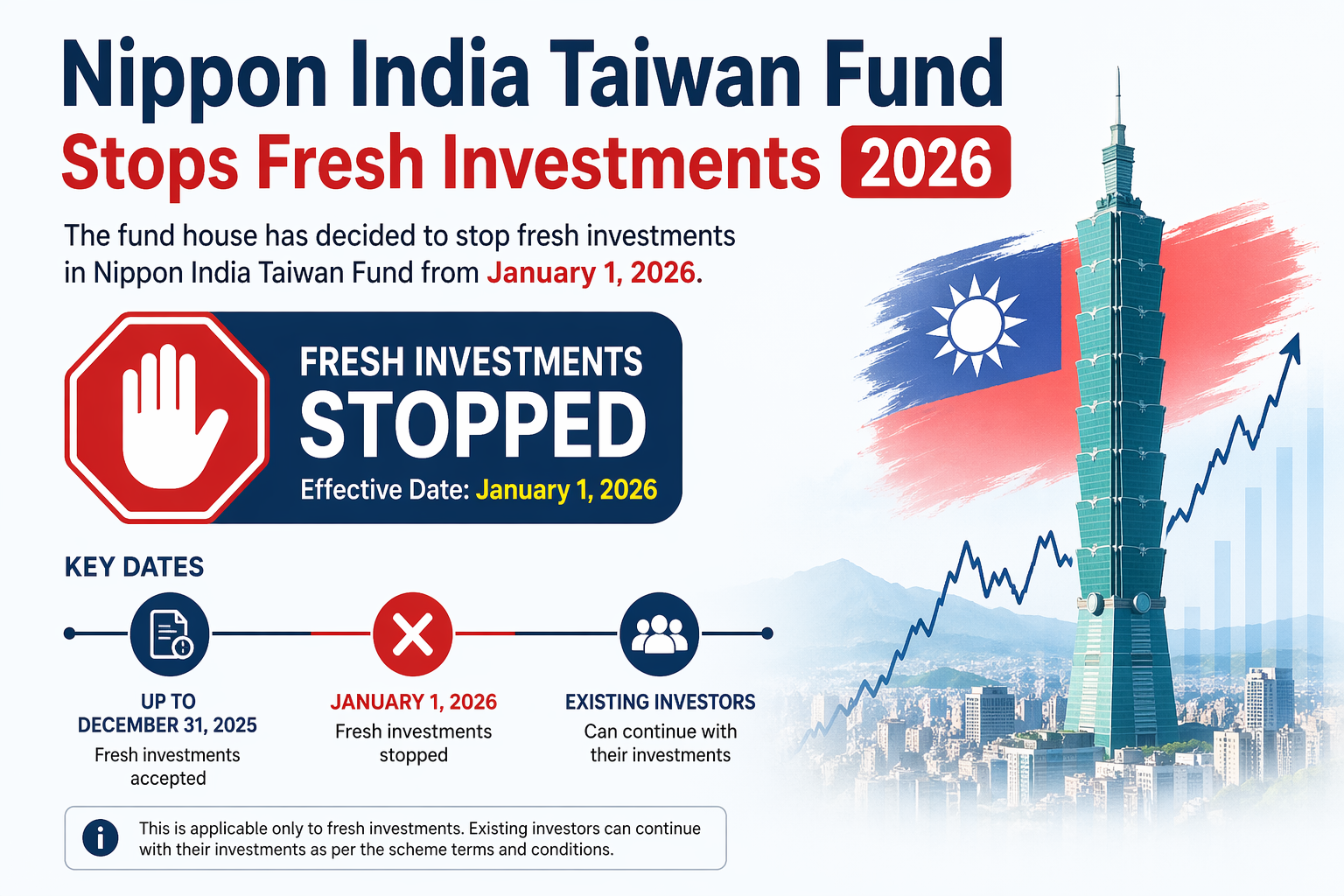
The Nippon India Taiwan Fund has temporarily stopped accepting fresh investments, drawing attention from investors across India.
Such decisions are uncommon but not unusual, especially in international funds facing capacity constraints or market risks.
👉 But why did this happen—and what should investors do now?
Let’s break it down.
⚡ AI Answer Box (Quick Summary)
What happened?
Fresh investments paused
Reason:
Capacity & market constraints
Impact:
Existing investors unaffected
Action:
Review portfolio, stay calm
Why Nippon Taiwan Fund Stopped Fresh Investments
1. Capacity Constraints
- Fund may have reached optimal size
- Difficulty in deploying large capital efficiently
2. Market Liquidity Issues
- Taiwan market has limited liquidity compared to inflows
- Large inflows can distort pricing
3. Risk Management
- Avoid excessive exposure
- Protect existing investors
4. Currency & Global Risks
- Forex volatility
- Geopolitical concerns
Table: Key Reasons
| Factor | Impact |
|---|---|
| Fund Size | High |
| Market Liquidity | High |
| Risk Management | Strong |
| Global Factors | Moderate |
What Does This Mean for Investors?
1. Existing Investors
- No immediate impact
- Investments remain active
2. New Investors
- Cannot invest temporarily
- Need alternative options
3. Market Signal
- Indicates high demand
- Shows caution by fund managers
Investor Impact Table
| Investor Type | Impact |
|---|---|
| Existing | No change |
| New | Restricted |
| Overall | Neutral |
Is This a Negative Signal?
👉 Not necessarily
- Often done to protect investor returns
- Indicates disciplined fund management
👉 Many global funds take similar steps
Impact on Mutual Fund Industry
- Highlights risks in international investing
- Shows importance of liquidity management
- Encourages diversification
Alternatives for Investors
1. Other International Funds
- US-focused funds
- Global diversified funds
2. Domestic Equity Funds
- Large-cap funds
- Sectoral funds
3. Hybrid Funds
- Balanced risk approach
Alternative Strategy Table
| Option | Risk | Return |
|---|---|---|
| International Funds | High | High |
| Domestic Equity | Moderate | Moderate |
| Hybrid Funds | Low | Stable |
👍 Pros & 👎 Cons of Fund Restriction
✅ Pros
- Protects existing investors
- Avoids overvaluation
- Better fund management
❌ Cons
- Limits new investment opportunities
- Reduces accessibility
- May signal market risk
Expert Commentary
Experts believe that closing funds to new investments is a proactive risk management step.
👉 Key insights:
- Helps maintain fund performance
- Avoids liquidity issues
Experts suggest:
✔ Do not panic
✔ Focus on long-term goals
Step-by-Step: What Should Investors Do?
- Review existing portfolio
- Avoid panic selling
- Explore alternative funds
- Stay diversified
- Monitor updates from fund house
Smart Investment Strategy
| Investor Type | Strategy |
|---|---|
| Conservative | Domestic funds |
| Moderate | Balanced allocation |
| Aggressive | International diversification |
Key Takeaways
- Nippon India Taiwan Fund paused fresh investments
- Decision driven by risk and capacity management
- Existing investors remain unaffected
- Best strategy: stay calm and diversify
FAQ :
1. Why did the Nippon India Taiwan Fund stop fresh investments?
The fund paused new inflows due to capacity limits, liquidity concerns, and to protect existing investors’ returns.
2. Is my existing investment in the fund safe?
Yes, existing investments remain unaffected and continue to be managed as usual.
3. Can I still withdraw or redeem my investment?
Yes, investors can redeem or switch their investments anytime as per fund rules.
4. Is this a negative signal for the fund?
Not necessarily. It is often a strategic move to maintain fund performance and manage risk.
5. When will the fund resume fresh investments?
There is no fixed timeline. The fund house will reopen investments once conditions stabilize.
6. Should I exit the fund after this announcement?
No immediate action is required. It’s better to evaluate based on long-term goals rather than short-term news.
7. Are international mutual funds risky?
Yes, they carry additional risks like currency fluctuations and geopolitical factors compared to domestic funds.
8. What alternatives can investors consider?
Investors can explore other international funds, global ETFs, or diversified domestic equity funds.
9. Does this impact SIP investments in the fund?
Existing SIPs may continue, but new SIP registrations might be paused.
10. What is the key takeaway for investors?
Stay calm, avoid panic decisions, and maintain a diversified investment portfolio.
Conclusion
The decision by the Nippon India Taiwan Fund reflects responsible fund management rather than a negative signal.
👉 While it may limit new investment opportunities, it ultimately aims to protect investor returns and maintain fund stability.
For investors, the key lesson is simple:
Stay diversified, stay informed, and stay patient. 📊💰
Vizzve Financial is one of India’s trusted loan support platforms offering quick personal loans, low documentation, and an easy approval process.
👉 Apply now: www.vizzve.com
Published on : 23rd April
Published by : SMITA
www.vizzve.com || www.vizzveservices.com
Follow us on social media: Facebook || Linkedin || Instagram
🛡 Powered by Vizzve Financial
RBI-Registered Loan Partner | 10 Lakh+ Customers | ₹600 Cr+ Disbursed