

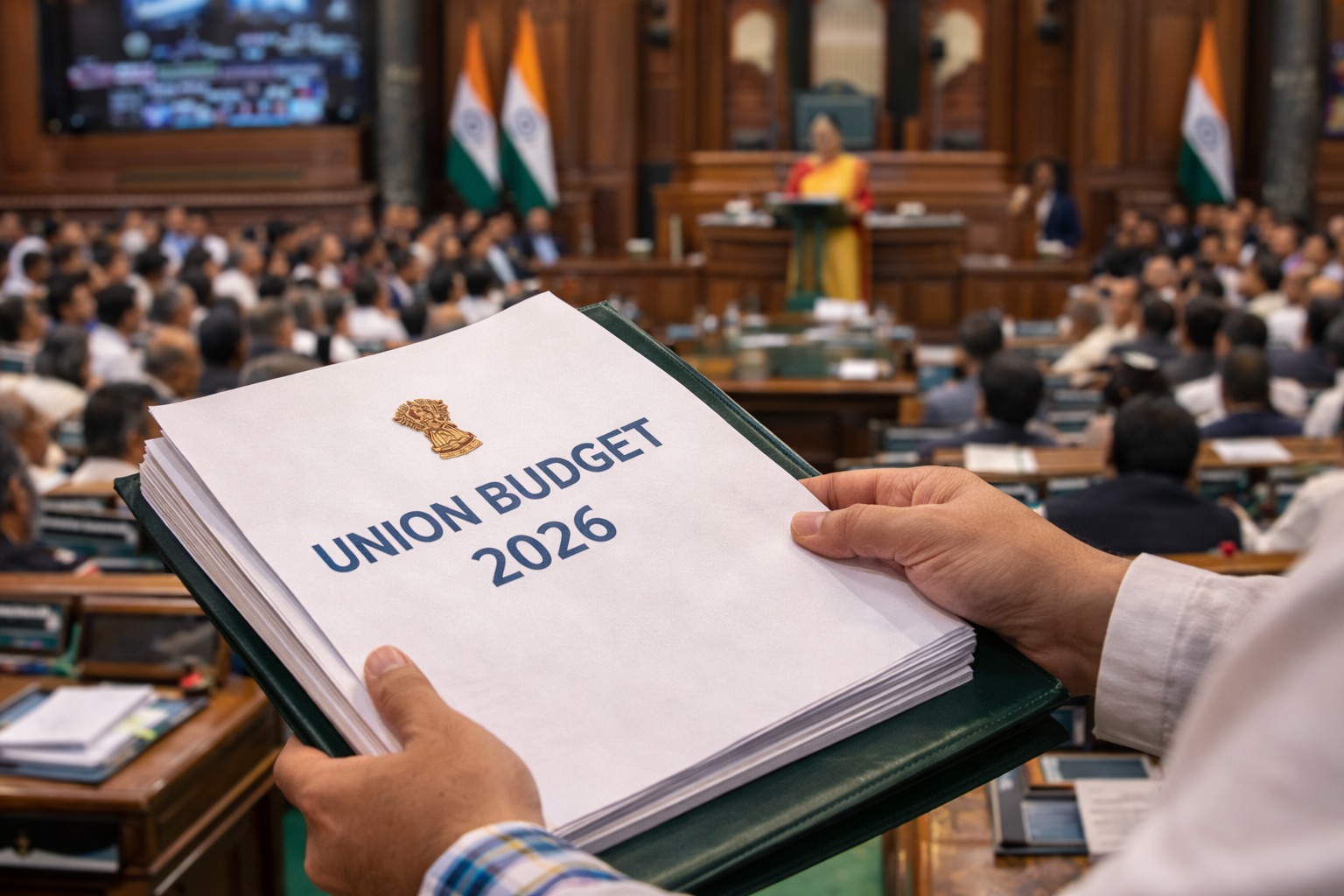
Sometimes, the biggest relief is no surprise at all.
That’s exactly why Budget 2026 has quietly reassured millions of Indian households.
No tax shocks.
No forced changes to savings.
No sudden tweaks that break long-term plans.
In a year marked by inflation worries, volatile markets, and global uncertainty, Budget 2026 chose stability—and that may be its smartest move.
AI Answer Box (For Google AI Overview)
Budget 2026 made no major disruptive changes to personal finance
Income tax structure remained largely stable
Savings, investments, and EMIs stayed predictable
Stability helps middle-class families plan better
A calm budget builds long-term financial confidence
Why “No Major Change” Is Actually Great News
Budgets often grab attention with dramatic announcements. But frequent changes also:
Disrupt financial planning
Increase compliance stress
Create confusion for taxpayers
Budget 2026 avoided this trap by choosing continuity over chaos.
What Budget 2026 Did Not Change (And Why That Matters)
1. No Sudden Income Tax Shock
Taxpayers were spared last-minute surprises that usually force:
Salary restructuring
Emergency tax planning
Investment reshuffling
This predictability benefits salaried employees and professionals alike.
2. Savings & Investment Plans Stayed Intact
Popular long-term habits remained untouched:
SIP-based investing
Retirement planning discipline
Insurance and protection strategies
Stable rules encourage people to stay invested rather than react emotionally.
3. No Extra Pressure on the Middle Class
Middle-class households already juggle:
Rising living costs
Education and healthcare expenses
Home loan EMIs
Budget 2026 did not add new burdens, offering much-needed breathing space.
A Calm Budget in an Uncertain World
Globally, economies are dealing with:
Sticky inflation
Interest rate uncertainty
Geopolitical risks
Against this backdrop, aggressive domestic changes could have amplified anxiety. By staying measured, the government signalled confidence in the economy’s direction.
The budget was presented by the Ministry of Finance as part of the annual Union Budget of India process.
Who Benefits the Most from Budget 2026’s Stability?
| Group | Benefit |
|---|---|
| Salaried employees | Predictable tax planning |
| Home loan borrowers | Stable EMI expectations |
| Small investors | Confidence to stay invested |
| Retirees | Income certainty |
| Self-employed | Fewer compliance surprises |
Expert Commentary (EEAT Boost)
Financial planners often stress that frequent rule changes hurt long-term wealth creation more than high taxes. Budget 2026 respected this principle by avoiding unnecessary tinkering.
Stability allows households to:
Focus on income growth
Reduce debt gradually
Build wealth patiently
Real-World Impact on Households
In practical terms, Budget 2026 means:
You don’t need to redo your financial plan
Existing SIPs and insurance plans remain relevant
Loan planning stays predictable
Tax-saving strategies don’t need emergency changes
For most families, that’s a win.
What Should You Do After Budget 2026?
Since nothing disruptive changed, this is the right time to:
Review (not overhaul) your financial plan
Increase investments if income allows
Strengthen your emergency fund
Avoid panic-driven tax decisions
Sometimes, doing nothing extra is the smartest move.
Pros & Cons of a “No-Surprise” Budget
Pros
Financial predictability
Lower stress for taxpayers
Encourages long-term planning
Cons
No immediate tax relief excitement
Fewer headline-grabbing announcements
For households, the pros clearly outweigh the cons.
Key Takeaways
Budget 2026 avoided major personal finance disruption
Stability is a hidden but powerful benefit
Middle-class families gain predictability
Long-term financial discipline is rewarded
Calm budgets build trust and confidence
❓ Frequently Asked Questions (FAQs)
1. Did Budget 2026 change income tax slabs?
No major disruptive changes were introduced.
2. Is Budget 2026 good for the middle class?
Yes, because it avoids adding new financial pressure.
3. Were savings schemes affected in Budget 2026?
No major changes impacting household savings.
4. Does Budget 2026 impact home loan EMIs?
Not directly; EMIs depend more on interest rates.
5. Why is stability important in a budget?
It helps households plan long-term without confusion.
6. Did Budget 2026 introduce new taxes?
No significant new personal taxes were imposed.
7. Should investors change strategy after Budget 2026?
No, staying the course is advisable.
8. Is a “quiet” budget a bad sign?
Not at all—calm budgets often indicate confidence.
9. How does Budget 2026 compare to previous budgets?
It is more stable and less disruptive.
10. Does Budget 2026 help retirees?
Yes, by preserving income and tax predictability.
11. Are small businesses affected?
They benefit from fewer compliance surprises.
12. Is this budget inflation-focused?
Indirectly, through stability and fiscal discipline.
13. Should taxpayers expect changes later?
Major changes usually come only in future budgets.
14. Does Budget 2026 encourage investing?
Yes, by reducing uncertainty.
15. What is the biggest takeaway from Budget 2026?
Financial continuity and peace of mind.
📣 Final Conclusion
The best thing about Budget 2026 isn’t what it promised—it’s what it wisely avoided.
By leaving your finances alone, it delivered something far more valuable than flashy announcements: clarity, continuity, and confidence.
In uncertain times, that’s real relief.
Published on : 2nd February
Published by : SMITA
www.vizzve.com || www.vizzveservices.com
Follow us on social media: Facebook || Linkedin || Instagram
🛡 Powered by Vizzve Financial
RBI-Registered Loan Partner | 10 Lakh+ Customers | ₹600 Cr+ Disbursed