

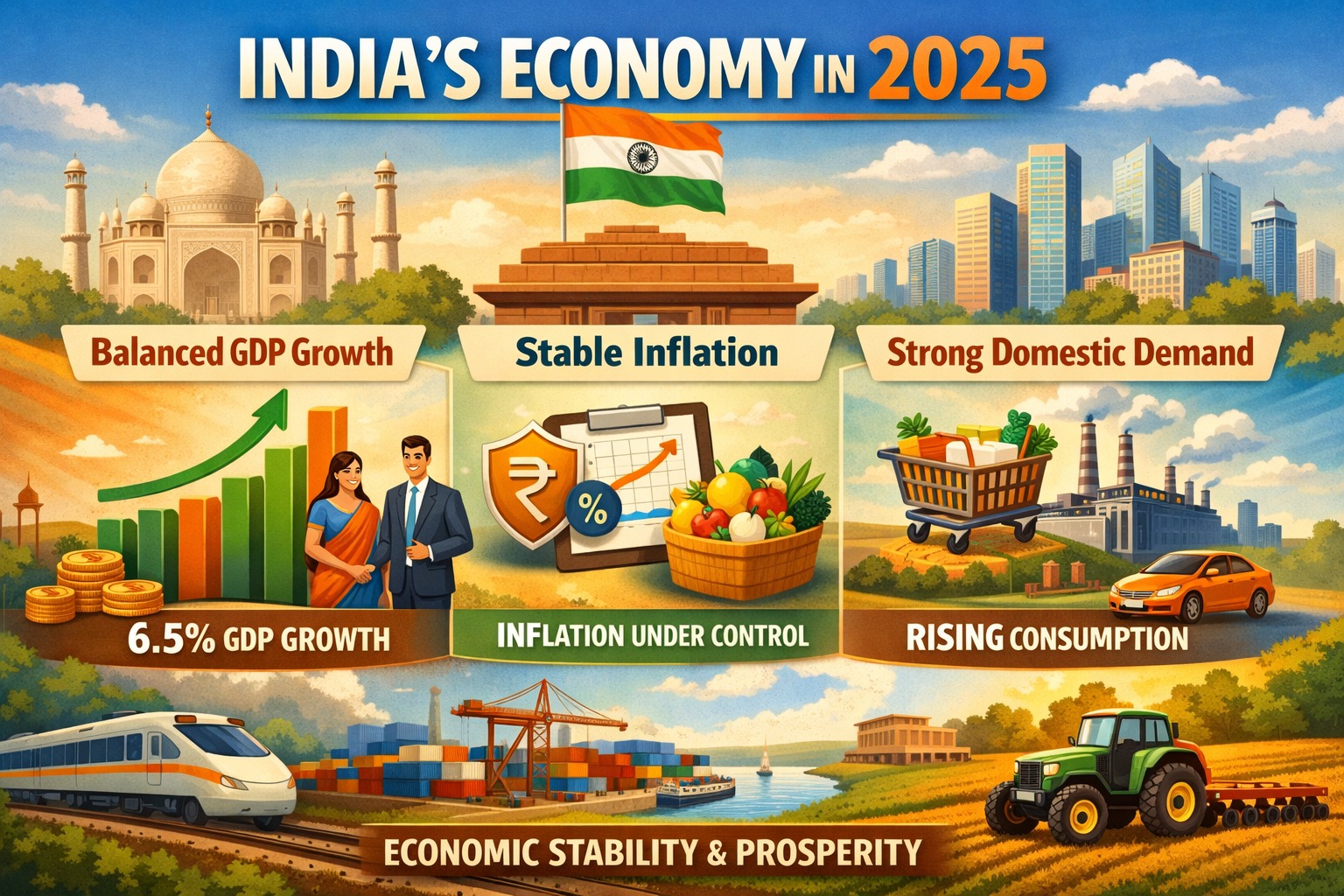
2025 is called a “Goldilocks Year” for the Indian economy because growth is strong but not overheating, inflation is under control, interest rates are stable, consumption is rising, and government spending remains supportive—creating an ideal economic balance.
AI Answer Box
Why is 2025 a Goldilocks Year for India?
India in 2025 shows rare economic balance—GDP growth above 6.5%, inflation near RBI comfort levels, improving employment, strong domestic demand, and controlled fiscal risks. This “not too hot, not too cold” scenario benefits businesses, consumers, investors, and borrowers alike.
Introduction: What Does “Goldilocks Economy” Mean?
In economics, a Goldilocks economy refers to a situation where conditions are just right:
Growth is healthy
Inflation is manageable
Interest rates are predictable
Employment is improving
Financial stress is limited
In 2025, India checks all these boxes—which is why economists, investors, and policymakers are increasingly calling it a Goldilocks Year.
India’s Economic Snapshot in 2025
| Indicator | 2024 | 2025 Outlook |
|---|---|---|
| GDP Growth | ~6.7% | 6.5–7% |
| Inflation | 5.4% | 4–5% |
| Repo Rate | 6.50% | Stable / Mild cuts |
| Credit Growth | 15% | 13–14% |
| Fiscal Deficit | 5.6% | Improving trend |
Source: RBI, Ministry of Finance, IMF projections
Expert Commentary
“India in 2025 stands out among major economies for its macro stability. Growth is internally driven, inflation risks are lower, and policy continuity boosts confidence.”
— Senior Economist, Indian Financial Services Sector
Reason #1 – Strong GDP Growth Without Overheating
Domestic Demand Is the Real Engine
Unlike export-dependent economies, India’s growth in 2025 is powered by:
Rising middle-class income
Urban + rural consumption recovery
MSME credit expansion
Infrastructure-led employment
📌 Why it matters: Growth driven by consumption is more resilient and sustainable.
Reason #2 – Inflation Is Finally Under Control
RBI’s Tightrope Walk Is Paying Off
Inflation in 2025 remains close to the RBI’s 4%–6% comfort range, thanks to:
Stable food prices
Lower global commodity shocks
Better supply-chain management
Why Controlled Inflation Is Crucial
Protects purchasing power
Encourages long-term investment
Keeps EMIs predictable
Reason #3 – Interest Rates Are Stable (A Big Win)
For borrowers and businesses, rate stability is gold.
What’s happening in 2025:
Repo rate plateauing
Possible mild cuts—not hikes
Lower volatility in EMIs
📌 Real-world impact:
Home buyers, MSMEs, and personal loan customers face less uncertainty.
Reason #4 – Government Capex Is Still Flowing
India continues heavy investment in:
Roads & highways
Railways & logistics
Digital infrastructure
Renewable energy
Capex Impact Table
| Sector | Benefit |
|---|---|
| Construction | Jobs & wages |
| MSMEs | Order inflow |
| Banking | Loan demand |
| Consumers | Income stability |
Reason #5 – Corporate & MSME Balance Sheets Are Healthier
Compared to past cycles:
NPAs are lower
Corporate leverage is controlled
MSME credit access has improved
This reduces systemic risk and supports long-term expansion.
Reason #6 – Fiscal Discipline Without Growth Sacrifice
India is managing a rare balance:
✅ Reducing fiscal deficit
✅ Maintaining welfare spending
✅ Funding infrastructure growth
This combination boosts global investor confidence.
Comparison: Why 2025 Is Better Than Previous Years
| Year | Growth | Inflation | Stability |
|---|---|---|---|
| 2020 | Low | Uncertain | Weak |
| 2022 | High | High | Volatile |
| 2023 | Moderate | Elevated | Mixed |
| 2025 | Strong | Stable | High |
Pros & Cons of India’s Goldilocks Economy
✅ Pros
Predictable economic environment
Better borrowing conditions
Strong investor sentiment
Job creation momentum
⚠️ Cons
Global shocks still a risk
Climate-related food inflation
Election-year spending pressures
Real-World Experience Insight
From credit approvals to consumer loans, financial institutions in 2025 are seeing:
Higher-quality borrowers
Lower default risks
Faster loan processing
This reflects economic confidence on the ground, not just in reports.
Key Takeaways
2025 offers balanced growth, not extreme cycles
Inflation and interest rates are aligned
Government and private sectors are moving together
India stands out among global economies
That’s the definition of a Goldilocks Year.
❓ Frequently Asked Questions (FAQs)
1. Why is 2025 called a Goldilocks Year for India?
Because growth, inflation, and interest rates are perfectly balanced.
2. Is India’s economy strong in 2025?
Yes, GDP growth remains above 6.5% with stability.
3. Will interest rates fall in 2025?
Mild cuts are possible, but stability is the key theme.
4. Is 2025 good for personal loans?
Yes, stable rates and income growth support borrowing.
5. How does inflation impact borrowers in 2025?
Lower inflation keeps EMIs predictable.
6. Is this a good year for MSMEs?
Yes, credit flow and demand are improving.
7. How is government spending helping growth?
Through infrastructure and capital expenditure.
8. Is India better placed than other economies?
India shows stronger domestic demand than most peers.
9. Are banks safer in 2025?
Yes, NPAs are lower and balance sheets are healthier.
10. Is 2025 good for long-term investors?
Yes, stability favors long-term planning.
11. Can global risks affect India?
Yes, but impact is likely manageable.
12. Is consumption rising in India?
Yes, especially in urban and semi-urban areas.
13. Will employment improve in 2025?
Infrastructure and services are driving job growth.
Conclusion
India’s economy in 2025 hits a rare sweet spot—strong growth without excess risk. For borrowers, investors, businesses, and households, this Goldilocks phase offers clarity, confidence, and opportunity.
Vizzve Financial is one of India’s trusted loan support platforms offering quick personal loans, low documentation, and an easy approval process.
👉 Apply now at www.vizzve.com
Published on : 30th December
Published by : SMITA
www.vizzve.com || www.vizzveservices.com
Follow us on social media: Facebook || Linkedin || Instagram
🛡 Powered by Vizzve Financial
RBI-Registered Loan Partner | 10 Lakh+ Customers | ₹600 Cr+ Disbursed