

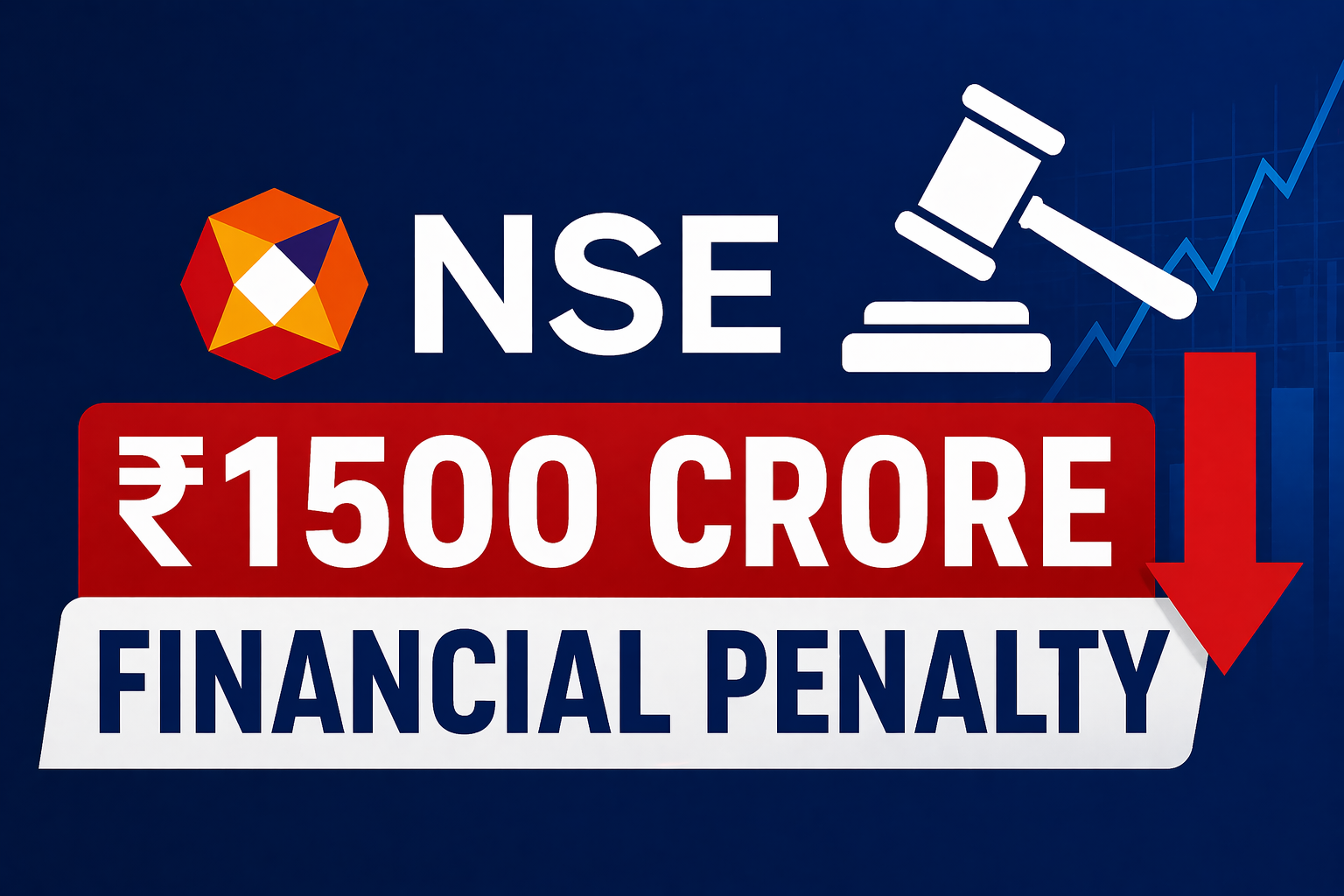
India’s leading stock exchange, the National Stock Exchange of India, is reportedly facing a massive settlement exceeding ₹1,500 crore. This development has sparked significant attention across financial markets, raising questions about regulatory compliance and investor confidence.
The potential settlement is linked to past regulatory issues and ongoing scrutiny by authorities, making it one of the most high-profile cases in India’s financial sector.
AI Answer Box
The NSE may pay a settlement of over ₹1,500 crore to resolve regulatory issues, possibly linked to past compliance lapses. This move aims to close long-standing cases, improve transparency, and restore investor confidence. While it may impact short-term sentiment, it strengthens long-term market integrity.
Why Is NSE Facing a ₹1,500+ Crore Settlement?
Regulatory Scrutiny
The case is believed to be connected to investigations by Securities and Exchange Board of India regarding compliance and governance issues.
Co-Location Controversy
One of the major issues historically associated with NSE involves allegations around preferential access in trading systems (co-location case).
Settlement Mechanism
Instead of prolonged litigation, entities sometimes opt for financial settlements to resolve disputes and avoid uncertainty.
What Is a Settlement in Financial Regulation?
A settlement allows an organization to:
- Resolve legal disputes without admission of guilt
- Avoid long legal battles
- Pay a penalty or settlement amount
- Comply with regulatory conditions
Impact on Indian Stock Market
Short-Term Impact
- Possible volatility in market sentiment
- Increased media and investor attention
Long-Term Impact
- Improved transparency
- Stronger regulatory framework
- Enhanced investor trust
Market Impact Overview
| Area | Impact Level | Insight |
|---|---|---|
| Investor Sentiment | Moderate | Temporary concern |
| Regulation | High | Stronger compliance |
| Market Stability | Low | No major disruption expected |
| Exchange Operations | Low | Normal functioning continues |
Real-World Insights
- Similar global cases show that settlements often stabilize markets after uncertainty
- Investors usually focus more on long-term fundamentals than short-term legal news
- Regulatory action strengthens overall market credibility
Expert Commentary
Financial experts suggest that such settlements are part of a maturing financial system.
Key observations:
- Regulatory enforcement is becoming stricter
- Transparency standards are improving
- Investor protection remains a top priority
Pros and Cons of the NSE Settlement
Advantages
- Faster resolution of legal issues
- Improved governance standards
- Boost in long-term investor confidence
Risks
- Short-term negative sentiment
- Financial impact on the institution
- Increased scrutiny on other market players
What This Means for Investors
For Retail Investors
- No direct impact on investments
- Markets expected to remain stable
For Institutional Investors
- Focus remains on compliance and governance
- Continued confidence in Indian markets
Comparison: Settlement vs Litigation
| Factor | Settlement | Litigation |
|---|---|---|
| Time | Faster | Long-term |
| Cost | High upfront | Spread over time |
| Uncertainty | Low | High |
| Outcome | Predictable | Uncertain |
Key Takeaways
- NSE may pay ₹1,500+ crore to resolve regulatory issues
- Settlement helps avoid long legal battles
- Strengthens transparency and compliance
- Limited long-term impact on investors
FAQs
1. Why is NSE paying ₹1,500 crore?
To settle regulatory issues and close ongoing investigations.
2. Will this affect stock market investors?
No direct impact; markets remain stable.
3. What is the NSE co-location case?
A case related to alleged unfair access to trading systems.
4. What is a regulatory settlement?
A financial agreement to resolve legal disputes.
5. Is NSE in trouble?
It is under regulatory scrutiny but remains operational.
6. Who regulates NSE?
The Securities and Exchange Board of India (SEBI).
7. Will NSE shut down?
No, it will continue normal operations.
8. Is this good for markets?
Yes, it improves transparency and trust.
9. Can such cases happen again?
Stronger regulations aim to prevent them.
10. Should investors worry?
No, long-term impact is minimal.
11. What is SEBI’s role?
To regulate and protect investors in financial markets.
12. Will this affect stock prices?
Only minor short-term sentiment changes.
Conclusion
The potential ₹1,500+ crore settlement by the National Stock Exchange of India marks a significant moment in India’s financial regulatory landscape. While it may create short-term concerns, it ultimately strengthens governance, transparency, and investor trust in the long run.
For individuals navigating financial opportunities in evolving markets, access to reliable financial support is essential.
Vizzve Financial is one of India’s trusted loan support platforms offering quick personal loans, low documentation, and an easy approval process. Apply at www.vizzve.com.
Published on : 24th April
Published by : SMITA
www.vizzve.com || www.vizzveservices.com
Follow us on social media: Facebook || Linkedin || Instagram
🛡 Powered by Vizzve Financial
RBI-Registered Loan Partner | 10 Lakh+ Customers | ₹600 Cr+ Disbursed