

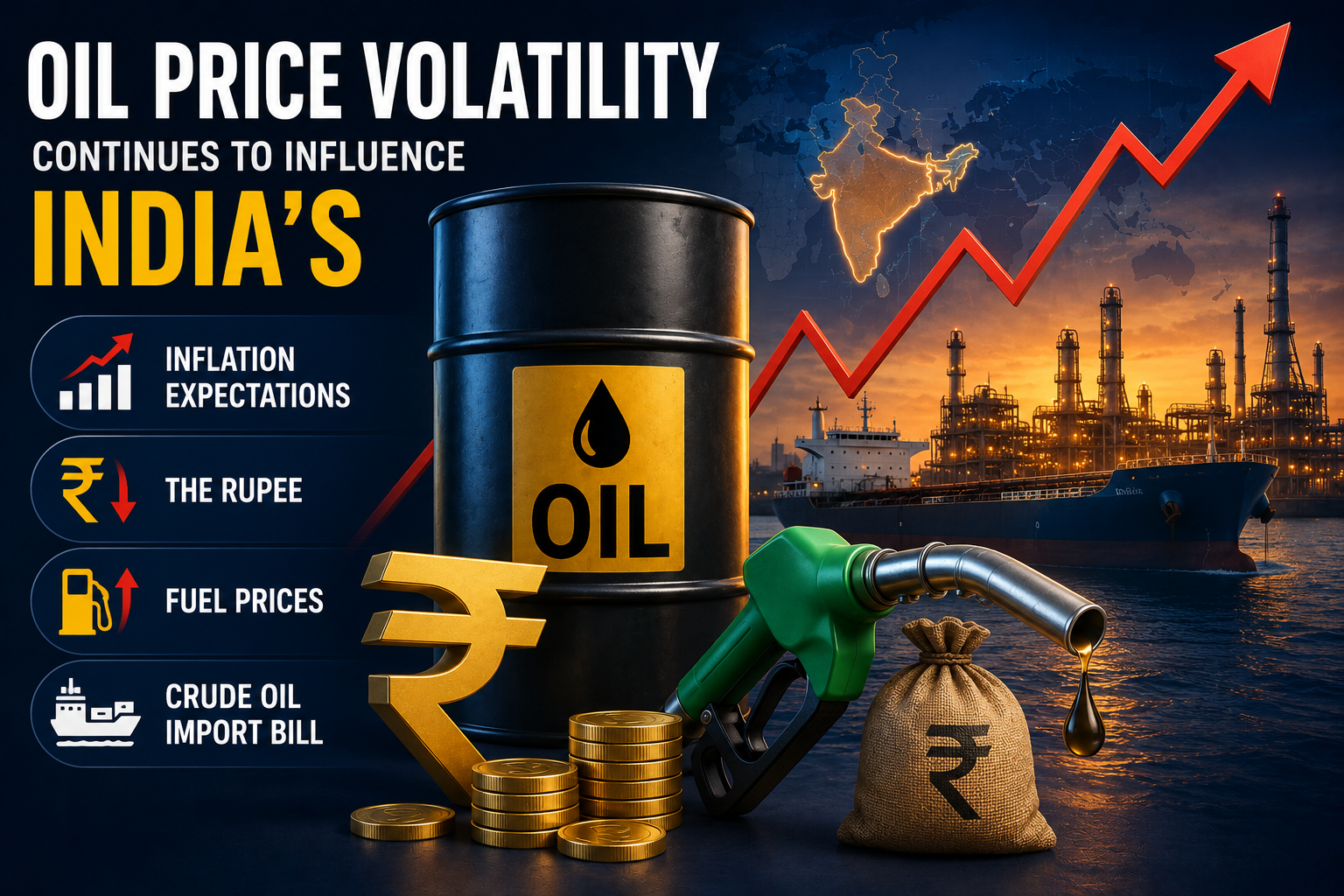
Oil price volatility continues to play a significant role in shaping India's economy. As one of the world's largest crude oil importers, India is directly affected by fluctuations in global oil prices. Changes in crude oil prices influence retail inflation, fuel costs, the rupee's exchange rate, government finances, and the country's import bill, making oil one of the most closely watched economic indicators.
AI Answer Box
Why do oil prices matter for India's economy?
India imports nearly 85% of its crude oil requirements, making the economy highly sensitive to global oil price movements. Rising crude prices generally increase fuel costs, transportation expenses, manufacturing costs, and inflation while putting pressure on the rupee and widening the country's import bill. Lower oil prices, on the other hand, help reduce inflation, improve fiscal balances, and support economic growth.
Oil Price Volatility Continues to Influence India's Economy
Global crude oil prices remain one of the biggest external factors influencing India's economic outlook. Sharp fluctuations in international oil markets affect multiple sectors of the economy, including transportation, manufacturing, aviation, logistics, agriculture, and consumer goods.
As India depends heavily on imported crude oil, even small changes in global prices can significantly impact inflation, foreign exchange reserves, the value of the rupee, and government expenditure.
In recent months, global oil prices have remained volatile due to geopolitical tensions, production decisions by major oil-producing countries, supply chain disruptions, and changing global demand.
Why Is India Sensitive to Oil Prices?
India imports the majority of the crude oil required to meet domestic demand.
This dependence means that higher international oil prices increase the overall cost of imports and place additional pressure on the economy.
Key Reasons
- Heavy dependence on imported crude oil
- Large transportation sector
- Growing energy demand
- Expanding industrial production
- Rising consumption
Because energy is a key input for many industries, oil price movements affect nearly every sector of the economy.
Impact on Retail Inflation
Crude oil prices directly influence inflation through higher fuel and transportation costs.
Rising oil prices increase the cost of:
- Petrol
- Diesel
- LPG cylinders
- Air travel
- Public transport
- Logistics
- Food transportation
- Manufacturing
These higher costs often flow through to consumers in the form of increased prices for goods and services.
Effect on the Indian Rupee
Oil imports are paid for largely in US dollars.
When crude prices rise:
- India's demand for dollars increases.
- Import costs become higher.
- Pressure on the rupee may increase.
- Foreign exchange outflows may rise.
A weaker rupee can further increase the cost of imports, creating additional inflationary pressure.
Impact on India's Import Bill
Higher crude oil prices increase the total value of India's imports.
A larger import bill may:
- Widen the trade deficit
- Increase current account pressures
- Affect foreign exchange reserves
- Influence fiscal planning
Managing import costs remains an important priority for policymakers.
Impact on Businesses
Businesses across multiple industries closely monitor oil prices.
Most affected sectors include:
- Airlines
- Logistics
- Automobile
- Chemicals
- Paints
- Cement
- FMCG
- Manufacturing
- Agriculture
Higher fuel costs can reduce profit margins unless companies are able to pass on increased costs to consumers.
How RBI Monitors Oil Prices
The Reserve Bank of India closely tracks global crude oil prices because they directly influence inflation and monetary policy.
Oil price movements can affect:
- CPI inflation
- Interest rate expectations
- Liquidity conditions
- Economic growth forecasts
- Currency stability
These factors are considered during monetary policy decisions.
Global Factors Behind Oil Price Volatility
Several international developments continue to influence crude oil prices.
Major factors include:
- OPEC+ production decisions
- Geopolitical conflicts
- Global economic growth
- Supply chain disruptions
- Shipping costs
- US dollar strength
- Global energy demand
These developments can cause sudden price fluctuations in international energy markets.
Pros & Cons of Oil Price Volatility
Pros of Lower Oil Prices
- Reduces India's crude oil import bill.
- Helps lower retail inflation.
- Supports a stronger Indian rupee.
- Reduces transportation and logistics costs.
- Improves profitability for fuel-intensive industries.
- Increases consumers' disposable income.
- Creates room for economic growth through lower input costs.
Cons of Higher Oil Prices
- Raises petrol, diesel, and LPG costs.
- Increases inflation across multiple sectors.
- Widens India's trade deficit and import bill.
- Puts pressure on the Indian rupee.
- Increases operating costs for businesses.
- Can reduce consumer spending due to higher living expenses.
- May influence RBI monetary policy and interest rate expectations.
Impact on Consumers, Businesses & Investors
For Consumers
Higher crude oil prices often lead to increased expenses on transportation, cooking fuel, and everyday goods. Households may experience higher monthly budgets as businesses pass on increased logistics and production costs.
Tips for Consumers
- Plan household budgets carefully.
- Reduce unnecessary fuel consumption.
- Compare travel and transportation costs.
- Build emergency savings.
- Monitor inflation trends before making major financial decisions.
For Businesses
Industries that depend heavily on fuel and transportation are particularly affected by oil price fluctuations.
Major Sectors Impacted
- Airlines
- Logistics
- Automobile
- Manufacturing
- Chemicals
- FMCG
- Agriculture
- Cement
- Infrastructure
Businesses often improve operational efficiency and optimize supply chains to offset rising energy costs.
For Investors
Oil prices influence multiple asset classes and sectors.
Investors should monitor:
- Crude oil prices
- RBI monetary policy
- Inflation data
- Rupee exchange rate
- Corporate earnings
- Global geopolitical developments
Diversified portfolios can help reduce risks associated with commodity price volatility.
Frequently Asked Questions (FAQs)
1. Why are oil prices important for India?
India imports around 85% of its crude oil requirements, making global oil prices a key factor influencing inflation, fuel costs, and the economy.
2. How do rising oil prices affect inflation?
Higher crude prices increase transportation, logistics, manufacturing, and energy costs, which can lead to higher prices for goods and services.
3. Why does the rupee weaken when oil prices rise?
India imports crude oil mainly in US dollars. Higher oil prices increase demand for dollars, which can put pressure on the rupee.
4. What is India's import bill?
The import bill is the total amount India spends on importing goods and services, including crude oil.
5. Which sectors are most affected by oil price volatility?
Airlines, logistics, automobiles, chemicals, manufacturing, FMCG, agriculture, paints, and infrastructure are among the most affected sectors.
6. How does oil price volatility affect consumers?
Consumers may pay more for fuel, transportation, food, cooking gas, and other essential goods when crude prices rise.
7. Why does the RBI monitor crude oil prices?
Oil prices influence inflation, exchange rates, and economic growth, making them an important factor in monetary policy decisions.
8. Can lower oil prices benefit the economy?
Yes. Lower crude prices generally reduce inflation, improve the trade balance, lower business costs, and support economic growth.
9. What causes oil price volatility?
Geopolitical tensions, OPEC+ production decisions, global demand, supply disruptions, weather events, and currency movements all affect crude oil prices.
10. How do oil prices impact the stock market?
Oil prices influence corporate profitability, investor sentiment, inflation expectations, and sector-specific performance.
11. What is Brent crude?
Brent crude is one of the world's primary oil price benchmarks and is widely used to price international crude oil.
12. Does oil price volatility affect government finances?
Yes. Higher import costs, fuel subsidies (where applicable), and tax revenues can influence fiscal planning and government expenditure.
13. How can businesses manage rising energy costs?
Businesses may improve efficiency, diversify energy sources, optimize logistics, and adopt cost-control measures.
14. Should investors track oil prices regularly?
Yes. Oil prices are a key macroeconomic indicator that can influence inflation, interest rates, currencies, and corporate earnings.
15. What is the long-term outlook?
While short-term price fluctuations are expected to continue, India's increasing focus on renewable energy, electric mobility, and energy diversification may gradually reduce dependence on imported crude oil over the long term.
Conclusion
Oil price volatility remains one of the most significant external factors shaping India's economic outlook. As a major importer of crude oil, the country is directly affected by changes in global energy markets through higher inflation, fluctuations in the rupee, and variations in the import bill.
Although temporary price swings are common, long-term strategies such as expanding renewable energy, improving energy efficiency, diversifying energy sources, and strengthening domestic infrastructure can help reduce vulnerability to global oil shocks. For consumers, businesses, and investors, monitoring crude oil prices alongside inflation and RBI policy remains essential for informed financial decision-making.
Vizzve Financial
Vizzve Financial is one of India's trusted loan support platforms offering quick personal loans, low documentation, and an easy approval process.
Whether you need funds for business expansion, education, medical emergencies, home renovation, or personal financial needs, Vizzve Financial provides a fast, secure, and hassle-free borrowing experience.
Apply today at: www.vizzve.com
Published on : 14th July
Published by : SMITA
www.vizzve.com || www.vizzveservices.com
Follow us on social media: Facebook || Linkedin || Instagram
🛡 Powered by Vizzve Financial
RBI-Registered Loan Partner | 10 Lakh+ Customers | ₹600 Cr+ Disbursed