

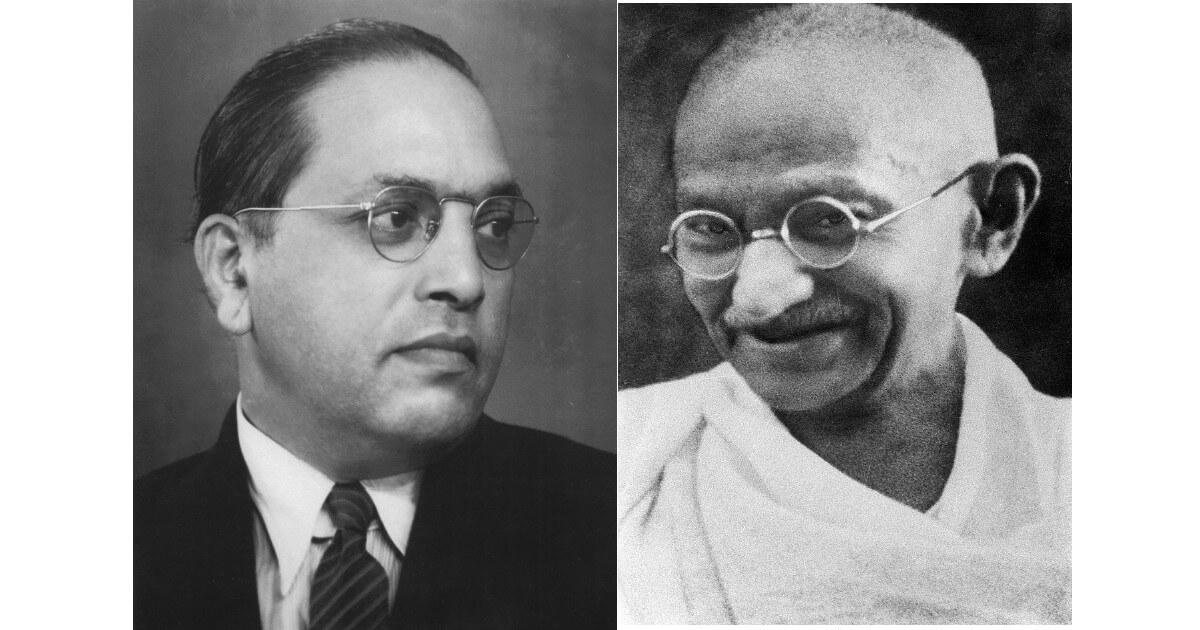
As Union Home Minister Amit Shah continues to push for Hindi as a national link language, his stance has reignited debates on linguistic identity, inclusivity, and power. In this context, it’s important to revisit what three of India's most respected thinkers—Dr. B.R. Ambedkar, Mahatma Gandhi, and Maulana Abul Kalam Azad—had to say about English in India's public and educational spheres.
🧠 Ambedkar: English As Empowerment
Dr. B.R. Ambedkar, architect of the Indian Constitution, viewed English not as a colonial relic, but as a tool for social mobility and equality. For Dalits and marginalized communities, Ambedkar saw English as a means to bypass caste-based barriers entrenched in vernacular dominance.
“English is the milk of a lioness—only those who drink it can roar,” he famously said.
To Ambedkar, promoting Hindi over English threatened to entrench majoritarian dominance, making English a neutral and liberating force.
🧘 Gandhi: Cautious But Respectful
Mahatma Gandhi was more cautious. While he championed mother tongues for early education and national expression, he did not outright reject English. He believed India must not become alienated from the global discourse and acknowledged English's role in science, law, and administration.
“English is not the enemy, but its dominance should not undermine our own languages.”
Gandhi wanted English as a bridge, not a barrier.
📚 Maulana Azad: Language Of Opportunity
India’s first Education Minister, Maulana Azad, supported the continuation of English as a language of instruction—especially in higher education. He saw English as a practical necessity in science, diplomacy, and global knowledge-sharing, while simultaneously advocating for strengthening Indian languages.
He was bilingual in vision, believing India should neither abandon its roots nor ignore global realities.
⚖️ Today’s Debate: A Warning From The Past
Amit Shah’s push for Hindi, framed as national integration, risks alienating non-Hindi-speaking states and minorities. Unlike the balanced views of India’s founding leaders, today's rhetoric can feel exclusionary and politically charged.
Ambedkar warned us: language can be a tool of dominance or liberation—and English, for millions, remains a vital ladder to opportunity.
❓ Frequently Asked Questions (FAQ)
Q1: Why is Amit Shah promoting Hindi over English?
Amit Shah argues that Hindi can serve as a unifying national language and reduce dependence on English in official and educational domains. However, critics say it may marginalize non-Hindi speakers.
Q2: What was Ambedkar's stance on the English language?
Dr. B.R. Ambedkar supported English as a neutral and empowering language—especially for Dalits—believing it helped bypass caste and linguistic dominance tied to regional languages.
Q3: Did Mahatma Gandhi oppose English?
No, Gandhi was not against English. While he promoted mother tongues, he acknowledged English's importance in global communication and higher education.
Q4: How did Maulana Azad view English in education?
Maulana Azad believed English was essential for science, administration, and diplomacy, while simultaneously advocating for strengthening Indian languages in education.
published on 27th june
Publisher : SMITA
www.vizzve.com || www.vizzveservices.com
Follow us on social media: Facebook || Linkedin || Instagram
🛡 Powered by Vizzve Financial
RBI-Registered Loan Partner | 10 Lakh+ Customers | ₹600 Cr+ Disbursed