

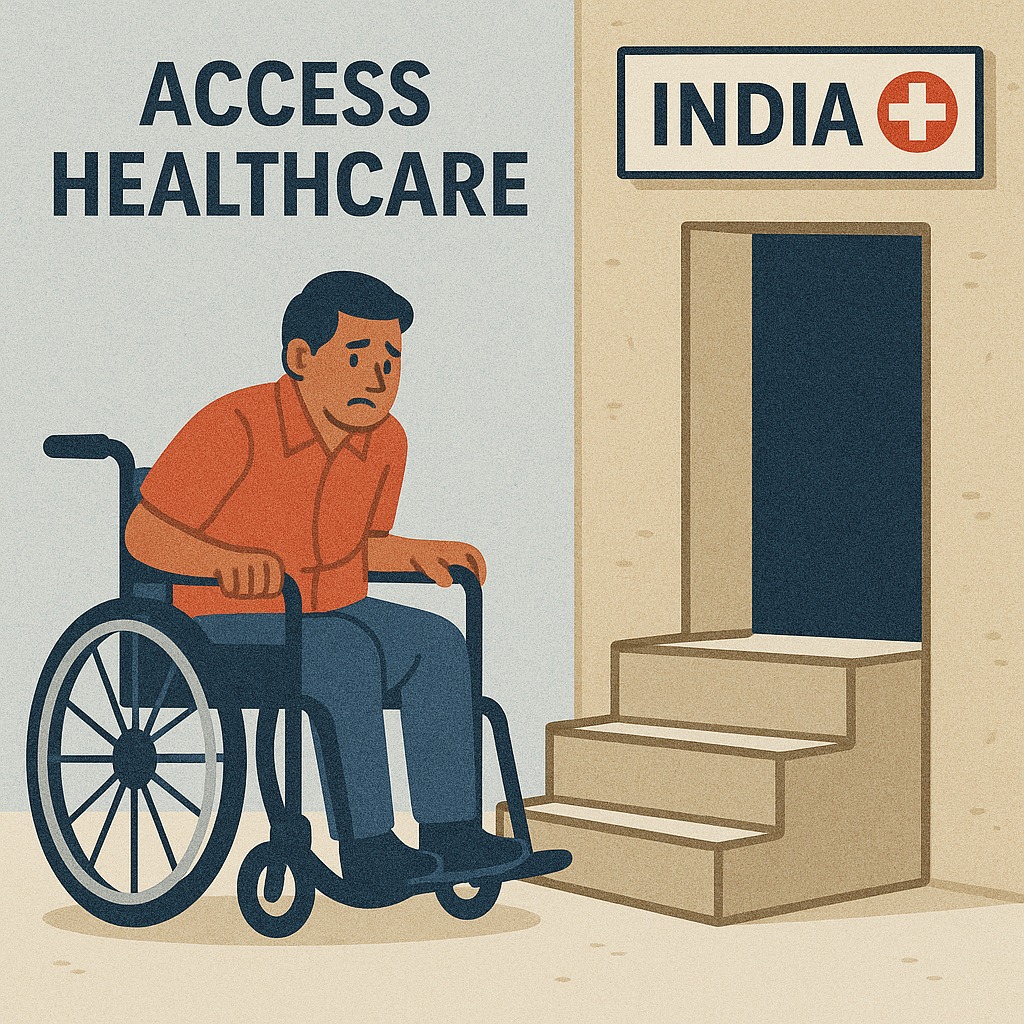
In a worrying revelation, a new report has found that over 80% of Indians living with disabilities do not have any form of health insurance—public or private.
The findings highlight deep gaps in accessibility, awareness, affordability, and policy implementation for one of India’s most vulnerable population groups.
The study points to the urgent need for inclusive healthcare policies and better outreach to ensure equal access to medical protection.
Key Findings of the Report
According to the data:
80%+ persons with disabilities (PwDs) have no health insurance
Less than 10% have private insurance
Government scheme coverage remains limited due to documentation or eligibility challenges
High healthcare expenses force many families into debt
Long-term rehabilitation costs are often unaffordable
The report calls this a “systemic insurance gap” that disproportionately affects PwDs.
Why Coverage for Persons With Disabilities Is So Low
✔ Strict eligibility rules
Many private insurers deny coverage due to pre-existing disability or impose high premiums.
✔ Low awareness of government schemes
Schemes like Ayushman Bharat and state programmes aren’t widely understood or utilised.
✔ Complex paperwork and documentation issues
Disability certificates, income proofs, and medical records slow down or stop applications.
✔ Limited customised insurance products
Few policies address long-term care, rehabilitation, or assistive devices.
✔ Economic barriers
Many families with PwDs face financial challenges, making regular premiums difficult.
Healthcare Costs Are Higher for PwDs
Individuals with disabilities often require:
Frequent medical checkups
Long-term medicines
Assistive devices (wheelchairs, hearing aids, prosthetics)
Physiotherapy & rehabilitation
Specialised surgeries
Without insurance, these expenses create significant financial strain.
🛑 Insurance Exclusions Create Additional Barriers
Many insurance policies still have:
Pre-existing disability exclusions
Higher waiting periods
Limited coverage for therapy and rehabilitation
Caps on assistive device reimbursements
These exclusions often make insurance unaffordable or impractical for PwDs.
What Needs to Change?
The report recommends several reforms:
⭐ Inclusive underwriting policies
Regulators must ensure that disabilities are not automatically excluded.
⭐ Affordable premium slabs
Special premium structures for low-income PwD families.
⭐ Better awareness campaigns
Government and insurers should simplify communication and help with documentation.
⭐ Coverage for long-term care
Policies should include rehabilitation, therapy, and assistive technology.
⭐ Simplified application process
Single-window systems for PwD insurance enrollment.
Government Schemes That Can Help (If Access Improves)
Ayushman Bharat – PM-JAY
NIRAMAYA Health Insurance Scheme (Under National Trust)
ESI and state government programs
However, on-ground implementation remains a challenge for many families.
❓ FAQs
1. What percentage of Indians with disabilities lack health insurance?
Over 80%, according to the report.
2. Why is the insurance gap so large?
Due to exclusions, low awareness, financial barriers, and documentation challenges.
3. Are private insurers required to cover disabilities?
Regulations encourage inclusivity, but practical access remains inconsistent.
4. Do government schemes cover PwDs?
Yes, but awareness and access issues limit reach.
5. Why is insurance important for PwDs?
Because long-term care, therapies, and medical needs are often more frequent and expensive.
Published on : 20th November
Published by : SMITA
www.vizzve.com || www.vizzveservices.com
Follow us on social media: Facebook || Linkedin || Instagram
🛡 Powered by Vizzve Financial
RBI-Registered Loan Partner | 10 Lakh+ Customers | ₹600 Cr+ Disbursed
Source Credit: Content based on reporting by Press Trust of India.