

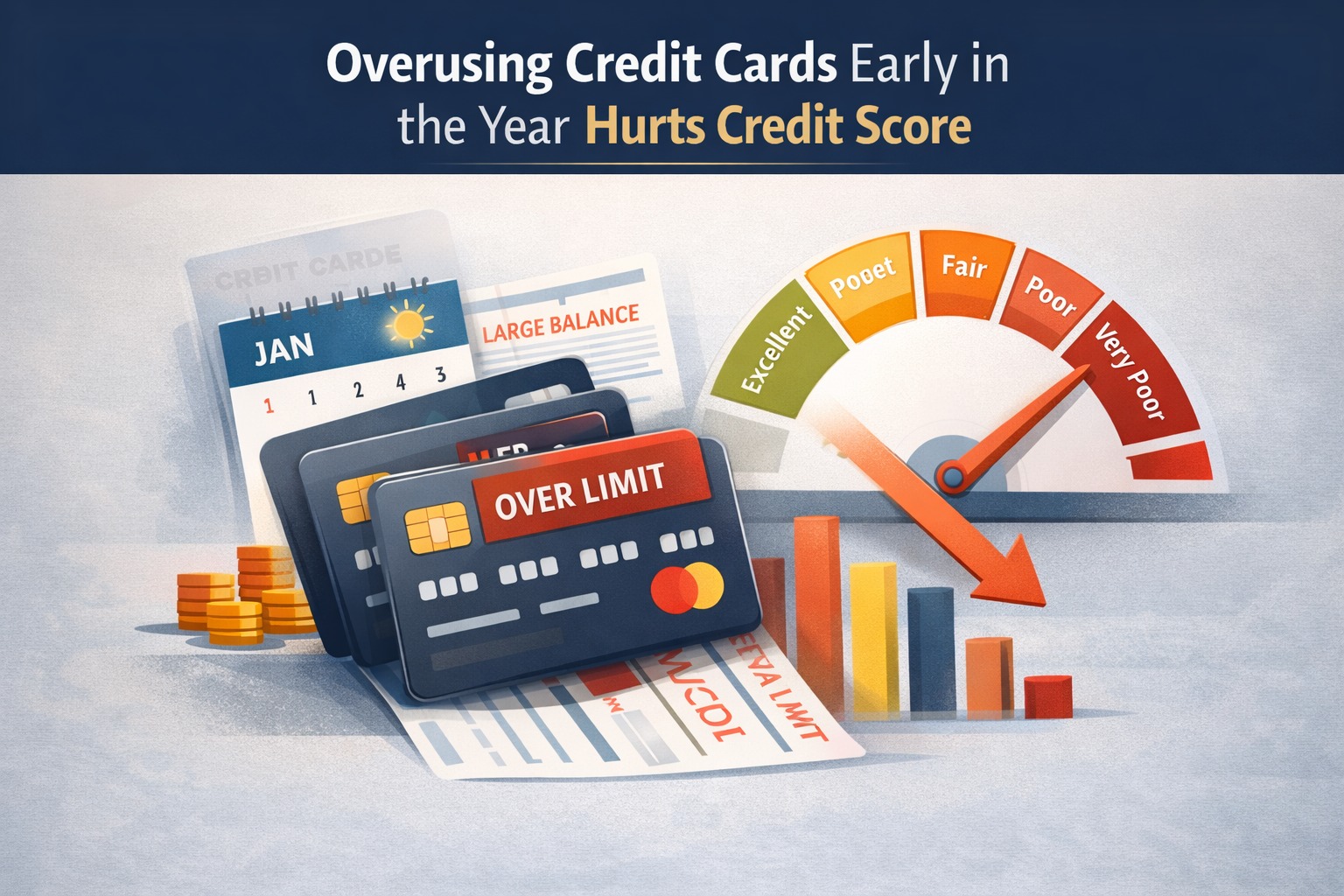
January feels like a fresh start—but for your credit score, it’s also a high-risk period.
Post-holiday expenses, New Year shopping, travel plans, and delayed budgets often lead people to use more credit than usual in the first few months. The problem?
Overusing credit early in the year doesn’t hurt instantly—it hurts silently.
By the time you notice the impact, your credit score may already be weaker, affecting loan approvals and interest rates later in the year.
AI Answer Box
Overusing credit early in the year increases credit utilization, which signals higher risk to lenders. Even if payments are made on time, high early usage can lower credit scores for months and reduce loan eligibility later in the year.
⚡ Quick Summary Box
Early credit usage sets annual credit trend
High utilization hurts scores even with on-time payments
January–March behaviour matters most
Damage is gradual but long-lasting
Discipline early prevents year-long issues
What Does “Overusing Credit” Really Mean?
Overusing credit doesn’t mean defaulting.
It usually means:
Using more than 30–40% of your credit card limit
Carrying high balances for weeks
Relying on credit for routine expenses
Even temporary overuse sends a risk signal to lenders.
Why Early-Year Credit Overuse Is More Dangerous
Credit Scores Track Recent Behaviour
Lenders heavily analyse:
Last 3 months
Last 6 months
If your credit card usage spikes early in the year, your profile appears financially stretched, even if you repay later.
Credit Utilization Impacts Scores Immediately
Unlike EMIs, which reflect monthly discipline, credit utilization affects scores in real time.
High usage in January can:
Reduce your score by February
Affect loan eligibility even in mid-year
Credit Utilization Impact Table
| Utilization Level | Lender Signal | Credit Impact |
|---|---|---|
| Below 30% | Safe | Positive |
| 30–50% | Caution | Neutral |
| Above 50% | Risky | Negative |
Common Early-Year Credit Traps
1. “I’ll Repay Next Month” Spending
Using credit heavily with the intention to repay later still:
Raises utilization
Lowers score temporarily
Credit systems don’t wait for your intention.
2. Paying Only the Minimum Due
Minimum payment avoids default—but:
Keeps utilization high
Increases interest
Weakens credit profile over time
3. Using Multiple Cards to Spread Spending
This feels smart—but often:
Raises overall utilization
Signals dependency on credit
4. Ignoring Credit Card Limits After Holidays
Festive spending spills into January, creating:
Back-to-back high balances
Prolonged score pressure
Why the Damage Feels “Silent”
Overusing credit early in the year:
Doesn’t trigger alerts
Doesn’t block card usage
Doesn’t cause immediate rejection
But it quietly:
Lowers your score
Reduces lender confidence
Raises future interest rates
By the time you apply for a loan, the damage is already reflected.
How to Protect Your Credit Early in the Year
Smart Credit Habits for Q1:
Keep card usage below 30%
Pay bills in full, not minimum
Avoid unnecessary large purchases
Track total utilization across cards
Plan expenses before using credit
Early-Year Credit Health Checklist
| Area | Safe Practice |
|---|---|
| Credit card usage | Below 30% |
| Payment type | Full payment |
| Spending spikes | Avoid |
| Card count | Limited |
| Credit review | Once in Q1 |
Expert Commentary: Why Early Discipline Matters
“Credit scoring models give more weight to recent behaviour. High credit usage early in the year can influence lender decisions for months.”
— Credit Risk Analyst
Key Takeaways
Overusing credit early sets a risky tone
High utilization hurts even with on-time payments
Credit damage is slow but persistent
Early discipline protects year-long eligibility
Credit cards require planning, not convenience
❓ Frequently Asked Questions (FAQs)
1. Can high credit usage lower my score even if I pay on time?
Yes, utilization affects scores regardless of payment punctuality.
2. What is safe credit card usage?
Below 30% of your total credit limit.
3. How long does utilization impact last?
Until balances are reduced and reported lower.
4. Does early-year usage matter more?
Yes, recent behaviour carries higher weight.
5. Is paying minimum due harmful?
Yes, it keeps utilization high and increases interest.
6. Should I avoid using credit cards early in the year?
No—use them responsibly and within limits.
7. Can utilization affect loan approval later?
Yes, lenders check recent credit trends.
8. How often should I review my credit usage?
Monthly, especially in the first quarter.
Conclusion: Credit Discipline Is Quiet—but Powerful
Overusing credit early in the year doesn’t scream danger—it whispers risk.
Those whispers grow louder when you apply for a loan, request a credit limit increase, or negotiate interest rates.
📌 The smartest move in 2026 isn’t avoiding credit—it’s using it carefully, especially at the start of the year.
Published on : 1st January
Published by : SMITA
www.vizzve.com || www.vizzveservices.com
Follow us on social media: Facebook || Linkedin || Instagram
🛡 Powered by Vizzve Financial
RBI-Registered Loan Partner | 10 Lakh+ Customers | ₹600 Cr+ Disbursed