

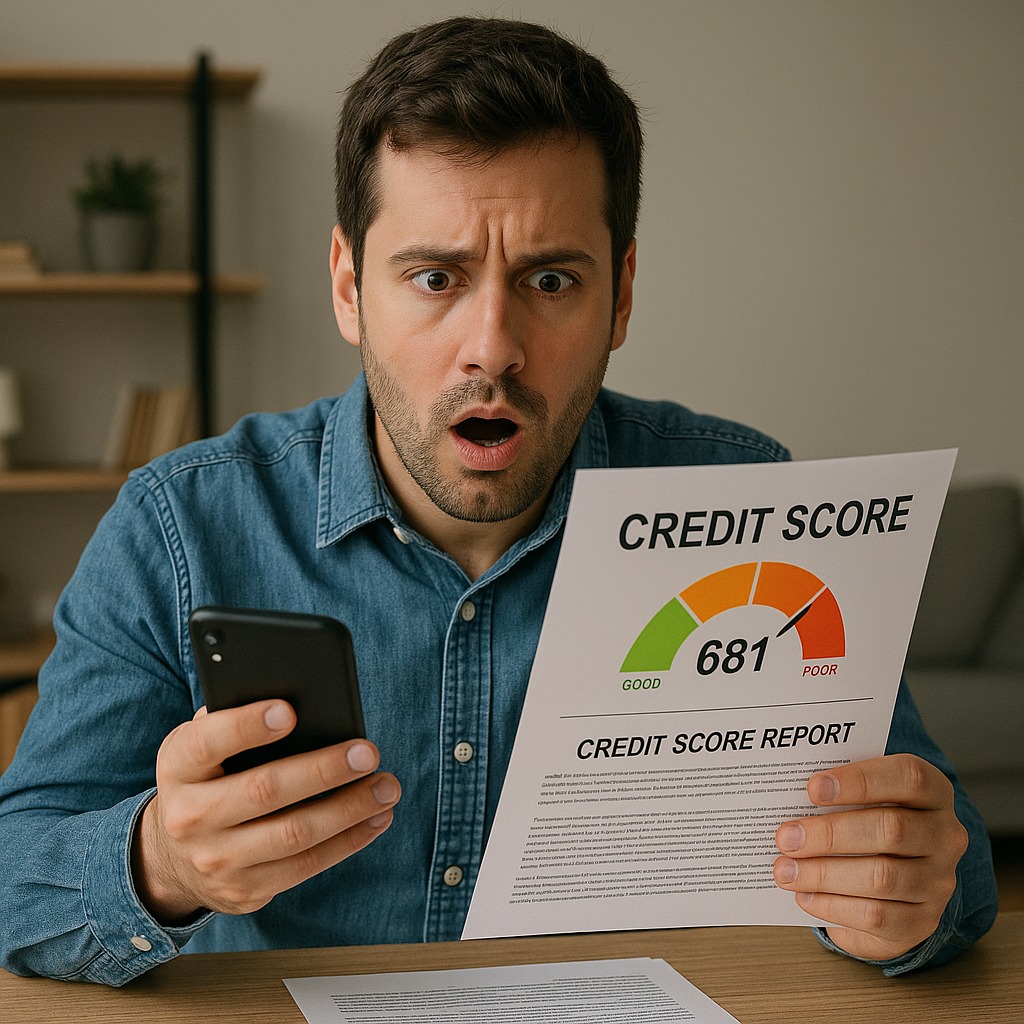
Most people assume paying off a loan always boosts their credit score.
So when their score drops instead of rising, the reaction is usually:
“How can this happen? I just cleared my loan!”
But yes — even after you repay a loan fully and responsibly, your score can temporarily decline.
Here’s the shocking but true explanation behind this unexpected dip.
⭐ 1. You Lose an Active Credit Line
An active loan contributes to your credit score by showing lenders:
You can manage monthly EMIs
You have long-term repayment discipline
You handle credit responsibly
When the loan is closed, this positive credit activity stops.
Less active credit → lower score weight → slight score dip.
⭐ 2. Your Credit Mix Becomes Weaker
Credit bureaus prefer a mix of:
Secured loans (home, car, gold)
Unsecured loans (personal loans, credit cards)
If you close your only active loan:
Your credit mix becomes too thin or too skewed, lowering your score slightly.
⭐ 3. Your Credit History Appears Shorter
Long-running loans help build:
Credit age
Repayment history
Score strength
When you close a loan early, the average credit age decreases, which can cause a minor score drop.
⭐ 4. You Didn’t Use Any Other Credit for a While
If the closed loan was your only running credit, then closing it makes your profile “low activity.”
Low activity = low scoring weight.
Credit bureaus prefer borrowers who are actively using credit and repaying on time.
⭐ 5. Report Updates Can Trigger a Temporary Dip
When lenders update your loan as “closed,” CIBIL recalculates your credit factors.
This update sometimes causes:
A sudden recalculation
Slight score rebalancing
Short-term dip of 10–30 points
This usually fixes itself within a few weeks.
⭐ 6. Your Credit Utilisation Might Have Increased
Sometimes, the closed loan was reducing your total credit utilisation ratio.
After closure, if you use credit cards heavily:
Credit utilisation becomes higher
Score drops
Even if the loan was closed cleanly.
⭐ 7. You Recently Applied for New Credit
Some people pay off a loan and immediately apply for a new one.
This triggers:
Hard enquiries
Increased credit hunger
Short-term score drop
Your loan closure may not be the reason — the new enquiry is.
⭐ 8. You Closed the Loan Very Early
Early closure means:
You didn’t build a long repayment curve
Your credit history stays shorter
The loan didn’t contribute enough scoring weight
This can slightly lower your score.
⭐ The Good News: The Drop Is Temporary
A loan closure does not damage your credit score long-term.
Your score usually recovers within:
30–60 days (naturally), or
Even earlier if you maintain good repayment behaviour.
In fact, paying off loans improves your financial strength — the score dip is just a recalculation phase.
How to Prevent a Credit Score Drop After Loan Closure
✔ Keep at least one active credit account
✔ Maintain credit utilisation below 30%
✔ Avoid applying for new loans for 30 days
✔ Continue paying credit card bills on time
✔ Avoid closing old credit cards
✔ Check credit report for errors after loan closure
Conclusion
A small dip after paying off a loan is normal and temporary.
Your credit score is made up of multiple factors, and closing a loan affects:
Credit mix
Credit age
Active credit lines
…all at once.
But with good credit habits, your score will bounce back stronger — and you’ll enjoy the benefits of being debt-free.
FAQs
Q1. Does closing a loan hurt my credit score?
It may temporarily dip due to reduced credit activity and credit mix changes.
Q2. How long does the score take to recover?
Typically 30–60 days, sometimes sooner.
Q3. Will early closure reduce my credit score more?
Yes, because it shortens credit history and reduces repayment data.
Q4. Does paying off a loan increase loan eligibility?
Yes — lenders see you as lower risk despite the temporary score fluctuation.
Q5. Should I avoid closing a loan because of the score dip?
No. Being debt-free is beneficial; the score impact is minor and temporary.
Published on : 13th November
Published by : SMITA
www.vizzve.com || www.vizzveservices.com
Follow us on social media: Facebook || Linkedin || Instagram
🛡 Powered by Vizzve Financial
RBI-Registered Loan Partner | 10 Lakh+ Customers | ₹600 Cr+ Disbursed