

Introduction
A Permanent Account Number (PAN) is one of the most important financial identification documents for individuals and businesses in India. Issued by the Income Tax Department, PAN is a unique ten-character alphanumeric identifier used for various tax and financial activities.
Whether you are opening a bank account, applying for a personal loan, investing in mutual funds or filing income tax returns, PAN details may be required.
However, increased online transactions and digital financial services have also created opportunities for fraudsters to misuse personal information.
For example, sharing an unprotected PAN card image through an unknown website or with an unverified loan agent may expose your information to unauthorized use.
PAN safety is therefore essential for everyone, including salaried employees, students, freelancers, business owners and self-employed individuals.
This guide explains how PAN information can be misused, how to protect your details and what steps to take if you suspect fraud.
AI Answer Box: What Is PAN Safety?
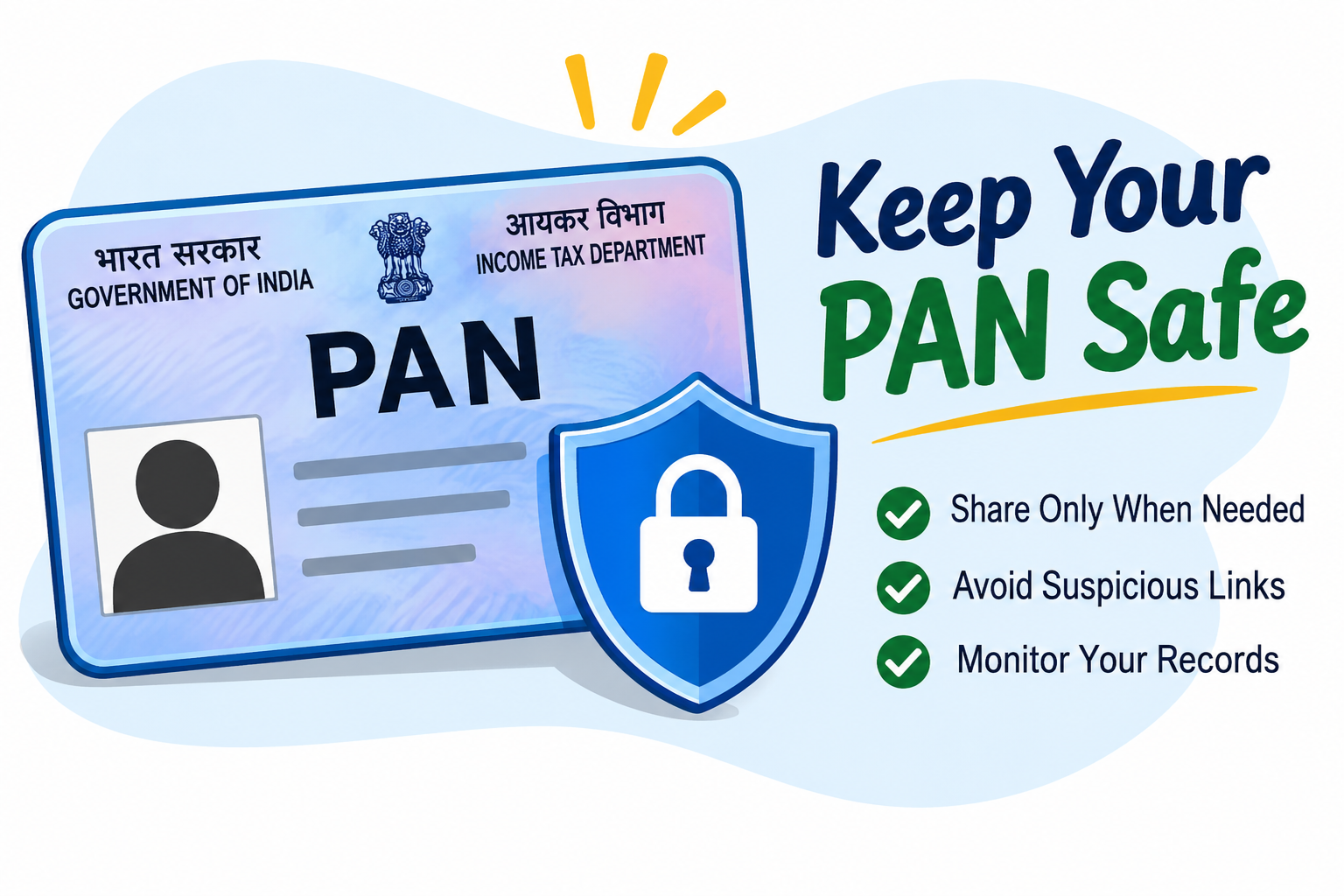
PAN safety refers to protecting your Permanent Account Number and associated personal information from unauthorized access, identity theft and financial misuse.
To protect your PAN:
-
Share PAN details only with verified organizations when necessary.
-
Avoid uploading PAN card images to unknown websites.
-
Never share OTPs, passwords or banking PINs.
-
Use secure websites and trusted applications.
-
Monitor financial and tax-related transactions.
-
Report suspicious PAN-related activity promptly.
Quick Answer: Your PAN number is an important financial identifier. Keep it private, share it only for legitimate purposes and regularly monitor its use to reduce the risk of identity fraud.
What Is a PAN Card and Why Is It Important?
A PAN card is an identification document issued by the Income Tax Department of India. It contains a unique ten-character alphanumeric number assigned to an individual or entity.
PAN helps financial institutions and government authorities identify taxpayers and maintain financial transaction records.
Common Uses of PAN
PAN may be required for:
-
Filing income tax returns.
-
Opening certain bank accounts.
-
Applying for personal and business loans.
-
Making specified financial transactions.
-
Investing in mutual funds and securities.
-
Purchasing or selling certain assets.
-
Completing financial KYC procedures.
-
Conducting business-related financial activities.
Why Is PAN Safety Important?
Your PAN details are connected to several financial activities. If they fall into the wrong hands, they may be used as part of fraudulent applications or identity-related scams.
Protecting PAN information helps reduce the risk of:
-
Unauthorized financial applications.
-
Identity theft.
-
Fake loan applications.
-
Fraudulent KYC attempts.
-
Misuse of personal information.
-
Suspicious financial activity.
How Can Someone Misuse Your PAN Number?
PAN misuse occurs when someone uses your PAN details without your permission or for an unauthorized purpose.
Not every PAN-related transaction is fraudulent. However, unfamiliar financial activity should never be ignored.
Common Types of PAN Misuse
1. Unauthorized Loan Applications
Fraudsters may attempt to use stolen PAN information as part of fake or unauthorized loan applications.
A PAN number alone does not automatically authorize a loan, but it may be used alongside other stolen personal details.
2. Fake KYC Verification
Scammers may collect PAN card photographs by pretending to represent banks, NBFCs or financial service providers.
They may use the information for unauthorized verification attempts or identity-related fraud.
3. Fake Financial Accounts
Criminals may combine PAN information with other stolen identity details to attempt fraudulent account opening or financial transactions.
4. Online Scams
Fake websites, loan advertisements and phishing messages may request PAN details under the pretext of providing financial services.
Once collected, the information may be misused or sold.
5. Identity Theft
PAN details combined with other personal information can help criminals impersonate individuals in financial or online activities.
15 Important PAN Safety Tips Everyone Should Follow
Protecting your PAN does not require complicated technical knowledge. Following a few simple habits can significantly reduce unnecessary exposure.
1. Share PAN Details Only When Necessary
Do not provide your PAN number to unknown individuals or organizations.
Before sharing it, understand:
-
Why the PAN is required.
-
Which organization is collecting it.
-
How the information will be used.
-
Whether the request is legally or operationally necessary.
2. Avoid Sharing PAN Card Images on Social Media
Never post your PAN card photograph on public platforms.
Even if you trust your social media audience, publicly available information can be copied or misused.
3. Verify Loan Applications and Financial Companies
Before submitting PAN details to a loan provider, verify the actual lender.
Check whether the lender is a regulated bank or NBFC and whether a digital lending service is operating through an authorized lending arrangement.
4. Use Official Websites
Submit PAN details only through genuine and secure websites.
Check the website address carefully and avoid suspicious links received through SMS, WhatsApp or email.
5. Never Share OTPs
Your PAN number may be requested during legitimate KYC procedures, but you should never disclose OTPs, banking passwords or UPI PINs to callers claiming to represent a financial institution.
6. Avoid Unknown Loan Applications
Before installing a loan application, check:
-
The identity of the actual lender.
-
The official website.
-
The app publisher.
-
The privacy policy.
-
The permissions requested.
-
The lender's customer support details.
7. Protect Digital Copies
If you store a PAN card image on your phone or computer, use a secure device and avoid keeping it in publicly accessible folders.
8. Avoid Sending PAN Through Unverified Channels
Do not send PAN photographs to unknown WhatsApp numbers, personal email addresses or unofficial customer support accounts.
Use verified submission channels.
9. Check Your Financial Records
Review bank statements, credit reports and financial communications regularly.
Look for unfamiliar loan accounts, credit enquiries or transactions.
10. Use Masked Documents Where Accepted
If an organization accepts a masked PAN document or another privacy-preserving verification method, prefer that option when appropriate.
Do not alter official documents when complete details are legally required.
11. Avoid Public Wi-Fi for Sensitive Submissions
Avoid uploading PAN documents through unsecured public networks.
Use a trusted private connection whenever possible.
12. Keep Your Mobile and Email Secure
Your registered mobile number and email account may receive important financial alerts.
Use strong passwords and two-factor authentication wherever available.
13. Verify KYC Requests Independently
If someone contacts you claiming that your PAN needs urgent verification, contact the organization through its official website or customer service number.
Do not depend on the contact details supplied in an unexpected message.
14. Never Pay Unknown Agents for PAN Verification
Be cautious of individuals demanding money to activate, unlock or verify your PAN through unofficial channels.
Use authorized government services for PAN-related corrections and verification.
15. Report Suspicious Activity Immediately
If you notice unauthorized financial activity, contact the concerned bank or financial institution and report the matter through appropriate official channels.
PAN Safety: Safe Practices vs Unsafe Practices
| Safe practices | Unsafe practices |
|---|---|
| Sharing PAN with verified institutions | Sharing PAN with unknown agents |
| Using official websites | Clicking suspicious links |
| Protecting digital copies | Posting PAN images publicly |
| Checking financial records | Ignoring unknown transactions |
| Verifying KYC requests | Trusting unexpected callers |
| Using secure devices | Uploading documents to unknown apps |
| Reporting suspicious activity | Delaying fraud complaints |
Is It Safe to Share PAN Details with Loan Apps?
Sharing PAN details with a legitimate loan provider may be necessary for identity verification, credit assessment and regulatory compliance.
However, you should verify the lending arrangement before submitting your documents.
Things to Check Before Sharing PAN with a Loan App
1. Verify the Actual Lender
Find out which bank or NBFC is responsible for providing the loan.
2. Check the App's Authenticity
Download applications from official sources and verify the developer and lender information.
3. Read the Privacy Policy
Understand what personal information is collected, why it is collected and how it is handled.
4. Check App Permissions
A loan application should not request unrelated permissions without a valid purpose.
5. Review Loan Terms
Check the interest rate, processing charges, repayment schedule and Key Fact Statement (KFS), where applicable.
Expert Tip: A genuine loan application should clearly identify the regulated lender and explain its data collection practices. Never assume that an application is trustworthy simply because it appears in an app store or advertises instant approvals.
How to Protect Your PAN Card While Applying for a Personal Loan
Personal loan applications commonly involve identity verification. PAN may be requested as part of the lender's KYC and credit assessment process.
Follow these steps before submitting your documents.
Step-by-Step PAN Safety Checklist
-
Identify the actual bank or NBFC offering the loan.
-
Verify the lender through its official website.
-
Check whether the loan application is associated with the lender.
-
Read the privacy policy and document submission instructions.
-
Upload PAN details only through verified channels.
-
Review the loan agreement and KFS.
-
Save the application reference number and official communications.
-
Monitor your financial records after applying.
Documents Commonly Requested During Loan Applications
Depending on the lender and applicant profile, the following may be requested:
-
PAN card.
-
Aadhaar or another accepted identity document.
-
Salary slips or income proof.
-
Bank statements.
-
Address proof.
-
Employment or business details.
The exact requirements depend on the lender's policies and applicable KYC rules.
What Should You Do If Someone Misuses Your PAN Number?
Discovering possible PAN misuse can be stressful. However, taking timely action may help limit further problems.
Step 1: Identify the Suspicious Activity
Check whether you have received unfamiliar loan notifications, credit enquiries, tax-related communications or financial account alerts.
Step 2: Contact the Concerned Financial Institution
If an unknown loan or account is linked to your identity, contact the bank or NBFC immediately.
Ask for:
-
Details of the application.
-
Application date.
-
Verification records.
-
Complaint reference number.
-
Investigation and dispute procedures.
Step 3: Check Your Credit Report
Obtain your credit report from a recognized credit information company.
Review it for:
-
Unknown loan accounts.
-
Unfamiliar credit enquiries.
-
Incorrect personal information.
-
Unexpected outstanding balances.
Dispute inaccurate entries with the credit bureau and the concerned lender.
Step 4: Report Cyber Fraud
If you suspect online financial fraud, report it through the National Cyber Crime Reporting Portal.
For financial cyber fraud requiring urgent intervention, call India's cybercrime helpline 1930.
Step 5: Report Tax-Related Misuse
If suspicious transactions or incorrect information appear in your income tax records, contact the Income Tax Department through its official portal.
Step 6: Keep Evidence
Maintain copies of:
-
Suspicious messages.
-
Emails.
-
Transaction notifications.
-
Loan application details.
-
Complaint acknowledgements.
These records can help during investigations.
How to Check Whether Your PAN Details Are Being Misused
There is no single public dashboard that guarantees complete visibility into every use of your PAN.
However, you can monitor several financial records to identify suspicious activity.
| Where to check | What to look for |
|---|---|
| Credit report | Unknown loans and credit enquiries |
| Income tax portal | Incorrect tax-related information |
| Bank statements | Unauthorized transactions |
| Email and SMS | Unexpected financial alerts |
| Loan provider communication | Unrecognized loan applications |
| Credit bureau dispute records | Incorrect account information |
Important Monitoring Tips
-
Review your credit report periodically.
-
Check unfamiliar credit enquiries.
-
Verify financial communications independently.
-
Report incorrect loan records quickly.
-
Keep copies of your complaints.
Remember that a credit enquiry is not automatically proof of fraud. Contact the concerned lender to establish whether it was authorized.
PAN Safety and Digital KYC: What Is the Connection?
Digital KYC makes financial verification faster and more convenient. However, it also requires customers to share personal information through digital channels.
PAN may be one of the documents used during the process.
Safe Digital KYC Practices
-
Use official verification links.
-
Check the name of the regulated entity.
-
Avoid unknown video KYC invitations.
-
Never share OTPs with another person.
-
Do not install remote-access applications at an agent's request.
-
Read consent statements before submitting information.
What Should a Genuine KYC Process Explain?
A trustworthy KYC process should clearly communicate:
-
The identity of the organization.
-
The purpose of collecting documents.
-
The information required.
-
How consent is obtained.
-
How customer data is handled.
PAN Safety for Different Types of People
PAN protection is important regardless of employment or income.
| Category | Recommended safety practice |
|---|---|
| Salaried employees | Verify PAN requests from employers and lenders |
| Students | Avoid sharing PAN with unknown loan agents |
| Freelancers | Use verified financial and tax platforms |
| Business owners | Restrict access to business PAN records |
| Self-employed individuals | Store financial documents securely |
| Senior citizens | Verify unexpected calls requesting PAN details |
Pros and Cons of Digital PAN Usage
Digital PAN services make financial processes easier, but they require responsible handling of personal information.
| Pros | Cons and risks |
|---|---|
| Convenient online verification | Risk of phishing |
| Faster financial applications | Exposure through fake websites |
| Easier document submission | Unauthorized data collection |
| Reduced physical paperwork | Digital identity theft risks |
| Accessible government services | Account security concerns |
Digital PAN usage is not inherently unsafe. The risk mainly comes from sharing information through unverified channels or failing to secure personal accounts.
PAN Safety: Important Mistakes to Avoid
Many people unintentionally expose their PAN details through small mistakes.
Avoid these common practices:
-
Sending PAN photographs to unknown people.
-
Using the same password across financial accounts.
-
Clicking unverified KYC links.
-
Sharing OTPs during phone calls.
-
Uploading PAN details to fake loan websites.
-
Ignoring unfamiliar credit enquiries.
-
Trusting instant loan approval promises without verification.
-
Providing unnecessary documents to unofficial agents.
Expert Commentary: Why PAN Protection Matters in Digital Finance
PAN is an important identifier within India's financial ecosystem. As banking, lending and investment services increasingly move online, protecting financial identity information has become an essential part of digital security.
A secure financial transaction involves more than submitting the correct document. Customers should also understand who is collecting their information, why it is required and how it will be protected.
From a practical perspective, three habits are especially valuable:
-
Verify the organization before submitting documents.
-
Share only information required for the stated purpose.
-
Monitor credit and tax-related records for unfamiliar activity.
These simple steps can help individuals make safer financial decisions.
Frequently Asked Questions (FAQs)
1. What is PAN safety?
PAN safety means protecting your Permanent Account Number and related personal information from identity theft, unauthorized access and financial fraud.
2. Why is PAN card safety important?
PAN is used for several financial and tax-related activities. Protecting it helps reduce the risk of identity misuse and fraudulent financial applications.
3. Can someone take a loan using my PAN number?
A PAN number alone is generally insufficient to obtain a legitimate loan. However, fraudsters may combine stolen PAN details with other personal information to attempt unauthorized applications.
4. Is it safe to share my PAN card online?
It can be safe when sharing through verified websites and authorized financial institutions. Avoid unknown websites, suspicious links and unofficial agents.
5. Should I share PAN details with loan apps?
Share PAN details only after verifying the actual lender, checking the app's authenticity and understanding its privacy policy.
6. How can I prevent PAN card fraud?
Use official websites, avoid unnecessary document sharing, protect digital copies, verify KYC requests and monitor your financial records.
7. How do I know if my PAN is being misused?
Check your credit report for unknown loans and enquiries, review income tax information and monitor unfamiliar financial communications.
8. What should I do if my PAN details are leaked?
Contact relevant financial institutions if you identify suspicious activity, monitor your credit report, secure your accounts and report suspected cyber fraud.
9. Can someone misuse my PAN without my Aadhaar?
PAN misuse may be attempted using other personal information. Aadhaar is not the only information that criminals may exploit.
10. Is it safe to send a PAN card through WhatsApp?
Avoid sending PAN images to unknown WhatsApp numbers. If document submission is necessary, use a verified official channel.
11. Does sharing PAN automatically affect my credit score?
No. Simply sharing your PAN does not automatically reduce your credit score. However, unauthorized credit applications or accounts may create problems that should be disputed.
12. Where can I report PAN-related cyber fraud in India?
You can report suspected online financial fraud at the National Cyber Crime Reporting Portal, cybercrime.gov.in. You can also call 1930 for financial cyber fraud assistance.
13. Can I change my PAN number if it is misused?
PAN is generally a permanent identifier and is not changed simply because it has been exposed. If misuse occurs, report it to the relevant authorities and follow their instructions.
14. Is a PAN card photograph enough for identity theft?
A photograph alone does not guarantee that someone can complete a financial transaction. However, it can expose personal information that may be combined with other stolen details.
15. How often should I check my credit report?
Review your credit report periodically and whenever you receive an unfamiliar loan or credit enquiry notification.
Conclusion
PAN safety is an important part of protecting your financial identity in India's growing digital economy. Although PAN makes tax filing, banking, investments and loan applications easier, careless sharing can increase the risk of identity-related fraud.
The best protection is to share PAN details only with verified organizations, use secure digital platforms, avoid suspicious KYC requests and monitor financial records regularly.
If you notice unauthorized activity, contact the concerned financial institution and report suspected fraud through official channels without delay.
Protect your PAN. Protect your financial identity. Make every financial transaction safer.
Published on : 04th November
Published by : Bhargavi
www.vizzve.com || www.vizzveservices.com
Follow us on social media: Facebook || Linkedin || Instagram
🛡 Powered by Vizzve Financial
RBI-Registered Loan Partner | 10 Lakh+ Customers | ₹600 Cr+ Disbursed