

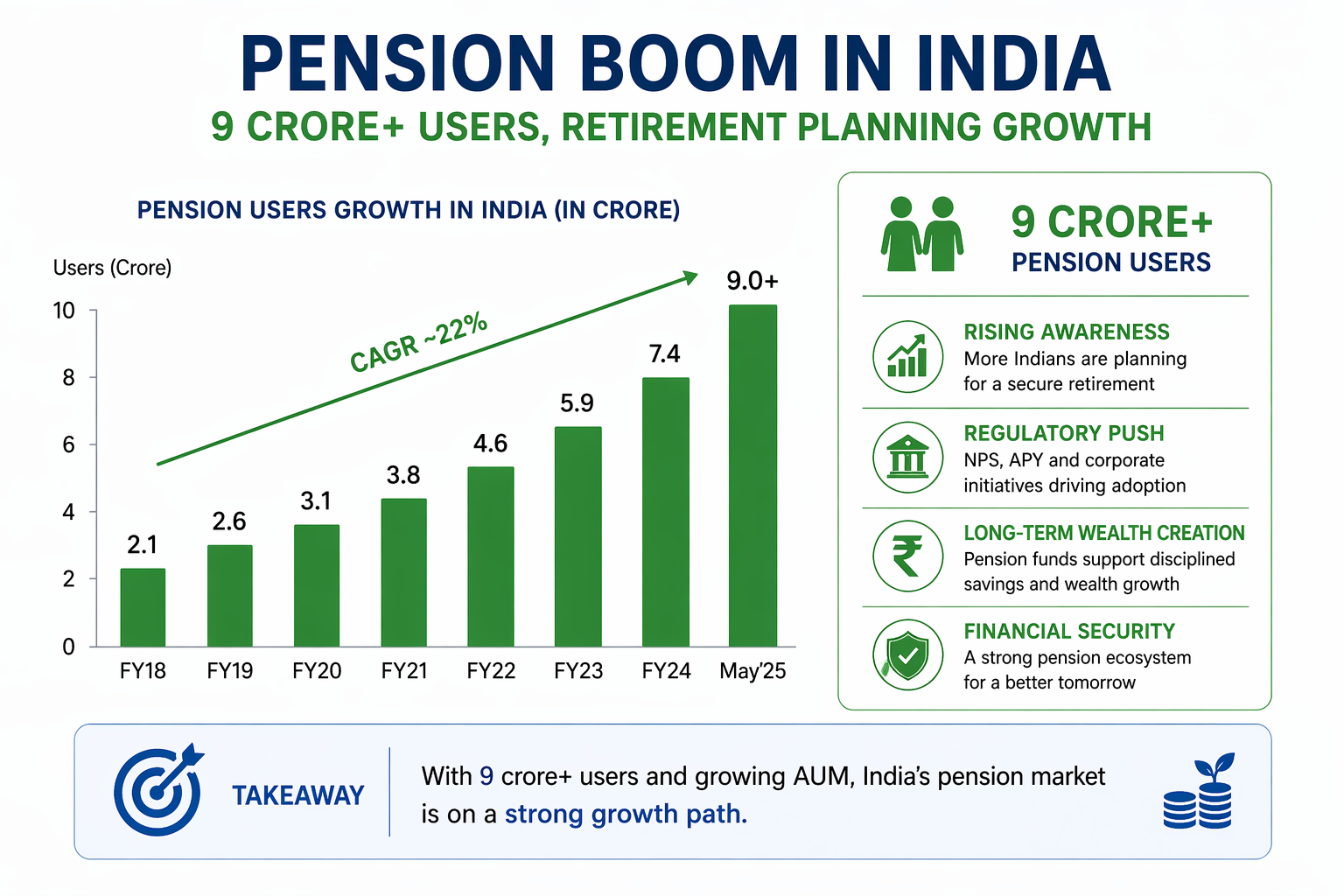
India is currently witnessing a powerful transformation in personal finance habits, as retirement planning takes center stage. The number of pension subscribers has crossed 9 crore users, marking a major milestone in the country’s financial evolution. This surge reflects a growing awareness among individuals about the importance of long-term financial security.
A key driver of this growth is the increasing adoption of structured retirement products such as the National Pension System. This scheme has gained popularity due to its flexibility, tax benefits, and long-term wealth creation potential. Alongside NPS, EPFO and private pension plans are also contributing to the expansion of India’s pension ecosystem.
One of the main reasons behind this pension boom is the shift in mindset. Earlier, retirement planning was often ignored or delayed. Today, individuals are more aware of rising living costs, longer life expectancy, and the need for financial independence after retirement. This has led to a steady increase in participation across both urban and semi-urban areas.
Tax benefits have played a significant role in boosting pension investments. Many retirement schemes offer deductions under income tax laws, making them attractive for salaried and self-employed individuals alike. Additionally, systematic contributions over a long period help in building a substantial retirement corpus through compounding.
The economic impact of this trend is also noteworthy. Higher participation in pension schemes leads to increased long-term savings in the financial system. These funds are typically invested in government securities, equities, and infrastructure projects, supporting overall economic growth and capital formation.
Another important aspect is financial inclusion. The rise in pension users indicates that more people are entering formal financial systems. This strengthens the economy by improving savings rates and reducing dependency on informal financial support systems.
However, despite this growth, challenges remain. Many investors still lack a clear understanding of pension products and their risk-return profiles. Market-linked schemes can be volatile, and returns are not guaranteed. Therefore, proper financial planning and diversification are essential.
From an individual perspective, pension investments offer multiple benefits. They ensure a steady income after retirement, reduce financial stress, and promote disciplined savings. Starting early provides a major advantage, as even small contributions can grow significantly over time.
Looking ahead, the pension sector in India is expected to expand further. With digital platforms making investments easier, increased financial literacy, and continued government support, the number of pension subscribers is likely to grow rapidly in the coming years.
For investors, the best approach is simple: start early, stay consistent, and align pension investments with long-term financial goals. Retirement planning is no longer optional—it is a necessity in today’s economic environment.
Key Takeaways
- Pension subscribers in India have crossed 9 crore
- Rising awareness and tax benefits driving growth
- Strong positive impact on economy and savings culture
- Early and consistent investment is the best strategy
❓ FAQs
1. What is the pension boom in India?
It refers to the rapid growth in pension scheme subscribers, now exceeding 9 crore users.
2. Which pension scheme is most popular in India?
The National Pension System (NPS) is one of the most widely used retirement investment options.
3.Why are pension investments increasing?
Due to higher financial awareness, tax benefits, and the need for long-term security.
4. Is NPS a safe investment?
It is relatively safe but partially market-linked, so returns may vary.
5. Who can invest in pension schemes?
Both salaried and self-employed individuals can invest.
6. What are the benefits of pension planning?
It ensures financial stability, regular income after retirement, and reduces dependency.
7.How does pension growth help the economy?
It increases long-term savings and supports infrastructure and capital markets.
8. What is the ideal age to start pension investment?
Starting early, preferably in your 20s or 30s, provides maximum benefit.
9.Are pension schemes tax-saving?
Yes, many schemes offer tax deductions under income tax laws.
10. What is the best pension investment strategy?
Start early, invest regularly, and maintain a diversified portfolio.
Published on : 23rd April
Published by : SMITA
www.vizzve.com || www.vizzveservices.com
Follow us on social media: Facebook || Linkedin || Instagram
🛡 Powered by Vizzve Financial
RBI-Registered Loan Partner | 10 Lakh+ Customers | ₹600 Cr+ Disbursed