

Introduction
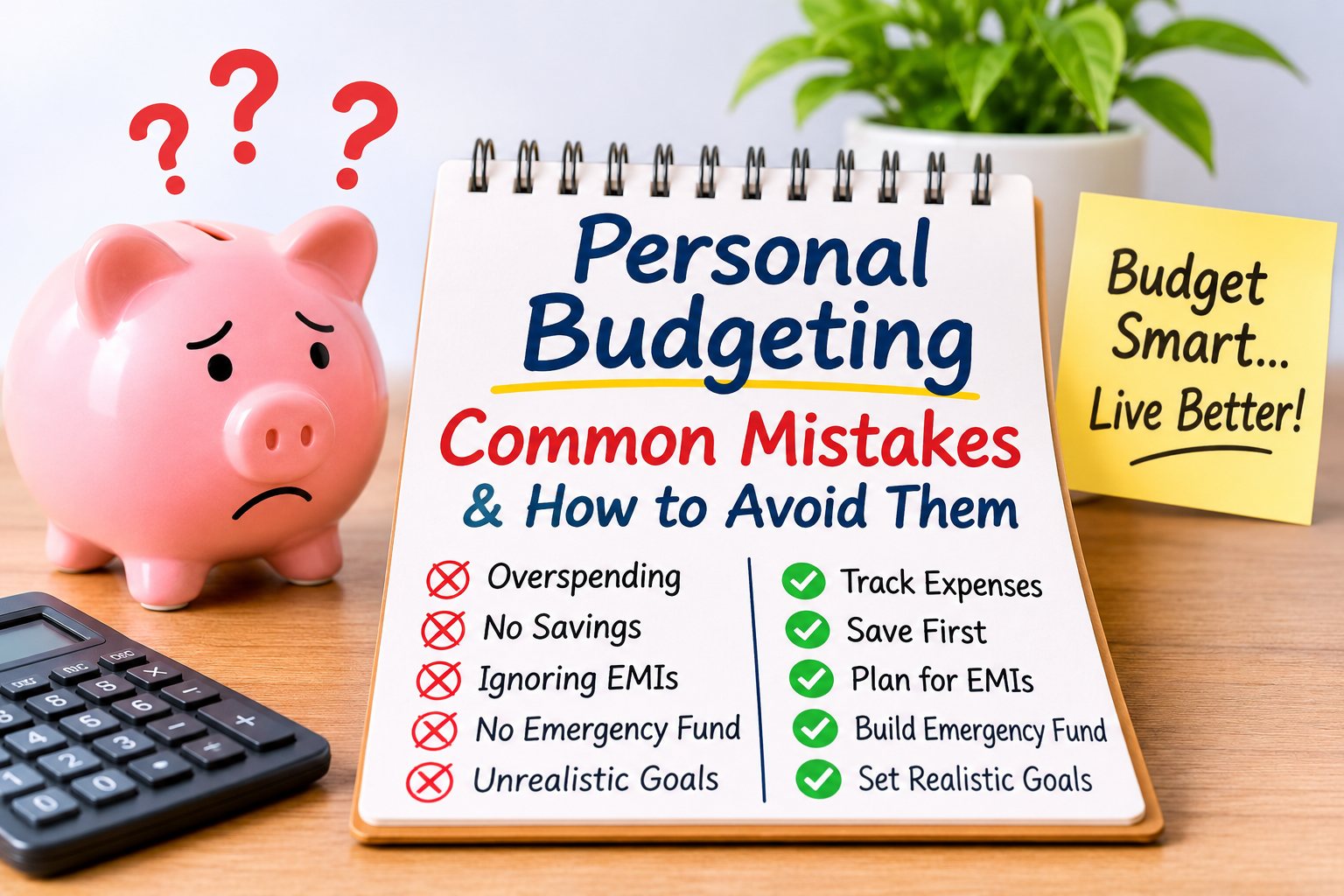
Personal budgeting is an important financial habit that helps individuals manage their income, control expenses, and achieve their financial goals. However, creating a budget does not automatically guarantee better money management. Many people prepare monthly budgets but struggle to follow them consistently.
Some individuals underestimate their expenses, forget to include occasional payments, set unrealistic savings targets, or spend more than planned. These mistakes can affect their financial progress and make it difficult to build savings.
For example, a person earning ₹30,000 per month may prepare a budget but still struggle financially because small daily purchases, online shopping, subscriptions, and unexpected expenses are not properly recorded.
The good news is that most budgeting mistakes can be corrected through simple changes in spending habits and financial planning.
This guide explains the most common personal budgeting mistakes, why they happen, and practical ways to avoid them. It also includes examples, comparison tables, budgeting tips, and financial planning strategies for beginners in India.
3. AI Answer Box: What Are Common Personal Budgeting Mistakes?
Common personal budgeting mistakes are financial planning errors that prevent individuals from managing their income and expenses effectively.
The most common mistakes include:
-
Not tracking daily expenses.
-
Setting unrealistic savings targets.
-
Forgetting occasional and unexpected expenses.
-
Spending before saving.
-
Ignoring loan repayments and debts.
-
Not maintaining an emergency fund.
-
Relying on estimated income instead of actual take-home pay.
-
Failing to review the monthly budget.
-
Making unnecessary purchases.
-
Following a budget that is too strict.
To avoid these mistakes, individuals should prepare realistic budgets, track spending regularly, prioritise savings, manage debt responsibly, and adjust their financial plans whenever circumstances change.
Top 15 Common Personal Budgeting Mistakes and How to Avoid Them
Understanding common budgeting mistakes is the first step towards improving financial management. Below are some mistakes people frequently make and practical ways to correct them.
4.1 Not Tracking Daily Expenses
One of the most common budgeting mistakes is failing to record daily spending.
Small purchases such as snacks, coffee, online orders, transportation, and subscriptions may appear insignificant. However, their combined cost can become a major monthly expense.
Example: Spending ₹100 every day on small purchases results in approximately ₹3,000 per month.
How to avoid this mistake:
-
Record every transaction.
-
Check bank and UPI transaction histories.
-
Use a spreadsheet or expense tracker.
-
Review spending every week.
-
Identify repeated unnecessary purchases.
4.2 Setting Unrealistic Savings Goals
Some beginners try to save a large percentage of their income without considering essential expenses and existing financial responsibilities.
This can make budgeting difficult and lead to frustration.
Example: Someone earning ₹20,000 per month may struggle to save ₹10,000 if rent, groceries, transportation, and loan payments already consume most of their income.
How to avoid this mistake:
-
Calculate essential expenses first.
-
Set achievable savings targets.
-
Start with a small amount.
-
Increase savings gradually.
-
Adjust targets when income changes.
4.3 Forgetting Occasional and Annual Expenses
Many people prepare budgets based only on regular monthly payments. They forget expenses that occur once or twice a year.
Examples include:
-
Insurance premiums.
-
Vehicle servicing.
-
Annual subscriptions.
-
School admission fees.
-
Festival expenses.
-
Property maintenance.
How to avoid this mistake:
List annual and occasional expenses and divide their expected cost into monthly savings targets.
For example, if an annual insurance premium is ₹12,000, set aside ₹1,000 every month.
4.4 Spending Money Before Saving
Waiting until the end of the month to save money is a common mistake.
After paying bills and purchasing personal items, individuals may have very little money remaining.
How to avoid this mistake:
-
Save immediately after receiving income.
-
Automate transfers where appropriate.
-
Maintain a separate savings account.
-
Treat savings as an important budget category.
4.5 Ignoring Small Subscriptions and Recurring Payments
Monthly subscriptions can silently increase expenses.
Examples include:
-
Streaming services.
-
Music applications.
-
Gaming memberships.
-
Premium mobile applications.
-
Cloud storage plans.
People sometimes continue paying for services they rarely use.
How to avoid this mistake:
-
Review subscriptions every month.
-
Cancel unused memberships.
-
Avoid duplicate subscriptions.
-
Check automatic payment instructions.
-
Keep only services that provide genuine value.
4.6 Not Creating an Emergency Fund
Using regular savings for every unexpected expense can disturb financial goals.
Without an emergency fund, people may depend on credit cards or personal loans when sudden expenses occur.
How to avoid this mistake:
-
Create a separate emergency savings account.
-
Start with a small monthly contribution.
-
Gradually build a reserve covering three to six months of essential expenses.
-
Use this money only for genuine emergencies.
4.7 Underestimating Monthly Expenses
Many individuals underestimate their actual spending when preparing a budget.
For example, someone may plan ₹2,000 for transportation but spend ₹3,000 because of additional travel and fuel costs.
How to avoid this mistake:
-
Review previous bank statements.
-
Record actual expenses for at least one or two months.
-
Use realistic estimates.
-
Include a reasonable buffer for variable expenses.
4.8 Not Separating Needs from Wants
Another common mistake is spending too much on lifestyle purchases while neglecting essential expenses.
Needs include rent, food, medicines, transportation, and utilities.
Wants include luxury shopping, expensive gadgets, and frequent entertainment purchases.
How to avoid this mistake:
-
Prioritise essential expenses.
-
Set limits for shopping and entertainment.
-
Avoid impulse purchases.
-
Consider whether a purchase is necessary before spending.
4.9 Ignoring Loan EMIs and Credit Card Payments
Some individuals prepare budgets without properly accounting for existing financial obligations.
This can result in missed payment dates, late fees, additional interest, and financial pressure.
How to avoid this mistake:
-
Include every EMI in the monthly budget.
-
Record credit card due dates.
-
Pay at least the required amount on time, while aiming to clear the full statement balance whenever possible.
-
Avoid taking unnecessary additional loans.
-
Review outstanding debt regularly.
4.10 Following a Budget That Is Too Strict
A budget that does not allow any personal spending can become difficult to maintain.
People may eventually stop following it because they feel restricted.
How to avoid this mistake:
-
Allocate a reasonable amount for entertainment.
-
Include occasional shopping expenses.
-
Allow flexibility for social activities.
-
Adjust spending categories when necessary.
A successful budget should balance financial responsibility with everyday enjoyment.
4.11 Not Adjusting the Budget for Inflation
The cost of groceries, transportation, healthcare, and other services can increase over time.
Following an outdated budget may result in repeated overspending.
How to avoid this mistake:
-
Review living expenses regularly.
-
Update grocery and transportation allocations.
-
Compare prices before major purchases.
-
Adjust savings targets realistically.
4.12 Depending Only on Credit Cards
Credit cards can be convenient, but using them to cover regular expenses without a repayment plan can create debt problems.
Paying only the minimum amount due may result in substantial interest costs on the remaining balance.
How to avoid this mistake:
-
Spend within your repayment capacity.
-
Track credit card transactions.
-
Pay the full statement balance by the due date whenever possible.
-
Avoid cash advances unless absolutely necessary.
-
Understand interest rates and fees.
4.13 Not Having Clear Financial Goals
Preparing a budget without specific financial goals can reduce motivation.
People may know how much they earn and spend but fail to understand what they are saving for.
How to avoid this mistake:
Set specific financial goals such as:
-
Save ₹20,000 for an emergency reserve.
-
Purchase a laptop within six months.
-
Repay a credit card balance within a planned period.
-
Build long-term retirement savings.
Make your goals measurable and realistic.
4.14 Comparing Your Budget with Other People
Everyone has different income levels, family responsibilities, and financial priorities.
Following another person's spending or savings plan without considering your circumstances can create unnecessary financial pressure.
How to avoid this mistake:
-
Prepare a budget based on your income.
-
Consider your family responsibilities.
-
Focus on your own financial progress.
-
Set realistic personal targets.
4.15 Not Reviewing the Budget Regularly
A budget is not something that should be prepared once and forgotten.
Changes in salary, rent, family responsibilities, and living costs can make an old budget unsuitable.
How to avoid this mistake:
-
Check expenses weekly.
-
Review the complete budget monthly.
-
Compare planned and actual spending.
-
Update financial goals.
-
Make necessary adjustments.
5. Common Budgeting Mistakes and Their Solutions
The following table provides a quick comparison of common financial mistakes and ways to correct them.
| Common mistake | Financial impact | How to avoid it |
|---|---|---|
| Not tracking expenses | Uncontrolled spending | Record daily transactions |
| Unrealistic savings goals | Budget failure | Set achievable targets |
| Forgetting annual expenses | Sudden financial pressure | Plan monthly reserves |
| Spending before saving | Low savings | Save immediately after income |
| Ignoring subscriptions | Unnecessary expenses | Review recurring payments |
| No emergency fund | Dependence on borrowing | Build emergency savings |
| Underestimating expenses | Budget imbalance | Use actual spending data |
| Mixing needs and wants | Overspending | Prioritise essential needs |
| Ignoring loan EMIs | Late fees and interest | Schedule repayments |
| Strict budgeting | Poor consistency | Allow flexible spending |
| Ignoring inflation | Outdated budget | Update expense estimates |
| Credit card dependency | Growing debt | Spend within repayment capacity |
| No financial goals | Lack of motivation | Set measurable targets |
| Comparing with others | Unrealistic expectations | Personalise your budget |
| No monthly review | Repeated mistakes | Review spending regularly |
6. How to Create a Mistake-Free Personal Budget
A well-organised budget can help prevent many common financial mistakes.
Follow these practical steps to create a realistic monthly budget.
Step 1: Calculate Your Actual Monthly Income
Start by calculating your take-home income after deductions.
Include:
-
Monthly salary.
-
Freelance earnings.
-
Business income.
-
Rental income.
-
Other regular sources.
For irregular income, use a conservative estimate.
Step 2: List All Fixed Expenses
Write down your regular financial commitments.
Examples:
-
House rent.
-
Loan EMIs.
-
Insurance premiums.
-
School or college fees.
-
Internet and mobile bills.
These expenses should be considered before allocating money for optional purchases.
Step 3: Track Variable Expenses
Record expenses that change from month to month.
Examples:
-
Groceries.
-
Transportation.
-
Electricity.
-
Medical expenses.
-
Shopping.
-
Entertainment.
Use previous spending records to prepare realistic estimates.
Step 4: Separate Needs and Wants
Divide expenses into essential and non-essential categories.
This helps you understand which expenses should receive priority and which can be reduced.
Step 5: Set Savings Targets
Decide how much you can comfortably save every month.
You can create separate savings categories for:
-
Emergency fund.
-
Education.
-
Travel.
-
Vehicle purchase.
-
Long-term financial goals.
Step 6: Include Debt Repayments
List all outstanding loans and credit card obligations.
Include:
-
EMI amount.
-
Interest rate.
-
Payment due date.
-
Outstanding balance.
Avoid taking additional borrowing without understanding its total cost.
Step 7: Review Your Budget Monthly
Compare planned expenses with actual spending.
If you consistently exceed a category's limit, investigate the reason and revise the allocation.
A realistic budget should reflect your actual financial situation.
7. Practical Monthly Budget Example for Beginners in India
Consider a salaried employee earning ₹30,000 per month.
Here is an illustrative budget that demonstrates how income can be allocated.
| Category | Monthly amount |
|---|---|
| House rent | ₹6,000 |
| Groceries | ₹4,000 |
| Transportation | ₹2,000 |
| Electricity and mobile | ₹1,500 |
| Loan EMI | ₹2,000 |
| Healthcare | ₹1,000 |
| Entertainment | ₹1,500 |
| Shopping | ₹1,000 |
| Emergency savings | ₹2,000 |
| General savings | ₹5,000 |
| Other expenses | ₹4,000 |
| Total | ₹30,000 |
What Does This Example Teach?
-
Essential expenses should receive priority.
-
Loan repayments must be included.
-
Savings should be planned in advance.
-
Entertainment and shopping should have limits.
-
Other expenses should not be ignored.
The allocation is only an example. Actual expenses will differ depending on location, family size, income, and lifestyle.
8. Best Budgeting Methods to Avoid Financial Mistakes
Choosing the right budgeting method can make expense management easier.
8.1 50/30/20 Budgeting Rule
This method divides after-tax income into three categories:
-
50% for needs.
-
30% for wants.
-
20% for savings and debt repayment.
For a monthly income of ₹30,000:
| Category | Percentage | Amount |
|---|---|---|
| Needs | 50% | ₹15,000 |
| Wants | 30% | ₹9,000 |
| Savings and debt repayment | 20% | ₹6,000 |
| Total | 100% | ₹30,000 |
It is a useful starting point, but the percentages should be adjusted to suit individual circumstances.
8.2 Zero-Based Budgeting
Zero-based budgeting assigns every rupee of income to a specific purpose.
The basic formula is:
Income − Planned Allocations = ₹0
This method helps prevent unplanned spending because all available income has a planned destination.
8.3 Envelope Budgeting
The envelope method divides spending money into categories such as groceries, transportation, entertainment, and shopping.
You can use physical envelopes or digital spending categories.
It helps control spending by setting clear limits for each category.
8.4 Pay Yourself First Method
This method prioritises savings immediately after receiving income.
For example, transfer ₹2,000 to savings before allocating the remaining amount towards regular expenses.
It helps prevent the common mistake of saving only what remains at the end of the month.
9. Useful Tools to Avoid Personal Budgeting Mistakes
Technology can make budgeting easier by helping individuals organise financial information and track expenses.
9.1 Excel and Google Sheets
Spreadsheets help record income, expenses, savings, and debt payments.
They can also calculate monthly totals and highlight spending differences.
9.2 Mobile Expense Trackers
Expense-tracking applications help organise daily transactions into categories.
Before choosing an app, check its privacy policy, security practices, and permissions. Never share banking passwords, OTPs, or UPI PINs.
9.3 Bank Statements
Bank statements help identify:
-
Recurring payments.
-
Unnecessary subscriptions.
-
Frequent withdrawals.
-
Unexpected charges.
-
Monthly spending patterns.
9.4 Personal Budget Notebook
A simple notebook is useful for individuals who prefer manual expense tracking.
Record daily transactions and review the totals every week.
10. Personal Budgeting Tips for Different Income Groups
Budgeting strategies should change depending on income and financial responsibilities.
10.1 For Students
Common mistakes:
-
Spending all pocket money immediately.
-
Unnecessary online shopping.
-
Not saving for education-related expenses.
Tips:
-
Prepare a weekly budget.
-
Track pocket money.
-
Prioritise food and education.
-
Save a small amount regularly.
10.2 For Salaried Employees
Common mistakes:
-
Spending too much after receiving salary.
-
Ignoring annual expenses.
-
Taking unnecessary loans.
-
Forgetting automatic payments.
Tips:
-
Prepare a monthly salary budget.
-
Automate savings.
-
Include all EMIs.
-
Maintain an emergency fund.
-
Review subscriptions and recurring charges.
10.3 For Freelancers and Gig Workers
Common mistakes:
-
Spending more during high-income months.
-
Not preparing for low-income periods.
-
Ignoring tax obligations.
-
Mixing personal and business expenses.
Tips:
-
Use conservative income estimates.
-
Maintain an income reserve.
-
Separate business and personal finances.
-
Plan for taxes and annual expenses.
10.4 For Families
Common mistakes:
-
Not discussing financial priorities.
-
Forgetting school and medical expenses.
-
Overspending during festivals.
-
Not preparing for household emergencies.
Tips:
-
Prepare a household budget together.
-
Plan annual expenses in advance.
-
Maintain emergency savings.
-
Track shared expenses.
11. Expert Commentary: Why Avoiding Budgeting Mistakes Matters
Effective personal budgeting is not about following strict spending rules. It is about understanding financial behaviour and making informed decisions.
A common reason people struggle with budgeting is that they focus only on their expected expenses rather than their actual spending patterns.
For example, someone may prepare a monthly grocery budget based on an estimate but forget to account for household purchases made through online shopping or small local stores.
Reviewing actual transactions helps identify these gaps.
A practical budgeting strategy should focus on three areas:
Financial awareness: Understand where your income goes and identify unnecessary expenses.
Financial discipline: Develop consistent saving and repayment habits.
Financial flexibility: Adjust your budget when income, prices, or family responsibilities change.
The goal is to build a financial plan that can be followed over the long term.
12. Updated Financial Awareness Practices in India
Financial awareness is important as individuals increasingly use UPI, credit cards, digital banking, and online financial services.
The Reserve Bank of India's Financial Awareness Messages booklet explains that budgeting involves planning future income and expenses and comparing planned expenditure with actual spending.
SEBI's investor education resources also recommend preparing budgets, prioritising essential expenses, setting financial goals, and maintaining emergency savings.
Important practices include:
-
Maintain accurate financial records.
-
Review bank transactions regularly.
-
Understand loan repayment responsibilities.
-
Avoid unnecessary borrowing.
-
Set realistic financial goals.
-
Maintain emergency savings.
-
Review spending when prices increase.
-
Use secure financial applications.
These habits can help individuals make better financial decisions and avoid common money management mistakes.
13. Personal Budgeting Mistakes Checklist
Use this checklist to evaluate your monthly financial habits.
-
Do I track my daily expenses?
-
Have I calculated my actual take-home income?
-
Have I included annual expenses?
-
Do I save money immediately after receiving income?
-
Do I maintain an emergency fund?
-
Have I separated needs from wants?
-
Do I track loan EMIs and credit card payments?
-
Have I reviewed unnecessary subscriptions?
-
Are my savings targets realistic?
-
Do I review my budget every month?
-
Do I adjust my budget when expenses increase?
-
Do I have clear financial goals?
If you answer no to several questions, consider improving those areas in your next monthly budget.
14. Pros and Cons of Personal Budgeting
Pros
-
Helps control monthly expenses.
-
Encourages regular savings.
-
Improves financial discipline.
-
Supports debt management.
-
Helps prepare for emergencies.
-
Reduces unnecessary purchases.
-
Makes financial goals clearer.
Cons and Challenges
-
Requires time and effort.
-
Needs regular monitoring.
-
Unexpected expenses can disturb plans.
-
Irregular income makes budgeting difficult.
-
Strict budgets may feel restrictive.
-
Incorrect estimates can affect results.
The best approach is to use a flexible budget and review it regularly.
15. Key Takeaways
-
Not tracking daily expenses is one of the most common budgeting mistakes.
-
Unrealistic savings targets can make budgets difficult to follow.
-
Annual expenses and unexpected costs should be included in financial planning.
-
Saving before spending helps develop better financial habits.
-
Emergency funds reduce dependence on borrowing.
-
Loan EMIs and credit card payments should be included in monthly budgets.
-
Separating needs from wants helps control unnecessary spending.
-
A flexible budget is more practical than an overly strict one.
-
Regular budget reviews help identify financial problems early.
-
Consistent financial habits are more important than creating a perfect budget.
16. Frequently Asked Questions (FAQs)
1. What are the most common personal budgeting mistakes?
The most common mistakes include not tracking expenses, setting unrealistic savings targets, forgetting annual expenses, overspending, ignoring debt payments, and failing to review the budget.
2. How can beginners avoid budgeting mistakes?
Beginners should calculate their actual income, list expenses, set realistic savings goals, track daily spending, and review their budget every month.
3. Why do people fail to follow their monthly budget?
People may fail because their budgets are too strict, their expenses are underestimated, their income changes, or they do not track spending consistently.
4. What is the biggest budgeting mistake?
Not tracking actual expenses is a major budgeting mistake because it prevents individuals from understanding where their money goes.
5. How can I stop overspending?
Set spending limits, record daily purchases, avoid impulse shopping, review subscriptions, and prioritise essential expenses.
6. Should I save before spending?
Saving immediately after receiving income can help develop consistent savings habits. Allocate money for essential expenses and repayments as part of the same plan.
7. How much should I keep for unexpected expenses?
The appropriate amount depends on your financial situation. A common long-term target is an emergency fund covering three to six months of essential living expenses.
8. How can I manage a budget with an irregular income?
Use a conservative income estimate, prioritise essential expenses, maintain a reserve, and avoid increasing spending during high-income months.
9. Is it a mistake to spend money on entertainment?
No. Entertainment is a normal part of life. The mistake is spending beyond your financial capacity or neglecting essential expenses and savings.
10. Why should I include annual expenses in my budget?
Annual expenses such as insurance premiums, vehicle maintenance, and school fees can create financial pressure if they are not planned in advance.
11. How often should I check my budget?
Review daily or weekly transactions and compare your planned budget with actual spending every month.
12. Can budgeting help reduce personal loan debt?
Yes. Budgeting helps allocate money towards EMI payments, identify unnecessary spending, and plan additional repayments when affordable.
13. What budgeting method is best for beginners?
The 50/30/20 rule is a simple starting point. Zero-based budgeting is useful for individuals who prefer detailed control over every rupee.
14. Should I use a budgeting application?
A budgeting application is optional. You can also use spreadsheets, notebooks, or bank statements to manage your expenses.
15. What should I do if I repeatedly exceed my budget?
Review your spending history, identify categories where expenses are higher than expected, adjust unrealistic limits, and reduce discretionary spending where possible.
17. Conclusion: Avoid Common Budgeting Mistakes and Build Better Financial Habits
Personal budgeting is an important part of managing money responsibly. However, even a well-prepared budget may fail when common mistakes such as overspending, poor expense tracking, unrealistic savings goals, and ignoring unexpected costs are repeated.
The best way to improve your financial situation is to understand these mistakes and make small, consistent changes.
Start by tracking your expenses, prioritising savings, managing debt, and preparing for emergencies. Review your budget regularly and make adjustments whenever your financial circumstances change.
Remember, successful budgeting is not about avoiding every purchase. It is about spending wisely, saving consistently, and preparing for your future.
Start improving your money management habits today and take a step towards better financial stability.
18. Explore Financial Support with Vizzve Financial
Unexpected expenses can sometimes affect your monthly financial plan. Medical bills, education costs, home repairs, and other urgent requirements may create a need for additional financial support.
Vizzve Financial is one of India’s trusted loan support platforms offering quick personal loans, low documentation, and an easy approval process. Apply at www.vizzve.com.
Before applying, compare the interest rate, Annual Percentage Rate (APR), processing fees, repayment tenure, and total borrowing cost. Choose a loan only when the repayment amount comfortably fits your budget.
Visit: https://www.vizzve.com/
Published on : 23rd November
Published by : Bhargavi
www.vizzve.com || www.vizzveservices.com
Follow us on social media: Facebook || Linkedin || Instagram
🛡 Powered by Vizzve Financial
RBI-Registered Loan Partner | 10 Lakh+ Customers | ₹600 Cr+ Disbursed