

Introduction
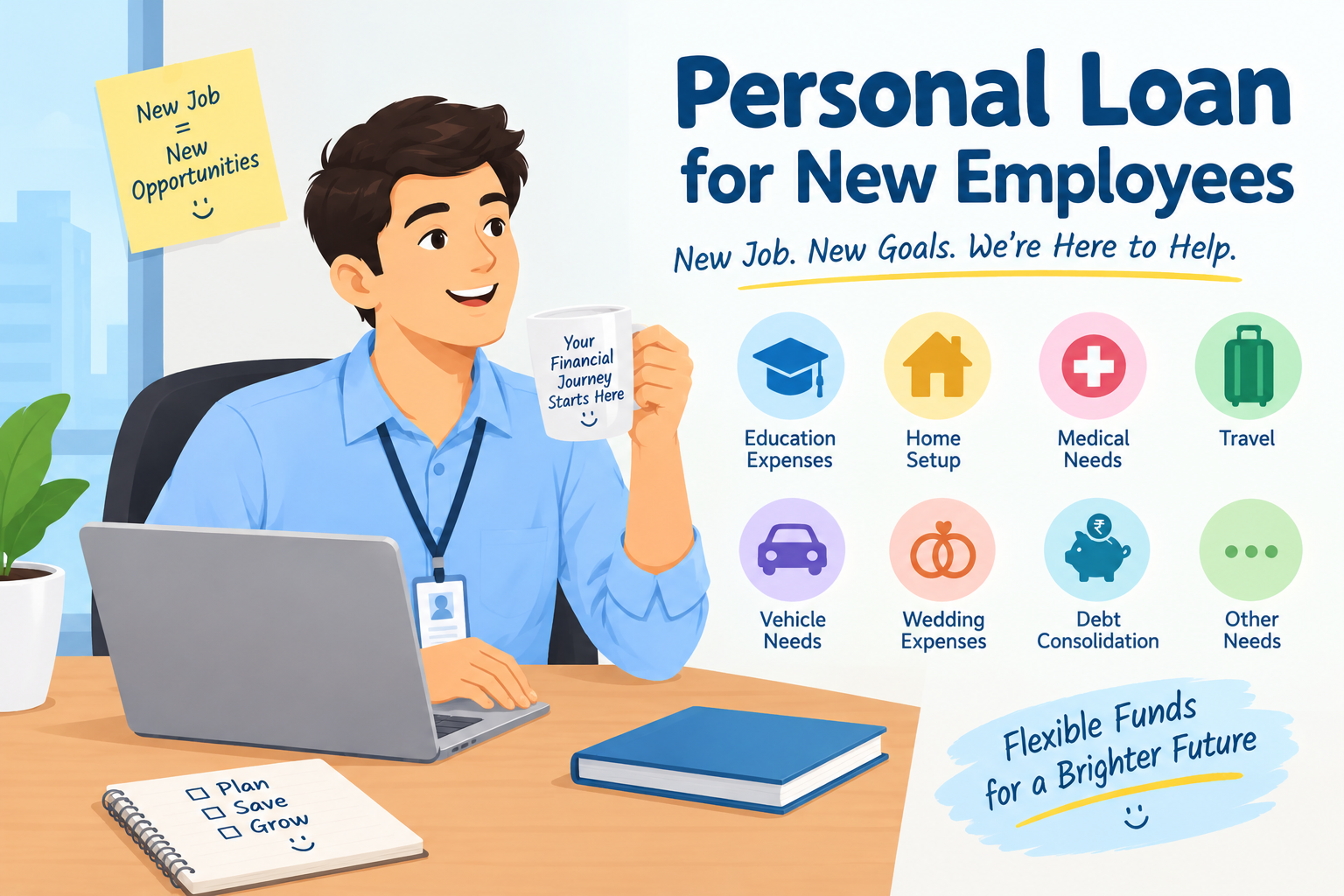
Starting a new job is an exciting phase of life, but it may also bring financial responsibilities such as relocation, setting up a home, education expenses, travel costs, medical needs, or emergency expenses.
A personal loan for new employees can provide access to funds without requiring collateral. Since personal loans are generally unsecured, lenders may evaluate salary, employment stability, credit history, work experience, and repayment capacity before approving an application.
New employees, including freshers and first-time salaried individuals, may be eligible for personal loans depending on the lender's criteria. This guide explains eligibility, required documents, EMI, interest rates, application steps, and important factors to consider before borrowing.
AI Answer Box
Can New Employees Get Personal Loans?
Yes. Eligible new employees may apply for personal loans depending on factors such as:
- Monthly salary
- Employment type
- Company profile
- Work experience
- Credit history
- Existing financial obligations
- Lender policies
Personal loans are generally unsecured, meaning borrowers usually do not have to pledge assets as collateral.
What Is a Personal Loan for New Employees?
A personal loan for new employees is an unsecured loan offered to eligible salaried individuals who have recently started employment.
The loan amount is repaid through fixed monthly instalments called EMIs.
Common Uses
- Relocation expenses
- House rent deposit
- Home setup costs
- Education expenses
- Medical emergencies
- Travel
- Wedding expenses
- Gadget purchases
- Debt consolidation
- Other personal needs
Key Features
| Feature | Details |
|---|---|
| Loan Type | Usually unsecured |
| Collateral | Generally not required |
| Applicant | Newly employed salaried individuals |
| Repayment | Monthly EMI |
| Documentation | KYC and income proof |
| Loan Usage | Flexible |
| Interest Rate | Depends on lender and borrower profile |
| Approval | Subject to lender assessment |
Why New Employees May Need a Personal Loan
Starting a career often involves additional expenses.
Examples include:
- Moving to a new city
- Paying rental deposits
- Purchasing furniture
- Buying a laptop or work essentials
- Managing emergency expenses
- Supporting higher education
- Handling family expenses
A personal loan can help manage these expenses, but borrowers should consider repayment obligations before applying.
Personal Loan Eligibility for New Employees
Eligibility differs across lenders.
Common Factors Considered
Age
Applicants generally need to meet the lender's age criteria.
Salary
Monthly income helps determine repayment capacity.
Work Experience
Some lenders may require a minimum period of employment.
Employer Profile
Company type and employment status may be considered.
Credit History
Existing credit behaviour can affect eligibility.
Existing EMIs
Current debt obligations may influence approval.
Eligibility Checklist
Before applying, check:
- Regular salary income
- Active employment
- Valid KYC documents
- Bank account details
- Manageable existing debt
- Stable repayment capacity
Meeting these conditions does not guarantee approval because lenders use their own credit assessment methods.
Documents Required
Identity Proof
- Aadhaar
- PAN
- Passport
- Driving Licence
- Voter ID
Income Documents
- Salary slips
- Bank statements
- Form 16 (if applicable)
Employment Documents
- Employee ID
- Offer letter
- Appointment letter
- Employer details
Document requirements vary by lender.
Personal Loan Interest Rate for New Employees
Interest rates may depend on:
- Salary
- Credit profile
- Employer category
- Work experience
- Loan amount
- Repayment tenure
- Existing liabilities
Cost Comparison Table
| Cost Factor | Importance |
|---|---|
| Interest Rate | Determines borrowing cost |
| Processing Fee | Additional cost |
| Taxes | May apply on charges |
| Late Fees | Applicable for delayed payments |
| Prepayment Charges | Important for early closure |
| Foreclosure Charges | Check before loan acceptance |
Personal Loan EMI for New Employees
EMI depends on:
- Loan amount
- Interest rate
- Loan tenure
Example EMI Factors
| Loan Amount | Tenure | EMI Impact |
|---|---|---|
| Lower Amount | Short Tenure | Higher EMI |
| Higher Amount | Long Tenure | Lower EMI but higher total interest |
Choose an EMI that fits comfortably within your monthly budget.
Personal Loan for Freshers
Freshers may be eligible for personal loans depending on:
- Salary
- Employer profile
- Credit history
- Employment duration
- Repayment capacity
Freshers without a credit history should borrow carefully and maintain timely repayments to build a healthy credit profile.
How to Apply for a Personal Loan Online
Step 1: Check Eligibility
Review lender requirements.
Step 2: Compare Loan Offers
Compare:
- Interest rate
- EMI
- Processing fee
- Total repayment
- Other charges
Step 3: Submit Application
Provide accurate personal and employment details.
Step 4: Upload Documents
Submit required documents.
Step 5: Verification
Lenders may verify:
- Identity
- Employment
- Income
- Credit information
Step 6: Review Offer
Read:
- Loan agreement
- KFS (Key Facts Statement)
- EMI details
- Charges
Step 7: Loan Disbursement
Approved loans are disbursed according to lender processes.
Tips to Improve Approval Chances
- Maintain a healthy credit score.
- Avoid multiple applications.
- Keep debt low.
- Submit accurate documents.
- Maintain stable employment.
- Borrow only what is necessary.
Pros and Cons
| Pros | Cons |
|---|---|
| No collateral required | Monthly repayment obligation |
| Flexible use | Interest cost |
| Online application | Processing charges |
| Fixed EMI | Approval not guaranteed |
| Helps manage expenses | Late payments affect credit profile |
Personal Loan vs Credit Card
| Feature | Personal Loan | Credit Card |
|---|---|---|
| Loan Amount | Higher | Depends on card limit |
| Repayment | EMI | Revolving credit |
| Interest | Depends on lender | May be higher |
| Usage | Flexible | Purchases and cash withdrawals |
Real-World Experience Point
Many newly employed individuals use personal loans for relocation and home setup expenses when moving to another city for work.
Responsible borrowing includes:
- Planning EMI before applying
- Maintaining emergency savings
- Avoiding unnecessary borrowing
Expert Commentary
Financial experts suggest that new employees should focus on affordability rather than the maximum loan amount available.
Questions to ask before borrowing:
- Do I really need this loan?
- Can I comfortably repay the EMI?
- Have I compared offers?
- Have I checked total costs?
Borrowing responsibly can help maintain long-term financial stability.
Key Takeaways
- Personal loans for new employees are generally unsecured.
- Eligibility depends on salary, employment and repayment capacity.
- Freshers may qualify based on lender policies.
- Compare total costs, not just EMI.
- Review KFS and loan agreement carefully.
- Borrow only what is needed.
Frequently Asked Questions (FAQs)
1. Can new employees get personal loans?
Yes. Eligible new employees may apply based on lender criteria.
2. Can freshers get personal loans?
Some lenders may offer loans to eligible freshers.
3. Is collateral required?
Generally, no.
4. Does work experience matter?
Some lenders may consider employment duration.
5. What documents are required?
KYC, salary slips, bank statements, and employment documents.
6. Can new employees apply online?
Yes, many lenders offer online applications.
7. Does salary affect eligibility?
Yes.
8. Does credit score matter?
Credit history may influence lender decisions.
9. Can I prepay a personal loan?
Depends on lender terms.
10. Is EMI fixed?
Usually, yes.
11. Can I use a personal loan for relocation?
Yes, depending on lender terms.
12. Should I compare lenders?
Yes.
13. Are processing fees applicable?
They may apply depending on lender policies.
14. Is approval guaranteed?
No.
15. Should freshers borrow carefully?
Yes. Responsible borrowing is important.
Conclusion
A personal loan for new employees can help manage expenses related to relocation, home setup, education, emergencies, and other personal needs.
Before applying, compare interest rates, EMI, fees, and total repayment cost. Borrow only an amount that comfortably fits your budget and review all terms carefully.
Responsible borrowing helps maintain financial stability and a healthy credit profile.
Published on : 07th October 2026
Published by : Bhargavi
www.vizzve.com || www.vizzveservices.com
Follow us on social media: Facebook || Linkedin || Instagram
🛡 Powered by Vizzve Financial
RBI-Registered Loan Partner | 10 Lakh+ Customers | ₹600 Cr+ Disbursed