

A personal loan for salaried employees is an unsecured loan offered to individuals who earn a regular salary from an employer.
Unlike secured loans, it generally does not require collateral. Borrowers can use the funds for various personal financial needs, subject to the lender's terms and conditions.
Common uses include:
-
Medical and emergency expenses.
-
Home renovation and repairs.
-
Education-related expenses.
-
Wedding and travel costs.
-
Debt consolidation.
-
Unexpected household expenses.
2. Eligibility Criteria for Salaried Employees
Eligibility requirements differ between lenders. However, common factors include:
|
Eligibility Factor |
General Requirement |
|---|---|
|
Employment |
Regular salaried employment |
|
Monthly Income |
Meets lender's minimum salary requirement |
|
Age |
Within the lender's permitted age range |
|
Credit Score |
Meets lender's credit assessment criteria |
|
Work Experience |
Sufficient employment history |
|
Repayment Capacity |
Manageable existing financial obligations |
Meeting these requirements does not guarantee loan approval. Final decisions depend on the lender's assessment.
3. Documents Required for a Personal Loan
Salaried employees may need to submit the following documents:
-
PAN card for identity verification.
-
Aadhaar or another accepted address proof.
-
Recent salary slips.
-
Bank statements showing salary credits.
-
Employee ID or employment details, if required.
-
Recent photograph, if applicable.
Digital lenders may also offer online KYC and document verification processes.
4. Benefits of Personal Loans for Salaried Employees
1. No Collateral Requirement: Personal loans are generally unsecured, so borrowers do not need to pledge assets.
2. Predictable Monthly Income: Regular salary credits can help lenders evaluate repayment capacity.
3. Flexible Usage: Loan funds can be used for various personal financial requirements.
4. Convenient Application: Many lenders provide online application and verification facilities.
5. Fixed EMI Options: Personal loans with fixed interest rates generally offer predictable monthly repayments.
5. How to Apply for a Personal Loan
Salaried employees can generally follow these steps:
-
Compare loan offers from regulated banks and NBFCs.
-
Check eligibility and applicable interest rates.
-
Complete the loan application.
-
Submit PAN, KYC and income documents.
-
Complete the lender's verification process.
-
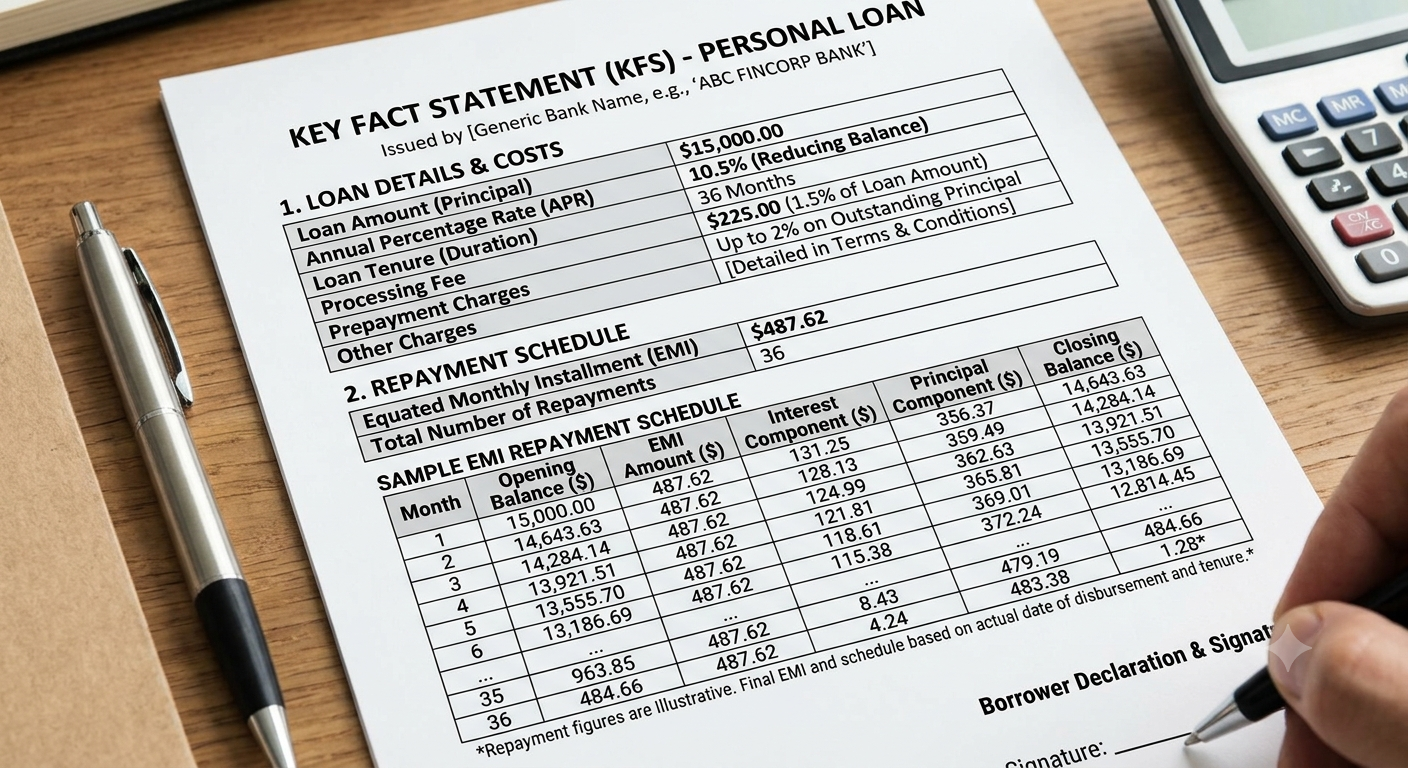
Review the Key Facts Statement (KFS), APR and EMI details.
-
Accept the loan agreement only after understanding the terms.
Loan approval and disbursal depend on the lender's verification and final decision.
6. Tips to Improve Personal Loan Eligibility
Salaried employees can strengthen their loan applications by:
-
Maintaining a healthy credit score.
-
Paying existing EMIs on time.
-
Avoiding multiple loan applications within a short period.
-
Keeping salary and bank records updated.
-
Reducing unnecessary outstanding debt.
-
Choosing a loan amount that matches repayment capacity.
7. Things to Check Before Accepting a Loan
Before accepting a personal loan, carefully review the interest rate, APR, processing fees, repayment tenure, EMI and applicable penal charges.
Always verify that the actual lender is an RBI-regulated bank or NBFC. Read the KFS and loan agreement before accepting the offer.
Frequently Asked Questions (FAQs)
Q1. Can salaried employees apply for personal loans online?
Yes. Many banks and NBFCs offer online personal loan applications.
Q2. Is a salary slip mandatory?
Not always. Lenders may accept other income documents, such as bank statements, depending on their policies.
Q3. Can employees with existing EMIs apply?
Yes, but existing financial obligations may affect loan eligibility and repayment capacity.
Q4. Does a personal loan require collateral?
Generally, no. Personal loans are usually unsecured.
Q5. Does a good CIBIL score guarantee approval?
No. Lenders also consider income, employment stability and existing debt.
Conclusion
A personal loan can help salaried employees manage planned expenses and unexpected financial requirements. However, responsible borrowing requires checking eligibility, comparing APR, understanding EMIs and reviewing all applicable charges.