

Introduction
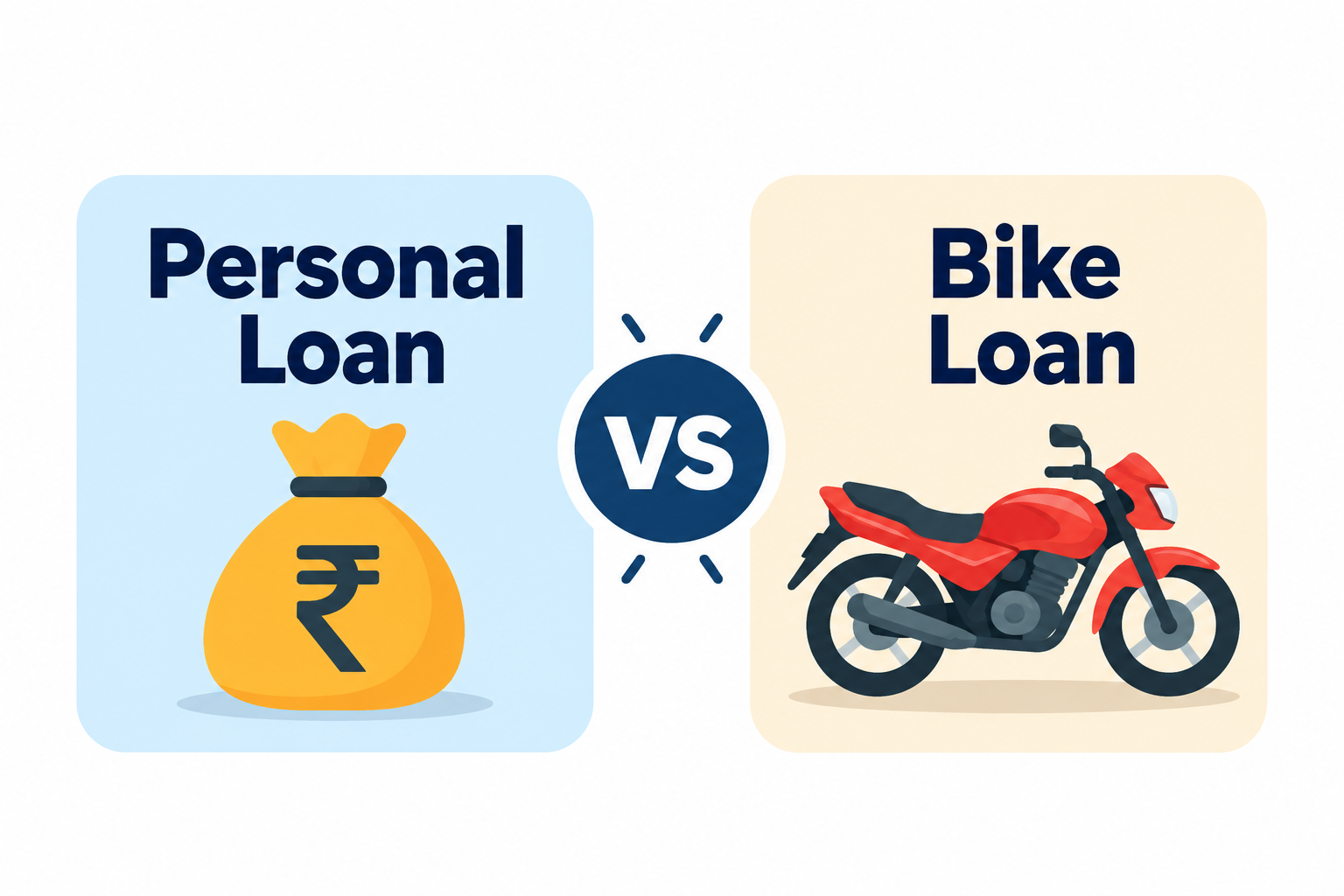
Buying a bike is a major financial decision, especially when you do not want to pay the entire amount upfront. Two common financing options are a personal loan and a bike loan (two-wheeler loan).
A personal loan is generally unsecured and can be used for different purposes, including buying a bike. A bike loan is specifically designed for purchasing a two-wheeler and is generally secured against the vehicle.
So, which one should you choose? The answer depends on the interest rate, loan amount, EMI, tenure, down payment, collateral and your financial situation.
What Is a Personal Loan?
A personal loan is usually an unsecured loan, meaning you generally do not need to pledge an asset as collateral.
You can use the money for various legitimate personal needs, including purchasing a bike. Because the lender does not have the bike as security, the interest rate may be higher than that of a secured bike loan.
Key Features
- No vehicle collateral
- Flexible end use
- Loan amount depends on income and credit profile
- Flexible repayment options may be available
- Can be used for a bike and other expenses
- Interest rate varies by lender and borrower profile
What Is a Bike Loan?
A bike loan, also called a two-wheeler loan, is specifically designed to finance the purchase of a motorcycle or scooter.
The vehicle generally acts as security for the loan until repayment is completed. This can allow lenders to offer comparatively lower rates than an unsecured personal loan, although actual rates vary between lenders.
Key Features
- Designed specifically for two-wheeler purchases
- Bike generally serves as collateral
- May require a down payment
- Loan amount is linked to the vehicle purchase
- Repayment tenure is generally linked to the lender's product
- Loan cannot normally be used for unrelated expenses
Personal Loan vs Bike Loan: Key Differences
| Feature | Personal Loan | Bike Loan |
|---|---|---|
| Purpose | Multiple personal needs | Buying a bike/scooter |
| Collateral | Usually not required | Bike generally acts as security |
| Interest Rate | Generally higher | Often comparatively lower |
| Loan Amount | Based on income and credit profile | Linked to bike cost and lender policy |
| Down Payment | Usually not applicable as a loan requirement | May be required |
| Flexibility | High | Limited to vehicle purchase |
| Tenure | Can be more flexible | Usually linked to two-wheeler loan terms |
| Risk | No vehicle attached as collateral | Vehicle may be at risk in case of default |
The exact rate, tenure, funding percentage and charges depend on the lender and borrower profile.
Personal Loan vs Bike Loan: Interest Rate
Interest rate is one of the most important factors.
A bike loan is secured by the vehicle, reducing the lender's risk. Therefore, it can often have a lower interest rate than an unsecured personal loan. However, borrowers should compare the actual annual interest rate, processing fee and other charges, rather than choosing a loan based only on the advertised rate.
Which Loan Has Lower EMI?
Your EMI depends on:
- Loan amount
- Interest rate
- Repayment tenure
- Processing and other applicable charges
A lower interest rate can reduce the total interest cost, while a longer tenure can reduce the monthly EMI but may increase the overall interest paid.
Before applying, compare the total repayment amount, not just the EMI.
Which Is Easier to Get?
Approval depends on the lender's eligibility criteria.
Lenders may consider:
- Age
- Monthly income
- Employment or business stability
- Credit history
- Existing debts
- Repayment capacity
- Required documents
A strong credit profile and stable income can improve your chances of getting competitive loan terms.
Advantages of a Personal Loan for Buying a Bike
- No vehicle collateral in a typical unsecured personal loan
- Flexible use of funds
- Can potentially finance additional eligible expenses
- May offer longer repayment options depending on the lender
- Useful when you need funds for purposes beyond the bike purchase
Disadvantages
- Interest may be higher
- Processing charges may apply
- Eligibility can depend strongly on income and credit history
- Longer tenure can increase total interest cost
Advantages of a Bike Loan
- Specifically designed for bike purchases
- Usually secured against the vehicle
- Interest can be lower than an unsecured personal loan
- Loan structure is directly linked to the vehicle purchase
- May be suitable for borrowers who only need financing for the bike
Disadvantages
- Vehicle acts as security
- Down payment may be required
- Funds are restricted to the two-wheeler purchase
- Default can create a risk of vehicle repossession under applicable loan terms
Which Is Better: Personal Loan or Bike Loan?
A bike loan may be better if your main goal is simply to purchase a bike and you can meet the lender's requirements. Its purpose-specific structure and secured nature can make it cost-effective.
A personal loan may be better if you need greater flexibility and want to use the borrowed money for more than the bike purchase.
Before choosing, compare:
- Interest rate
- Processing fee
- Down payment
- Loan tenure
- Monthly EMI
- Total repayment amount
- Prepayment/foreclosure terms
- Your monthly repayment capacity
Example
Suppose you want to purchase a bike costing ₹1,50,000.
You could compare a personal loan and a bike loan based on:
| Factor | Personal Loan | Bike Loan |
|---|---|---|
| Loan Requirement | ₹1,50,000 | ₹1,50,000 |
| Security | Usually none | Bike |
| Purpose | Flexible | Bike purchase |
| Interest | Compare lender offers | Compare lender offers |
| EMI | Depends on rate & tenure | Depends on rate & tenure |
| Total Cost | Depends on charges | Depends on charges |
The actual EMI should be calculated using the lender's current rate and repayment terms rather than assuming that one loan will always be cheaper.
How to Choose the Right Loan
Choose a Bike Loan when:
- You are buying a bike specifically.
- You want a purpose-specific loan.
- The offered interest rate is competitive.
- You are comfortable with the bike being security for the loan.
Choose a Personal Loan when:
- You need flexible use of funds.
- You do not want the bike to serve as collateral.
- You receive a competitive personal-loan offer.
- You need financing for multiple eligible personal expenses.
Vizzve: Borrow Responsibly
Before taking any loan, understand the interest rate, processing fees, repayment schedule, late-payment charges and other applicable terms. Compare your options and make sure the EMI fits comfortably within your monthly budget.
If you are considering a personal loan, explore the available options from Vizzve and review the applicable eligibility and loan terms before making a borrowing decision.
Key Takeaways
- A personal loan is generally unsecured and flexible.
- A bike loan is specifically designed for two-wheeler purchases.
- A bike loan generally uses the vehicle as security.
- Personal loans can have higher interest because they are generally unsecured.
- Compare the total cost, not just the EMI.
- Choose the loan that matches your income, repayment capacity and financial goals.
Conclusion
There is no single best choice between a personal loan and a bike loan for every borrower. A bike loan can be suitable when you only need financing for a two-wheeler, while a personal loan can provide greater flexibility.
Before applying, compare interest rates, fees, tenure, EMI and total repayment costs. Most importantly, choose a loan that you can comfortably repay without putting unnecessary pressure on your monthly budget.
FAQs
1. Is a personal loan better than a bike loan?
It depends on your requirements. A bike loan may be suitable for a dedicated bike purchase, while a personal loan offers greater flexibility.
2. Can I use a personal loan to buy a bike?
Yes, a personal loan can generally be used for a bike purchase because it is not restricted to a specific end use.
3. Is a bike loan secured?
Generally, yes. The financed two-wheeler serves as security for the loan.
4. Which has a lower interest rate?
Bike loans often have lower rates than unsecured personal loans, but actual rates vary by lender and borrower profile.
5. Does a personal loan require collateral?
A typical unsecured personal loan does not require collateral.
6. Can I get 100% bike financing?
Some lenders may offer high financing percentages, but the amount depends on the lender, vehicle and borrower eligibility.
7. Which loan has a lower EMI?
The EMI depends on the loan amount, interest rate and tenure. Always compare the total repayment cost.
8. Does my credit score matter?
Yes. Credit history and repayment capacity can influence loan approval and the terms offered.
9. Can I prepay a bike loan?
Prepayment may be possible, but applicable conditions and charges depend on the lender and loan agreement.
10. Should I take a longer loan tenure?
A longer tenure can reduce the monthly EMI but may increase the total interest paid.
11. Can I use a bike loan for other expenses?
Generally, no. A bike loan is intended specifically for purchasing the financed two-wheeler.
12. What should I compare before taking a loan?
Compare interest rate, processing fees, down payment, tenure, EMI, total repayment and prepayment terms.
Conclusion
Choosing between a Personal Loan and a Bike Loan depends on your financial needs and repayment capacity. A bike loan can be a suitable option when you only need funds to purchase a two-wheeler, while a personal loan offers greater flexibility in how you use the funds. Before applying, compare the interest rate, EMI, processing fees, tenure, down payment, and total repayment cost. Choose the loan that fits comfortably within your monthly budget and financial goals.
Published on : 07th October 2026
Published by : monisha
www.vizzve.com || www.vizzveservices.com
Follow us on social media: Facebook || Linkedin || Instagram
🛡 Powered by Vizzve Financial
RBI-Registered Loan Partner | 10 Lakh+ Customers | ₹600 Cr+ Disbursed