

Introduction
Unexpected expenses can arise at any time. A medical bill, urgent home repair, vehicle breakdown, or sudden loss of income can create financial stress. During these situations, people often face one important question: should they use their emergency fund or apply for a personal loan?
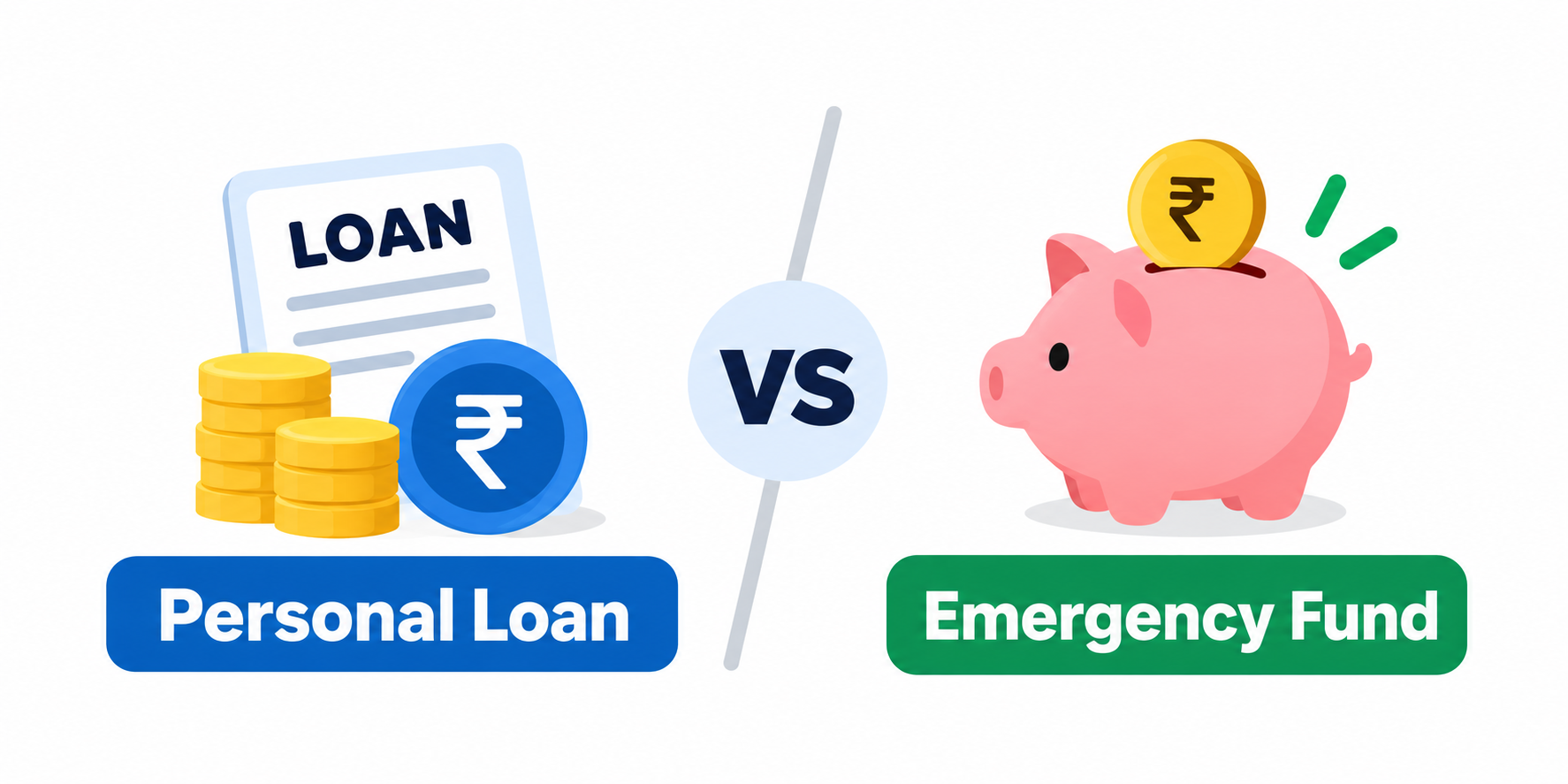
Both options can help manage financial difficulties, but they work differently. An emergency fund is money saved for unexpected expenses, while a personal loan provides borrowed money that must be repaid with interest and applicable charges.
In this guide, Vizzve Finance explains the differences between a personal loan and an emergency fund, their advantages and disadvantages, and how to choose the right option for your financial situation.
What Is an Emergency Fund?
An emergency fund is a dedicated savings reserve used for unexpected and essential expenses. It helps individuals and families manage financial emergencies without immediately depending on loans or credit cards.
Common situations where an emergency fund can help include:
-
Unexpected medical expenses.
-
Temporary job loss or salary delays.
-
Urgent home or vehicle repairs.
-
Essential family-related emergencies.
-
Unexpected travel expenses.
Benefits of an Emergency Fund
-
No borrowing costs: You generally do not pay interest to use your own savings.
-
Immediate access: Accessible savings can help you pay urgent expenses without loan approval.
-
Less financial stress: You avoid adding another monthly EMI to your budget.
-
Greater financial independence: You can manage unexpected expenses using your own resources.
Limitations of an Emergency Fund
An emergency fund is limited to the amount you have saved. A major medical expense or prolonged loss of income could exhaust your savings. Rebuilding the fund after using it also requires time and financial discipline.
What Is a Personal Loan?
A personal loan is an unsecured loan offered by a bank or eligible lending institution. It allows borrowers to access money for eligible personal expenses without providing property or other assets as collateral.
Depending on the lender's terms, borrowers may use personal loans for expenses such as:
-
Medical emergencies.
-
Essential home repairs.
-
Urgent family requirements.
-
Necessary travel.
-
Other unavoidable expenses.
Benefits of a Personal Loan
-
Additional funds: A loan may cover expenses that exceed your available savings.
-
Structured repayment: Monthly EMIs can help spread repayment over an agreed period.
-
No collateral in most standard personal loans: Approval depends on the lender's eligibility criteria.
-
Flexible use: Funds may be used for various permitted personal expenses.
Limitations of a Personal Loan
-
Interest increases the total amount you repay.
-
Processing fees and other applicable charges may increase the cost.
-
Approval and disbursal are not guaranteed.
-
Monthly EMIs reduce the money available for regular expenses.
-
Missed payments may affect your credit history and lead to additional charges.
Always review the interest rate, Key Facts Statement (KFS), total repayment amount, fees, and repayment schedule before accepting a loan.
Personal Loan vs Emergency Fund: Key Differences
| Feature | Emergency Fund | Personal Loan |
|---|---|---|
| Source of money | Your own savings | Borrowed money |
| Interest cost | No loan interest | Interest applies |
| Access to funds | Usually immediate if liquid | Subject to approval and disbursal |
| Available amount | Limited to savings | Depends on eligibility |
| Monthly EMI | None | Usually required |
| Repayment obligation | Rebuild savings when possible | Repay according to the loan agreement |
| Financial risk | Savings may decrease | Debt and repayment burden increase |
| Best suited for | Expenses covered by savings | Urgent expenses when savings are insufficient |
The key difference is simple: an emergency fund uses money you already own, while a personal loan creates a repayment obligation.
When Should You Use an Emergency Fund?
Using your emergency fund is generally a sensible first option when you have sufficient accessible savings to cover an unexpected expense without compromising your ability to pay for essential needs.
Consider using it when:
-
You have enough savings to cover the expense.
-
The expense is urgent and unavoidable.
-
You want to avoid paying loan interest.
-
You can retain some savings for other immediate needs.
Example: Suppose your vehicle requires an urgent repair costing ₹12,000. If you have sufficient emergency savings, paying from that fund may be cheaper than borrowing money and paying interest.
However, avoid using emergency savings for non-essential shopping, luxury purchases, or expenses that can reasonably be postponed.
When Should You Consider a Personal Loan?
A personal loan may be worth considering when an expense is urgent, your available savings are insufficient, and you have a realistic plan to repay the borrowing.
Consider this option when:
-
Your emergency fund cannot cover a large essential expense.
-
Your available savings are already depleted.
-
The expense cannot be postponed.
-
Insurance or other suitable funding options are insufficient.
-
The proposed EMI fits comfortably within your budget.
Example: Imagine an unavoidable expense of ₹80,000 when you have only ₹20,000 in accessible emergency savings. After exploring insurance, payment arrangements, and other suitable options, a personal loan may help cover the remaining amount if the borrowing cost and EMI are affordable.
Do not borrow simply because a loan is available. Calculate the full cost and consider whether your income can support the repayments.
How Much Should You Keep in an Emergency Fund?
A common financial planning guideline is to aim for three to six months of essential living expenses. People with dependents, irregular income, or greater financial responsibilities may need a larger reserve.
For example, if your essential monthly expenses are ₹20,000, your savings target could be:
| Coverage period | Emergency fund target |
|---|---|
| 1 month | ₹20,000 |
| 3 months | ₹60,000 |
| 6 months | ₹1,20,000 |
Start with a manageable target if saving several months of expenses feels difficult. Even small, consistent contributions can help build financial security over time.
Keep emergency money in an accessible, relatively low-risk place rather than relying entirely on investments that may fluctuate in value or take time to withdraw.
How to Decide Between a Personal Loan and an Emergency Fund
Follow these practical steps before making a decision.
Step 1: Calculate the Expense
Determine exactly how much money you need and whether the expense is urgent.
Step 2: Check Your Available Savings
Review your accessible savings and any insurance coverage that may apply.
Step 3: Compare Other Options
Check whether you can negotiate a payment plan, use an appropriate insurance benefit, or access another lower-cost funding source.
Step 4: Calculate the Total Loan Cost
Review the interest rate, processing fees, applicable taxes and charges, EMI, tenure, and total repayment amount.
Step 5: Check Your Repayment Capacity
Make sure the EMI leaves enough money for rent, groceries, utilities, existing debt repayments, and other essential expenses.
Step 6: Choose the More Affordable Option
Use savings when they can cover the expense without leaving you financially exposed. Consider borrowing only when necessary and when repayment is manageable.
Common Mistakes to Avoid
-
Spending emergency savings on non-essential purchases.
-
Taking a loan without comparing the total cost.
-
Ignoring processing fees and other charges.
-
Borrowing more than the actual requirement.
-
Choosing an EMI that strains your monthly budget.
-
Failing to rebuild emergency savings after using them.
-
Relying on loans repeatedly instead of developing a savings plan.
How Vizzve Finance Can Help You Make Informed Financial Decisions
Vizzve Finance encourages individuals to understand their financial options before making borrowing decisions. Learning about loan costs, repayment obligations, savings strategies, and budgeting can help you prepare for unexpected expenses.
Before considering any personal loan, review the lender's terms, verify its legitimacy, and assess your repayment capacity. Borrow responsibly and select an option that supports your financial well-being.
Key Takeaways
-
An emergency fund helps cover unexpected expenses without taking on new debt.
-
A personal loan can provide additional money when savings are insufficient.
-
Emergency savings generally avoid loan interest and mandatory EMIs.
-
Personal loans involve interest, applicable fees, and repayment obligations.
-
Aim to build an emergency fund covering three to six months of essential expenses.
-
Compare all available options before borrowing.
-
Choose a loan only when the expense is necessary and the repayment plan is affordable.
Conclusion
Choosing between a personal loan and an emergency fund depends on your savings, the urgency of the expense, and your ability to repay borrowed money.
An emergency fund is generally the first option when sufficient accessible savings are available. A personal loan may be useful when an unavoidable expense exceeds your savings, but it comes with additional costs and financial responsibilities.
The best long-term strategy is to build emergency savings while understanding responsible borrowing options. With proper planning and informed decisions, you can manage unexpected expenses and work towards greater financial stability with Vizzve Finance.
Frequently Asked Questions (FAQs)
1. Is a personal loan better than an emergency fund?
Generally, an emergency fund is more cost-effective when it can cover the expense. A personal loan may help when savings are insufficient and the expense cannot be postponed.
2. What is the main difference between a personal loan and an emergency fund?
An emergency fund is your own saved money, whereas a personal loan is borrowed money that must be repaid with interest and applicable charges.
3. Can I use a personal loan for medical emergencies?
Depending on the lender's terms, a personal loan may be used for eligible medical expenses. Compare the borrowing cost and repayment terms before applying.
4. How much emergency savings should I have?
A common guideline is three to six months of essential living expenses, adjusted to your income stability and financial responsibilities.
5. Does an emergency fund have interest charges?
No loan interest is charged when you use your own emergency savings. However, the savings account or investment holding the money may have its own terms.
6. Can I take a personal loan if I have savings?
Yes, subject to lender eligibility. However, compare the cost of borrowing against the benefit of retaining savings before deciding.
7. What happens if my emergency fund is insufficient?
Explore insurance coverage, payment arrangements, and other suitable funding options. A personal loan may be considered if the need is urgent and repayment is affordable.
8. Does taking a personal loan affect my credit score?
Applying for or taking a personal loan can affect your credit profile. Repaying EMIs on time helps maintain a positive repayment history, while missed payments may harm it.
9. Is a personal loan suitable for job loss?
It may provide temporary financial support if savings are insufficient, but new EMIs can increase financial pressure. Assess your future income and other support options carefully.
10. Where should I keep my emergency fund?
Consider accessible savings accounts or other suitable low-risk, liquid options. Understand withdrawal conditions and avoid placing the entire fund in volatile or difficult-to-access investments.
11. Should I use all my emergency savings to pay an expense?
Not automatically. Consider the urgency, amount required, remaining savings, and other available options before deciding.
12. Can I build an emergency fund with a low salary?
Yes. Start with small, regular contributions and gradually increase them when your income or expenses allow.
13. Is a personal loan cheaper than using savings?
Using your own savings usually avoids borrowing costs. Compare the loan's total cost with the financial security you would lose by using your savings.
14. Can I rebuild my emergency fund after using it?
Yes. Set a realistic monthly savings target and replenish the fund gradually while keeping up with essential expenses and any existing loan repayments.
15. What is the best financial strategy for emergencies?
Build accessible emergency savings, maintain suitable insurance, manage your budget, and understand responsible borrowing options for expenses that exceed your available resources.
Disclaimer
This article is for educational and informational purposes only and does not constitute financial advice or a loan offer. Loan approval, eligibility, interest rates, fees, and terms depend on the lender and the applicant's circumstances. Verify all applicable terms before making a financial decision.
Published on : 9th October
Published by :MONISHA
www.vizzve.com || www.vizzveservices.com
Follow us on social media: Facebook || Linkedin || Instagram
🛡 Powered by Vizzve Financial
RBI-Registered Loan Partner | 10 Lakh+ Customers | ₹600 Cr+ Disbursed