

Introduction
Unexpected expenses can arise at any time, from medical bills and household needs to urgent travel costs. When you need extra money before your next payday, a salary advance or personal loan may be worth considering.
Although both options provide access to money, they differ in eligibility, borrowing limits, repayment periods, and costs. Understanding these differences can help you select an option that suits your financial situation.
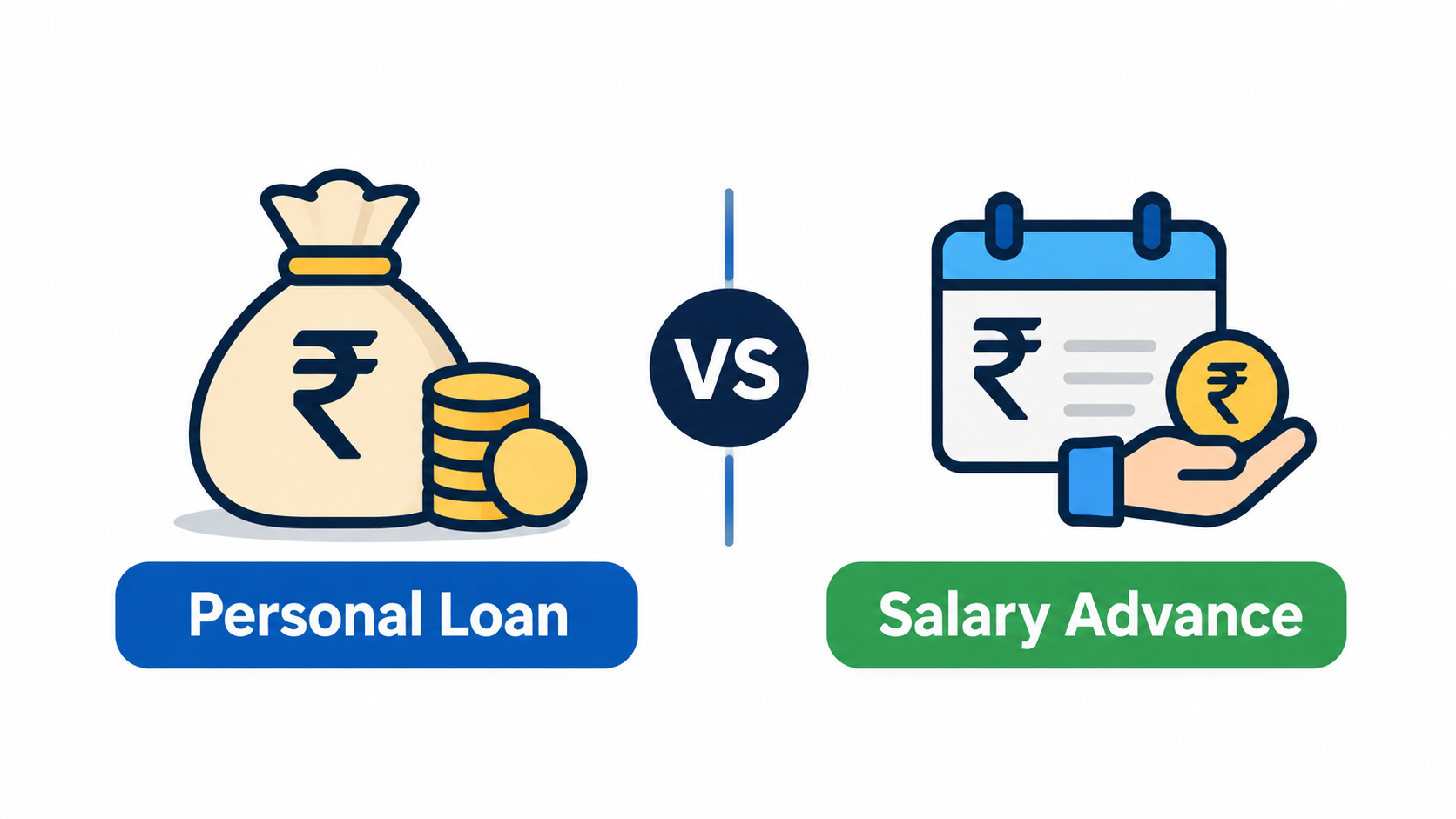
In this guide, Vizzve explains personal loans versus salary advances, their benefits, limitations, and the factors to consider before borrowing.
What Is a Personal Loan?
A personal loan is an unsecured loan offered by a bank or eligible financial institution. Borrowers can use the money for various personal expenses without pledging assets as collateral.
Benefits of a Personal Loan
-
Can provide a larger amount, depending on eligibility.
-
May offer repayment periods spread over several months or years.
-
Can be used for medical expenses, education, travel, or other permitted needs.
-
Provides a defined repayment schedule through EMIs.
Limitations of a Personal Loan
-
Interest and processing fees may increase the total cost.
-
Approval depends on the lender's eligibility criteria.
-
A credit check and income verification may be required.
-
Missed payments can affect your credit history.
What Is a Salary Advance?
A salary advance is money received before your regular payday. It may be provided by an employer as an advance against earned or upcoming salary, or through a third-party service under its own terms.
Employer-provided advances may be deducted from a future salary. Third-party salary advance products can have different fees, repayment arrangements, and eligibility requirements.
Benefits of a Salary Advance
-
May help cover small, urgent expenses.
-
Employer-provided advances may have low or no interest, depending on company policy.
-
Repayment may be aligned with the next payday.
-
It may involve a simpler process when offered directly by an employer.
Limitations of a Salary Advance
-
The amount may be limited.
-
Repayment from the next salary can reduce money available for regular expenses.
-
Third-party providers may charge fees or interest.
-
Availability depends on employer policies or provider eligibility.
Personal Loan vs Salary Advance: Key Differences
| Feature | Personal Loan | Salary Advance |
|---|---|---|
| Main purpose | Short- or medium-term financial needs | Expenses before payday |
| Amount | Depends on income and eligibility | Often limited by salary or provider rules |
| Repayment | Usually monthly EMIs | Often deducted from upcoming salary or repaid on an agreed date |
| Interest and fees | Interest and applicable charges may apply | May be free through an employer or carry provider fees |
| Approval | Lender eligibility and verification | Employer policy or provider requirements |
| Repayment duration | May extend over several months or years | Usually shorter |
| Best suited for | Larger expenses requiring more time to repay | Smaller, immediate cash shortages |
Actual terms vary by lender, employer, and product.
Which Option Is Better for You?
A salary advance may be suitable when you need a relatively small amount to manage an urgent expense before payday and can comfortably cover the resulting salary deduction.
A personal loan may be more appropriate when you need a larger amount and require a structured repayment schedule over a longer period.
Before choosing either option, compare the total repayment amount, interest rate, processing fees, repayment date, and consequences of missed payments.
Important Factors to Consider Before Borrowing
-
Your requirement: Borrow only what you genuinely need.
-
Total cost: Check interest, processing fees, and other applicable charges.
-
Repayment capacity: Make sure repayments leave enough money for rent, food, bills, and other essentials.
-
Repayment period: Choose a timeline that fits your income and budget.
-
Lender credibility: Check the lender's identity, terms, privacy practices, and applicable regulatory status.
-
Alternatives: Consider employer assistance or savings before taking on new debt.
How Vizzve Can Help You Make an Informed Decision
Vizzve Finance encourages borrowers to understand their available options before making financial commitments. Compare loan terms carefully, review the repayment schedule, and choose borrowing that fits your needs and repayment capacity.
Always verify the applicable product terms, fees, and lender details before applying.
Frequently Asked Questions
1. What is the difference between a personal loan and a salary advance?
A personal loan is repaid according to an agreed loan schedule, while a salary advance is money received before payday and is often repaid from an upcoming salary.
2. Is a salary advance interest-free?
Not always. An advance from an employer may be interest-free, but third-party services can charge fees or interest.
3. Which option is better for emergency expenses?
It depends on the amount required, urgency, total cost, and your ability to repay.
4. Can I get a personal loan without collateral?
Many personal loans are unsecured, meaning they do not require collateral, but approval depends on the lender's criteria.
5. Does a salary advance affect my credit score?
An employer-provided advance generally differs from a credit product. A third-party product may affect your credit profile depending on how it is structured and reported.
6. Which option is easier to obtain?
An employer-provided salary advance may be simpler if your employer offers one. Personal loan approval depends on the lender's eligibility and verification process.
7. Can salaried employees apply for personal loans?
Yes, salaried employees may apply if they meet the lender's income, employment, credit, and other eligibility requirements.
8. What should I check before accepting a salary advance?
Check the amount, repayment date, salary deduction, fees, and whether the deduction will affect your essential expenses.
9. Can I repay a personal loan early?
Some lenders allow early repayment, subject to the loan agreement and any applicable prepayment charges.
10. Is borrowing always the best solution?
No. If possible, consider savings, an employer's assistance policy, or adjusting non-essential spending before borrowing.
Conclusion
Personal loans and salary advances serve different financial needs. A salary advance can help bridge a short-term cash shortage, while a personal loan may offer a structured way to finance larger expenses. Neither option is automatically better for everyone.
Compare the costs, repayment terms, and impact on your monthly budget before deciding. Responsible borrowing can help you manage emergencies without creating unnecessary financial pressure.
Published on : 10th October
Published by :MONISHA
www.vizzve.com || www.vizzveservices.com
Follow us on social media: Facebook || Linkedin || Instagram
🛡 Powered by Vizzve Financial
RBI-Registered Loan Partner | 10 Lakh+ Customers | ₹600 Cr+ Disbursed