

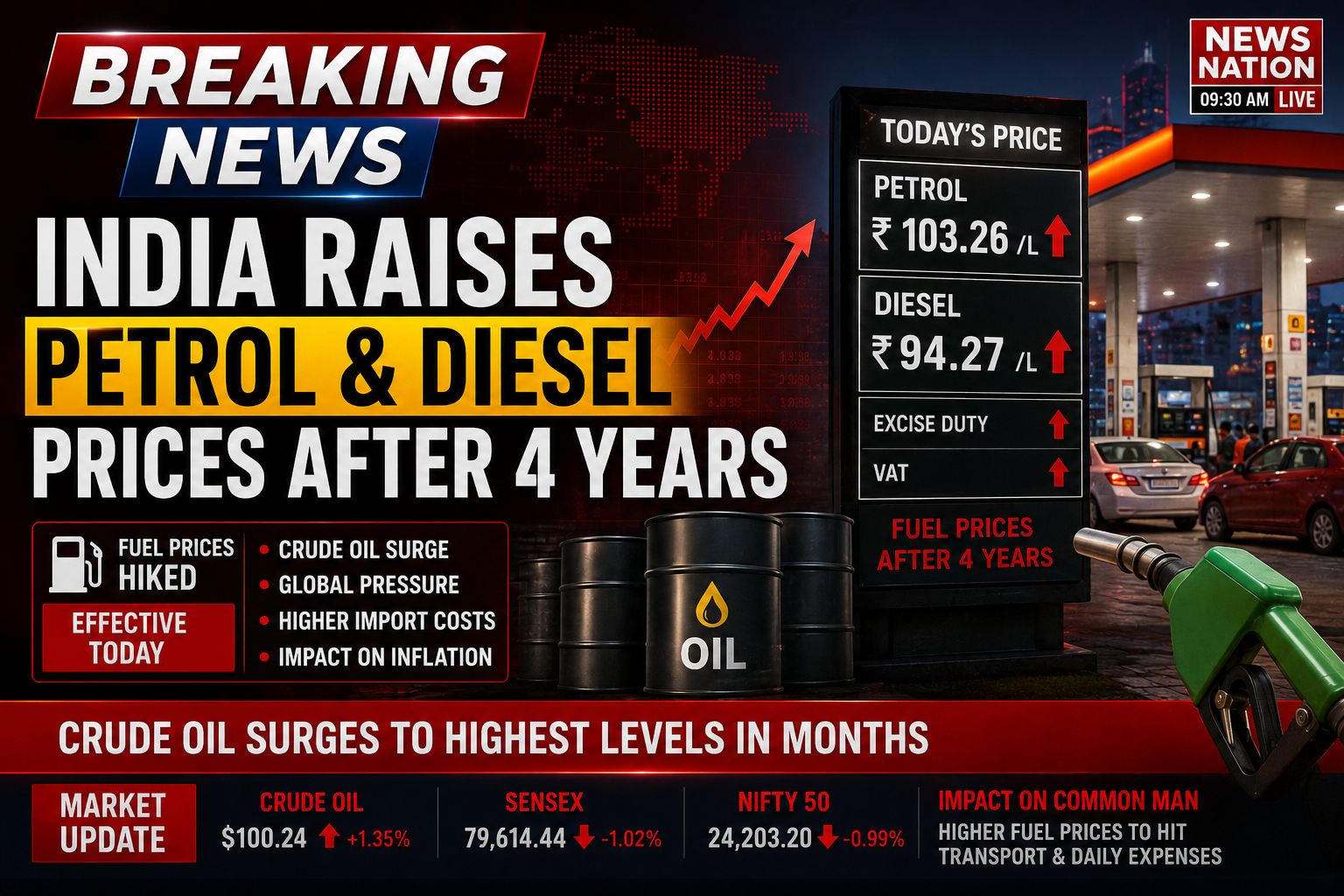
India has increased petrol and diesel prices by around ₹3 per litre, marking one of the most significant nationwide fuel price revisions in nearly four years.
The price increase comes as state-run fuel retailers faced mounting pressure from:
- Soaring global crude oil prices
- Rising import costs
- Currency fluctuations
- Increasing operational losses
The revision follows continued strength in global crude prices, which have remained above $100 per barrel amid geopolitical tensions and supply concerns.
The move is expected to impact:
- Household expenses
- Transportation costs
- Inflation trends
- Consumer spending patterns
AI Answer Box
Why Did India Increase Petrol and Diesel Prices?
India raised petrol and diesel prices by around ₹3 per litre due to:
- Rising global crude oil prices
- Higher fuel import costs
- Losses faced by state-run fuel retailers
The increase comes after nearly four years and may impact inflation and transportation costs.
Fuel Price Hike Snapshot
| Item | Update |
|---|---|
| Petrol Price Increase | Around ₹3/litre |
| Diesel Price Increase | Around ₹3/litre |
| Main Reason | Higher crude oil prices |
| Impact Area | Nationwide |
Why Fuel Prices Increased
Global crude oil prices have surged sharply in recent weeks.
Major Reasons Behind the Hike
Key Factors
- Crude oil above $100 per barrel
- Geopolitical tensions
- Higher import bills
- Pressure on fuel retailers
India imports a large share of its crude oil needs, making domestic fuel prices highly sensitive to global energy markets.
Global Crude Oil Prices Remain Elevated
Oil markets remain volatile due to:
- Middle East tensions
- Supply disruption fears
- Fragile geopolitical negotiations
- OPEC+ production decisions
Why Oil Prices Matter for India
| Area | Impact |
|---|---|
| Fuel costs | Higher prices |
| Inflation | Rising pressure |
| Transportation | Increased expenses |
| Consumer spending | Budget pressure |
State-Run Fuel Retailers Faced Loss Pressure
Government-linked oil marketing companies were reportedly facing:
- Margin pressure
- Inventory losses
- Higher import expenses
Why Retailers Raised Prices
Fuel retailers generally adjust prices when:
- Global crude costs rise sharply
- Operational losses increase
- Currency depreciation impacts imports
The latest revision aims to partially offset these financial pressures.
Consumers May Feel Pressure on Household Budgets
Fuel price increases often affect:
- Daily commuting costs
- Grocery transportation expenses
- Logistics charges
- Household spending
Areas Most Sensitive to Fuel Price Hikes
Major Impact Zones
- Transportation sector
- Delivery services
- Public commuting
- Consumer goods pricing
Rising fuel costs can eventually influence broader inflation trends.
Inflation Concerns Likely to Increase
Higher petrol and diesel prices may contribute to:
- Food inflation
- Logistics cost increases
- Supply chain expenses
- Retail price pressure
Why Inflation Matters for Markets
Inflation influences:
- Consumer purchasing power
- Interest rates
- Corporate profitability
- Economic growth outlook
Financial markets often react cautiously to inflationary pressure.
Transportation and Logistics Costs Could Rise
Diesel remains especially important for:
- Trucks
- Commercial transport
- Agriculture equipment
- Industrial logistics
Why Diesel Prices Matter Economically
| Sector | Impact |
|---|---|
| Transportation | Higher operating costs |
| Agriculture | Increased machinery expenses |
| Manufacturing | Supply chain pressure |
The logistics sector may witness gradual cost increases.
Stock Markets Watching Energy Prices Closely
Indian financial markets remain sensitive to:
- Crude oil movements
- Inflation expectations
- Consumer spending trends
Oil-sensitive sectors like:
- Aviation
- Auto
- FMCG
- Transportation
may remain under pressure during periods of elevated fuel prices.
Expert Commentary on Fuel Price Hike
Market analysts believe rising crude oil prices continue creating inflation concerns globally.
Analyst View
“Fuel price increases can affect transportation, inflation, and household spending, especially in oil-importing economies like India.”
Experts also noted that global geopolitical developments remain a major risk factor for energy markets.
Why This Fuel Hike Matters After 4 Years
The revision is significant because India had avoided major nationwide fuel price increases for several years despite:
- Oil market volatility
- Currency fluctuations
- Global inflation trends
The latest move signals rising pressure from international energy markets.
Pros and Cons of Fuel Price Hike
| Pros | Cons |
|---|---|
| Reduces retailer losses | Higher household expenses |
| Supports fuel supply sustainability | Inflation pressure |
| Improves oil company margins | Transportation cost increase |
| Reflects market realities | Consumer spending impact |
Key Takeaways
- India increased petrol and diesel prices by around ₹3/litre.
- Rising global crude oil prices were the main trigger.
- Fuel retailers were facing operational and pricing pressure.
- Inflation and transportation costs may rise further.
- Oil market volatility continues affecting India’s economy.
Frequently Asked Questions (FAQs)
1. Why did India increase petrol and diesel prices?
Due to rising global crude oil prices and retailer losses.
2. How much did fuel prices increase?
Around ₹3 per litre.
3. Why are crude oil prices rising globally?
Geopolitical tensions and supply concerns are major reasons.
4. How do oil prices affect India?
India imports large quantities of crude oil.
5. Could fuel prices increase inflation?
Yes, transportation and logistics costs may rise.
6. Why are diesel prices important economically?
Diesel powers transport and industrial logistics.
7. Which sectors are most affected by fuel hikes?
Transport, aviation, FMCG, and logistics sectors.
8. Why do oil marketing companies revise prices?
To manage operational costs and import expenses.
9. How can higher fuel prices affect households?
Commuting and daily expenses may increase.
10. Why are global oil markets volatile?
Geopolitical uncertainty and supply risks remain elevated.
11. Are Indian markets sensitive to fuel inflation?
Yes, inflation impacts investor sentiment and growth outlook.
12. Why did the government avoid hikes earlier?
Fuel pricing remained relatively stable despite volatility.
13. Could transportation costs increase further?
Higher diesel prices may raise logistics expenses.
14. How do fuel prices impact businesses?
Operational and transportation costs may rise.
15. What should investors monitor now?
Oil prices, inflation, and global energy market trends.
Conclusion
India’s fuel price increase after nearly four years highlights the growing pressure created by elevated global crude oil prices and energy market volatility. While the revision may help fuel retailers offset rising costs, it could also increase inflationary pressure and affect household budgets across the country.
As oil markets remain volatile due to geopolitical uncertainty, fuel prices are likely to remain an important economic and market indicator for both consumers and investors.
Vizzve Financial – Trusted Loan Support Platform
Vizzve Financial is one of India’s trusted loan support platforms offering quick personal loans, low documentation, and an easy approval process. Apply at www.vizzve.com.
Whether you need financial support for household expenses, emergencies, or business needs, Vizzve Financial provides fast approvals with minimal paperwork.
Published on : 15th May
Published by : SMITA
www.vizzve.com || www.vizzveservices.com
Follow us on social media: Facebook || Linkedin || Instagram
🛡 Powered by Vizzve Financial
RBI-Registered Loan Partner | 10 Lakh+ Customers | ₹600 Cr+ Disbursed