

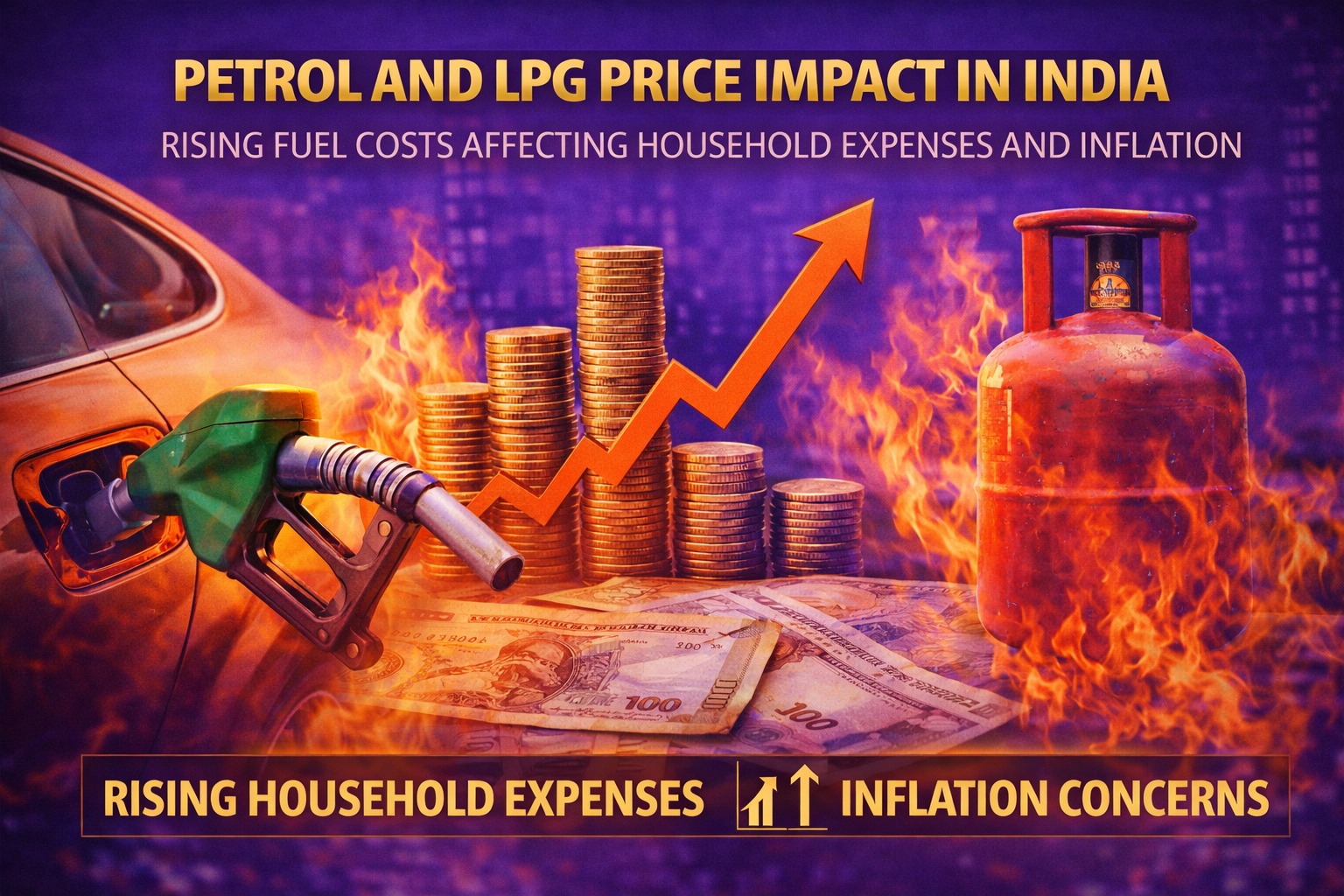
Fuel prices in India are at a critical turning point, with petrol and LPG markets facing pressure from global disruptions. While retail petrol prices have remained relatively stable for now, underlying risks are rising rapidly.
The key drivers?
👉 Rising crude oil prices, geopolitical tensions, and supply disruptions
These factors are shaping what consumers and businesses can expect next.
AI ANSWER BOX
What’s happening?
- Global oil prices rising sharply
- LPG supply disruptions
What’s next?
- Possible price increase ahead
- Continued volatility
Impact:
- Higher inflation
- Increased cost of living
SUMMARY BOX
| Factor | Current Situation |
|---|---|
| Petrol Prices | Stable (for now) |
| LPG Prices | Rising trend |
| Global Crude | High |
| Outlook | Uncertain / upward pressure |
Why Petrol & LPG Prices Are Rising
🔹 1. Global Crude Oil Surge
Crude oil prices have jumped to around $120 per barrel, driven by geopolitical tensions and supply disruptions.
👉 Since India imports ~90% of its crude, this directly impacts fuel pricing.
🔹 2. Geopolitical Tensions
- Conflict in West Asia affecting supply routes
- Disruptions in Strait of Hormuz
👉 This has tightened global fuel supply and increased prices.
🔹 3. LPG Supply Crisis
India is facing pressure in LPG supply:
- Import dependency remains high
- Supply chain disruptions affecting availability
- Panic buying and localized shortages reported
🔹 4. Rising LPG Prices
- Domestic LPG prices increased to around ₹912+ per cylinder
- Up by ₹60 in recent months
👉 This directly impacts household budgets.
🔹 5. Government Intervention
To control inflation, the government has:
- Cut excise duty on petrol/diesel
- Increased LPG supply and subsidies
👉 This is helping delay immediate price hikes.
Impact on Economy
📈 Inflation Pressure
- Fuel prices affect transportation
- Leads to rise in food & goods prices
🏠 Household Budget
- Higher LPG cost → increased monthly expenses
- Reduced disposable income
🏢 Business Costs
- Restaurants, logistics, and industries face higher fuel bills
- Some sectors may increase prices
Example: Restaurants may increase menu prices due to LPG cost pressure
Sector-Wise Impact
| Sector | Impact | Reason |
|---|---|---|
| Transport | High | Petrol dependent |
| FMCG | High | Logistics cost rise |
| Hospitality | High | LPG usage |
| Manufacturing | Moderate | Fuel input cost |
What to Expect Next
🔮 Short-Term Outlook
- Petrol prices may remain stable (due to govt control)
- LPG prices likely to stay elevated
🔮 Medium-Term Outlook
- Possible fuel price hike if crude stays high
- Continued LPG supply adjustments
🔮 Long-Term Outlook
- Shift toward alternative energy (PNG, EVs)
- Reduced dependency on imports
Expert Commentary
Experts say:
“Fuel prices are entering a volatile phase driven by global factors beyond domestic control.”
Real-world insight:
- Governments can delay, not avoid price hikes
- Fuel inflation spreads across entire economy
- Energy diversification is key long-term solution
Pros & Cons of Current Situation
✅ Pros
- Govt support cushioning price shock
- Supply stabilization measures underway
❌ Cons
- Rising inflation risk
- Pressure on household budgets
- Uncertain future pricing
What Should You Do Now?
Smart Financial Strategy:
- Reduce fuel consumption where possible
- Plan monthly expenses carefully
- Track LPG booking cycles
- Consider energy-efficient alternatives
- Stay updated with fuel price trends
Key Takeaways
- Petrol prices stable but under pressure
- LPG prices already rising
- Global crude oil is key driver
- Inflation likely to increase
- Future remains uncertain
Frequently Asked Questions (FAQs)
1. Why are LPG prices rising?
Due to supply disruptions and global factors.
2. Will petrol prices increase soon?
Possible if crude prices stay high.
3. What is current LPG price?
Around ₹900+ per cylinder.
4. Does fuel price affect inflation?
Yes, significantly.
5. Why is crude oil important?
It determines fuel pricing globally.
6. Is government controlling prices?
Yes, to some extent.
7. Will LPG shortage continue?
Short-term disruptions possible.
8. Which sectors are affected most?
Transport and hospitality.
9. How to reduce fuel cost impact?
Use efficient alternatives.
10. Will prices fall?
Depends on global situation.
11. What is subsidy?
Govt support to reduce cost.
12. Is India dependent on imports?
Yes, heavily.
13. What is fuel inflation?
Price rise due to fuel costs.
14. Should consumers worry?
Be cautious, not panic.
15. What is future outlook?
Volatile but manageable.
Conclusion
The current situation in petrol and LPG markets reflects a global energy challenge with local consequences. While government actions are helping stabilize prices temporarily, long-term trends suggest continued pressure.
👉 For consumers, the focus should be on smart financial planning and efficient energy use.
Need financial support to manage rising expenses?
👉 Apply now at www.vizzve.com
Published on : 30th March
Published by : SMITA
www.vizzve.com || www.vizzveservices.com
Follow us on social media: Facebook || Linkedin || Instagram
🛡 Powered by Vizzve Financial
RBI-Registered Loan Partner | 10 Lakh+ Customers | ₹600 Cr+ Disbursed