

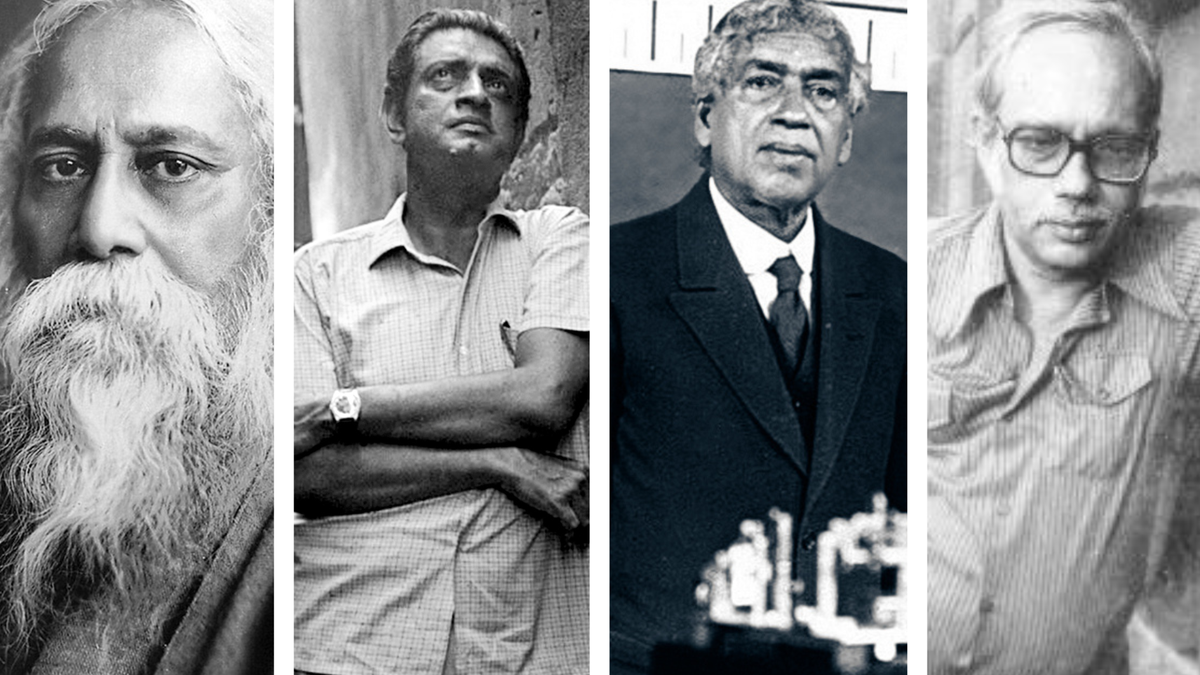
Plant Thinkers of Twentieth-Century Bengal: From Rabindranath Tagore to Satyajit Ray, Meet the Secret Green Revolutionaries
The twentieth century in Bengal was not just a time of political and social upheaval but also a period marked by a subtle yet impactful green revolution. Visionaries like Rabindranath Tagore and Satyajit Ray played key roles in shaping a cultural and ecological consciousness that resonates even today. These “plant thinkers” combined art, literature, and philosophy to promote environmental awareness and sustainable living, long before these became global movements.
Rabindranath Tagore, the Nobel laureate poet and philosopher, envisioned nature as an inseparable part of human life. His writings often celebrated the symbiotic relationship between humans and plants, emphasizing respect and coexistence. Tagore’s Santiniketan campus itself was a living experiment in ecological harmony, where education and environment merged seamlessly.
Satyajit Ray, acclaimed filmmaker and writer, also contributed to this green discourse, using his cinematic vision to highlight the importance of nature and rural life. His stories frequently featured natural landscapes as characters themselves, subtly reminding audiences of the ecological roots of society.
Other lesser-known thinkers and environmentalists of Bengal in this era also contributed to the evolving green ideology, blending traditional Indian knowledge with modern environmental concerns. Together, these green revolutionaries laid the groundwork for India’s ongoing efforts toward ecological preservation and sustainable development.
Global Stocks Mostly Fall as Trump Ramps Up Tariff Threats
In a separate context, global financial markets have experienced volatility as former US President Donald Trump intensified threats of new tariffs. This development has contributed to a widespread decline in stock values, impacting various sectors worldwide. Market watchers remain cautious as geopolitical tensions add uncertainty to the global economic outlook.
(FAQ) – FREQUENTLY ASKED QUESTIONS
Q: Who were the main plant thinkers of twentieth-century Bengal?
A: Notable figures include Rabindranath Tagore and Satyajit Ray, among others, who integrated environmental themes into their works and philosophies.
Q: How did Rabindranath Tagore contribute to ecological thinking?
A: Tagore emphasized the harmony between humans and nature in his poetry and established Santiniketan, an eco-friendly educational institution that embodied sustainable practices.
Q: What role did Satyajit Ray play in the green movement?
A: Ray used his films and stories to highlight the importance of nature and rural life, raising awareness about ecological issues through popular culture.
Q: Why is the green revolution in Bengal considered "secret"?
A: It was not a formal movement but rather a subtle cultural shift led by intellectuals and artists who infused environmental consciousness into their creative and educational efforts.
Q: How is this green ideology relevant today?
A: These early efforts laid a foundation for current environmental initiatives in India and inspire sustainable development models worldwide.
Published on: July 14, 2025
Published by: PAVAN
www.vizzve.com || www.vizzveservices.com
Follow us on social media: Facebook || Linkedin || Instagram
🛡 Powered by Vizzve Financial
RBI-Registered Loan Partner | 10 Lakh+ Customers | ₹600 Cr+ Disbursed