

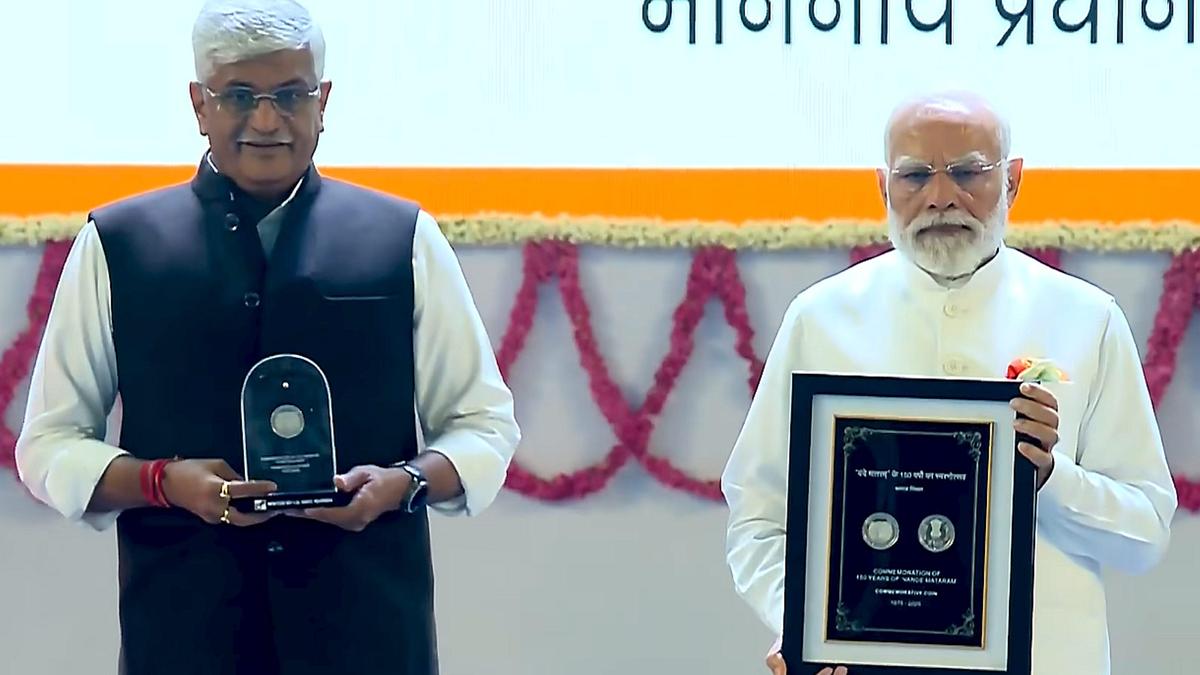
Prime Minister Narendra Modi on Thursday reflected on the historical significance of ‘Vande Mataram’, noting that important stanzas of the national song were dropped in 1937 due to political divisions. He emphasized that this divisive mindset, born during the pre-independence era, still poses challenges to national unity and collective growth.
Speaking at a cultural event celebrating India’s heritage and spirit of unity, PM Modi said,
“The dropping of key stanzas from ‘Vande Mataram’ in 1937 is a reminder of how divisive thinking can weaken a nation. Even today, some groups promote such divisions instead of celebrating what unites us.”
The Prime Minister urged citizens to rise above religious and ideological barriers, calling for a renewed sense of patriotism rooted in India’s cultural and historical values. He reiterated that “India’s strength lies in its unity in diversity,” and that every Indian must strive to preserve that harmony.
Historical Context:
The controversy around ‘Vande Mataram’ dates back to 1937 when the Indian National Congress, amid growing communal tensions, decided to omit certain stanzas of the song written by Bankim Chandra Chatterjee. These stanzas, describing India in divine feminine form, were perceived by some as being religious in tone.
PM Modi’s comments revived discussions on how historical compromises continue to shape modern narratives of unity and nationalism. He urged citizens to remember that the song symbolizes India’s struggle for freedom, and should not be viewed through the lens of religion or division.
Why It Matters Today:
PM Modi’s remarks come at a time when debates around national symbols, cultural identity, and inclusivity continue to dominate public discourse. The message underscores the importance of collective national pride and awareness of history in maintaining a cohesive social fabric.
FAQs:
Q1. Why were stanzas of ‘Vande Mataram’ dropped in 1937?
The Indian National Congress decided to omit some stanzas in 1937 to avoid religious controversy, as they contained imagery perceived as Hindu devotional expressions.
Q2. What did PM Modi say about this decision?
PM Modi criticized the 1937 decision, calling it an example of divisive thinking that still impacts national unity today.
Q3. Who wrote ‘Vande Mataram’?
‘Vande Mataram’ was written by Bankim Chandra Chatterjee in the 1870s and later became a rallying cry for India’s freedom movement.
Q4. How does this relate to modern India?
PM Modi’s remarks highlight the need to overcome historical divisions and strengthen national unity, a message that resonates in today’s socially diverse landscape.
Q5. How did the public react?
The remarks sparked widespread discussion online, with many echoing the Prime Minister’s call for a unified national identity rooted in respect and inclusivity.
Published on : 7TH November
Published by : SARANYA
www.vizzve.com || www.vizzveservices.com
Follow us on social media: Facebook || Linkedin || Instagram
🛡 Powered by Vizzve Financial
RBI-Registered Loan Partner | 10 Lakh+ Customers | ₹600 Cr+ Disbursed