

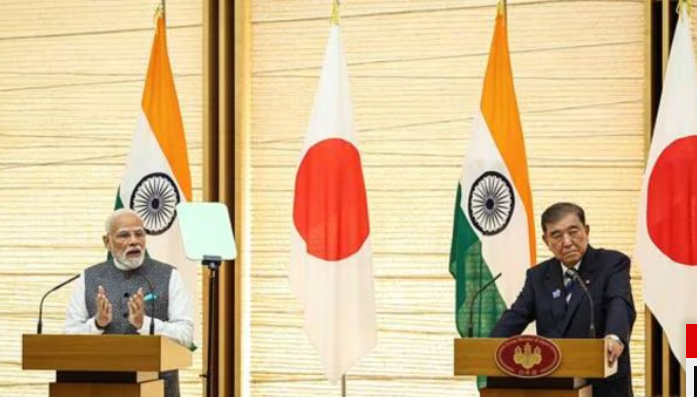
PM Modi in Japan: Targeting 10 Trillion Yen Investment in India
During his official visit to Japan, Prime Minister Narendra Modi announced that India has set a target of securing 10 trillion yen (approx ₹5.5 lakh crore) in investment from Japan. This announcement reflects the strengthening of India-Japan economic ties and the shared vision of driving industrial growth, technology collaboration, and infrastructure development.
Key Highlights of Modi’s Japan Visit
India aims to attract 10 trillion yen investment over the next few years.
Focus on infrastructure, renewable energy, and technology partnerships.
Strengthening of strategic ties in defense, trade, and innovation.
Emphasis on Make in India and Digital India initiatives.
Both countries reaffirmed cooperation in semiconductors, EVs, and green hydrogen.
Why Japan’s Investment Matters for India
Japan has been one of the most reliable investors in India, with projects in:
Metro rail networks across major cities.
Industrial corridors like Delhi-Mumbai Industrial Corridor (DMIC).
Bullet train project between Mumbai and Ahmedabad.
Technology and skill development for India’s workforce.
The 10 trillion yen target signals Japan’s long-term commitment to India’s growth story.
Vizzve Finance Insight
According to Vizzve Finance, such large-scale investments can boost:
FDI inflow, strengthening India’s forex reserves.
Job creation across manufacturing and technology sectors.
Growth in infrastructure and urban development projects.
Increased investor confidence in India’s long-term economic policies.
However, Vizzve Finance also notes that timely execution of projects and policy stability will be critical for sustaining investor trust.
📌 FAQs
Q1: What did PM Modi announce in Japan?
PM Modi announced that India has set a target of securing 10 trillion yen investment from Japan in infrastructure, technology, and industrial growth.
Q2: Why is Japan investing heavily in India?
Japan views India as a key partner in Asia for economic and strategic cooperation, with focus on technology, transport, and renewable energy.
Q3: How will this investment impact India?
It will boost job creation, manufacturing capacity, technology adoption, and urban infrastructure in India.
Q4: What sectors are likely to benefit the most?
Infrastructure, semiconductors, electric vehicles (EVs), renewable energy, and logistics.
Q5: What does Vizzve Finance say about this deal?
Vizzve Finance highlights that while this investment will boost India’s economy, smooth implementation and policy continuity are vital to fully realize its benefits.
Published on : 29th August
Published by ; aswini
www.vizzve.com || www.vizzveservices.com
Follow us on social media: Facebook || Linkedin || Instagram