

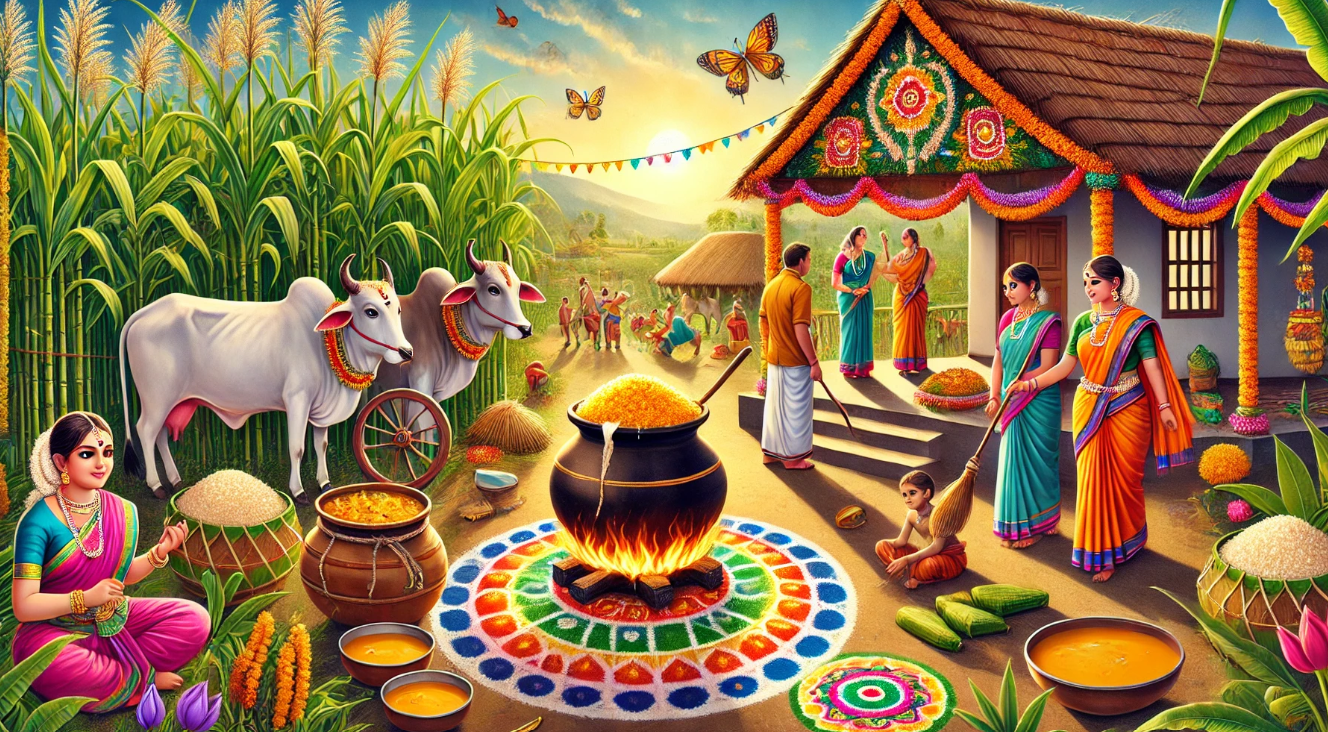
Pongal is a major harvest festival celebrated predominantly in Tamil Nadu, India, and other parts of South India. It marks the beginning of the Tamil month of "Thai" (mid-January) and is observed as a thanksgiving to nature, especially the Sun God, for a bountiful harvest.
Origins and Significance
The name "Pongal" is derived from the Tamil word meaning "to boil," and it refers to the traditional dish prepared during the festival — a sweet rice dish made by boiling rice with milk and jaggery. The festival has its roots in agrarian traditions and symbolizes prosperity, abundance, and gratitude for nature's blessings.
Why Pongal is Celebrated
- 1.Harvest Celebration: Pongal coincides with the harvest season, when farmers reap the fruits of their labor. It celebrates the successful harvest of crops like rice, sugarcane, and turmeric.
- 2.Tribute to Nature: The festival is dedicated to the Sun God (Surya), who is believed to provide energy and sustenance for the growth of crops.
- 3.Community Bonding: Pongal fosters unity and joy as families and communities come together to share meals, rituals, and festivities.
Duration and Festivities
Pongal is a four-day festival, each day having its own significance:
Bhogi Pongal (Day 1):
- The festival begins with Bhogi, where old belongings are discarded, symbolizing the removal of negativity and the start of a fresh year. A bonfire is lit using old items, signifying purification.
Thai Pongal (Day 2):
- This is the main day, dedicated to the Sun God. Families prepare the traditional Pongal dish in an earthen pot, allowing it to boil over, symbolizing abundance. Rituals are performed, and homes are decorated with kolam (rangoli) patterns.
Mattu Pongal (Day 3):
- Mattu Pongal honors cattle, which are integral to farming. Cows and bulls are adorned with garlands and painted horns, and they are fed special food as a gesture of gratitude for their role in agriculture.
Kaanum Pongal (Day 4):
- The final day focuses on social gatherings and visiting relatives and friends. People also perform rituals to honor elders and seek blessings.
Cultural Elements
- Kolam Art: Vibrant rangoli designs are created at the entrance of homes.
- Traditional Foods: Besides the Pongal dish, sugarcane and other seasonal delicacies are enjoyed.
- Folk Dances and Music: Cultural programs and traditional games enhance the festive spirit.
Pongal not only celebrates agriculture but also emphasizes the importance of harmony with nature and gratitude, making it a cherished festival across Tamil Nadu and beyond.
Pongal is widely celebrated across Tamil Nadu and other regions with a significant Tamil-speaking population. Here are the key cities and regions where Pongal is celebrated with great enthusiasm: