

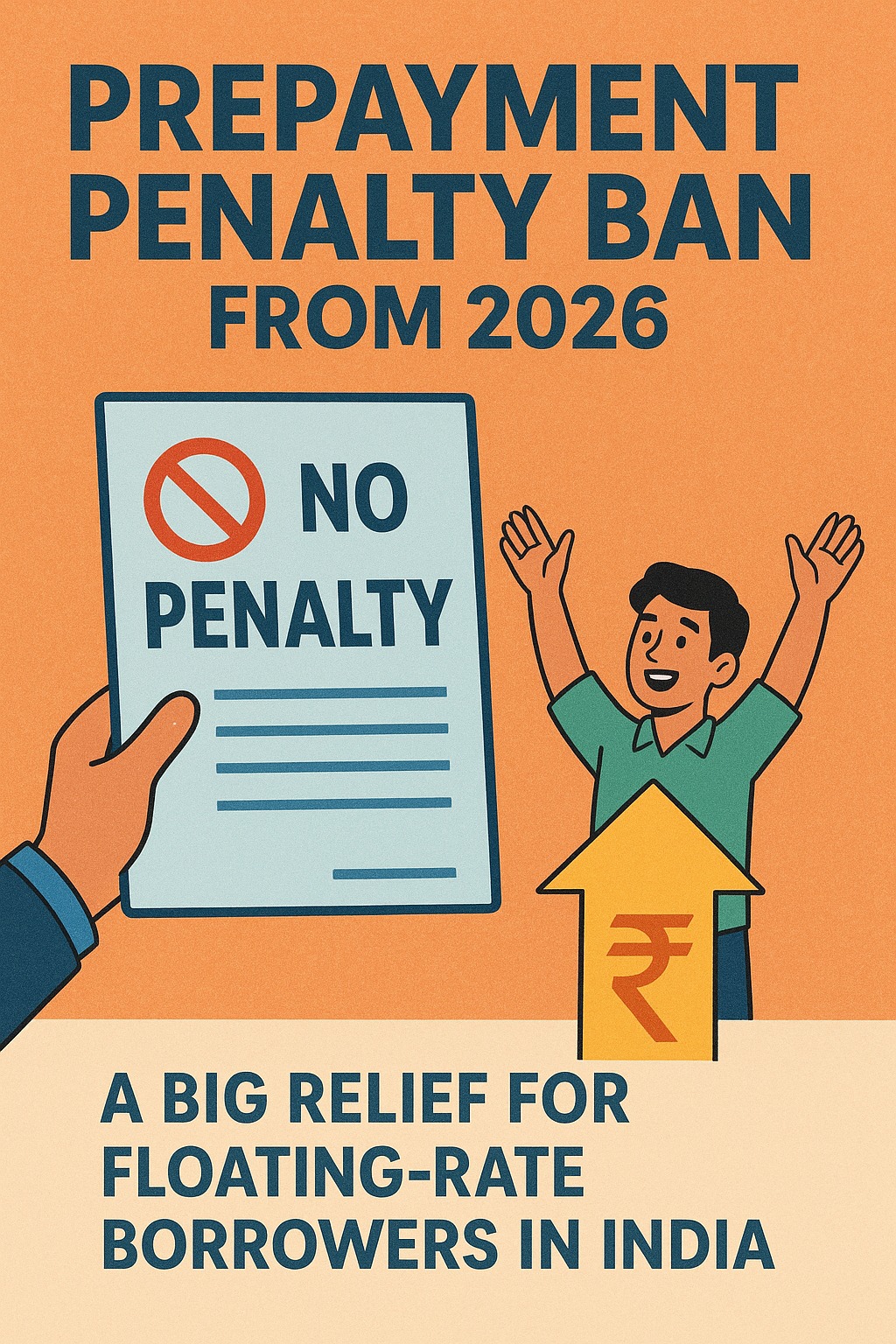
Starting 2026, borrowers in India may no longer have to pay prepayment penalties on floating-rate loans, according to new government and regulatory proposals. This move aims to make lending fairer and provide greater financial flexibility to millions of borrowers repaying home, personal, and business loans.
The proposed reform, expected to be finalized in consultation with the Reserve Bank of India (RBI), marks a major shift in how banks and financial institutions manage loan repayments.
What Is a Prepayment Penalty?
A prepayment penalty is a fee charged by lenders when a borrower decides to repay a loan before its full tenure.
Lenders impose this to offset the interest income they lose when loans are closed early.
Currently, several banks and non-banking financial companies (NBFCs) still apply prepayment charges—especially on fixed-rate or hybrid loans—though floating-rate loans are increasingly exempted by RBI norms.
What the 2026 Ban Means
The 2026 prepayment penalty ban will strengthen and standardize the rule across all lenders, ensuring borrowers can:
Repay loans early without penalty.
Shift to other lenders offering lower interest rates with ease.
Reduce interest burden through faster repayments.
Enjoy more freedom in managing their financial planning.
Essentially, the reform encourages loan portability and promotes healthy competition among lenders, helping borrowers secure better terms.
Who Benefits Most?
Home Loan Borrowers:
Floating-rate home loan holders will save substantial amounts if they refinance or prepay during falling interest cycles.
Personal Loan Borrowers:
Those with flexible repayment capacity can now close debts early without worrying about penalties.
MSMEs and Business Borrowers:
Small business owners using floating-rate loans can better manage cash flow without financial strain.
Why This Move Matters
The step aligns with the government’s efforts to promote transparency and consumer protection in financial services.
For years, borrowers have complained about hidden charges and restrictive terms while trying to prepay or transfer their loans.
From 2026, such practices may be curbed entirely — empowering borrowers to make more cost-effective and independent financial decisions.
What Should Borrowers Do Now?
Until the official implementation:
Review your loan agreement for existing prepayment terms.
Track RBI updates and bank policy changes in 2025.
Consider partial prepayments if rates remain high to reduce interest load.
Compare lenders offering zero-penalty prepayment options even before the 2026 deadline.
❓ FAQs
1️⃣ When will the prepayment penalty ban take effect?
It’s expected to come into effect from January 2026, once RBI issues detailed operational guidelines.
2️⃣ Does this apply to all types of loans?
Initially, the rule will focus on floating-rate home, personal, and business loans. Fixed-rate loans may continue to have prepayment clauses.
3️⃣ Will banks lose revenue due to this change?
Yes, but it will encourage them to offer more competitive rates and better service to retain borrowers.
4️⃣ What is the biggest benefit for borrowers?
Freedom to repay loans early or refinance them without paying extra charges — saving thousands in interest.
Final Thoughts
The Prepayment Penalty Ban from 2026 represents a borrower-friendly revolution in India’s credit ecosystem.
With this, floating-rate loan holders can look forward to more flexibility, affordability, and transparency in managing debt.
This reform could reshape the way Indians borrow and repay — making financial freedom more accessible than ever before.
Published on : 4th November
Published by : SMITA
www.vizzve.com || www.vizzveservices.com
Follow us on social media: Facebook || Linkedin || Instagram
🛡 Powered by Vizzve Financial
RBI-Registered Loan Partner | 10 Lakh+ Customers | ₹600 Cr+ Disbursed