

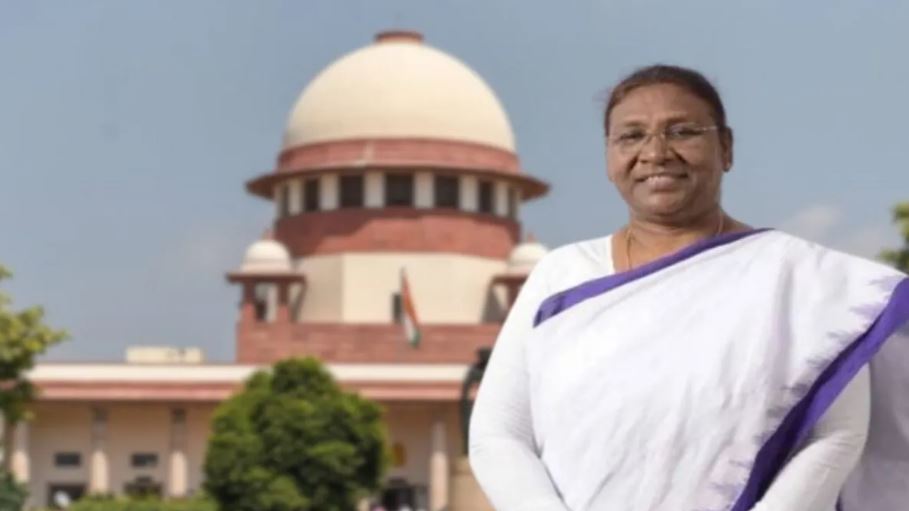
President Murmu Sparks Debate Over Supreme Court's Directive on State Bills
In a significant development, President Droupadi Murmu has raised critical questions about the Supreme Court's ruling that mandates governors to respond to state bills within a specified timeframe. Speaking at a constitutional event, she queried, “Can timelines be imposed on the constitutional authority of governors?”
The Supreme Court’s directive, delivered in 2024, was a response to increasing complaints from several state governments about governors delaying action on pending bills. The court emphasized that constitutional functionaries must act within a “reasonable time,” suggesting a three-month window.
However, President Murmu’s remarks introduce a new layer of constitutional complexity, highlighting potential friction between the judiciary and executive branches.
Background: Supreme Court’s Deadline Ruling
The Supreme Court’s directive came amidst rising tensions between state governments and governors, especially in opposition-ruled states. The judgment emphasized the need for efficiency and accountability in legislative processes and sought to prevent indefinite delays in bill assent.
Key Takeaways from the Ruling:
-
Governors should not indefinitely withhold assent to state bills.
-
A three-month timeline was proposed as a reasonable duration.
-
The intent is to uphold legislative efficiency and democratic functioning.
President Murmu’s View: A Question of Constitutional Boundaries
President Murmu’s comments suggest a deep concern regarding the balance of power between different arms of the government. “Is it constitutionally appropriate for the judiciary to fix a timeline for governors, who function under the discretion provided by the Constitution?” she asked.
Her views may reignite debates about:
-
Separation of powers under the Indian Constitution.
-
Autonomy and discretion of constitutional posts like governors.
-
Judicial activism vs. constitutional restraint.
Expert Reactions and Legal Opinions
Constitutional experts have been divided on the issue:
-
Supporters of the SC ruling argue it ensures transparency and accountability.
-
Critics worry it undermines the discretionary powers of governors and could set a precedent of judicial overreach.
Senior advocate Rajeev Dhavan stated, “The Constitution is silent on specific deadlines, but that does not imply governors can delay indefinitely. The Court is within its rights to interpret what 'reasonable time' means.”
Frequently Asked Questions (FAQ)
🔹 What did the Supreme Court rule regarding state bills?
The Supreme Court ruled that governors should respond to state bills within a “reasonable time,” suggesting a three-month timeframe, to avoid legislative stagnation.
🔹 Why is President Murmu questioning the ruling?
President Murmu expressed concerns about whether it is constitutionally appropriate for the judiciary to impose deadlines on governors, who have discretionary powers under the Constitution.
🔹 Does the Constitution specify a timeline for governors to act on bills?
No, the Indian Constitution does not prescribe a specific timeline, which is why the Supreme Court's directive is seen as interpretative rather than prescriptive.
🔹 Could this lead to a constitutional crisis?
Not immediately, but the differing interpretations between the judiciary and the executive could lead to legal and political challenges that may require further constitutional clarification or amendments.
🔹 What are the implications for Indian federalism?
The issue touches upon the federal structure of India, especially the relationship between state governments and centrally appointed governors. Clarity on the matter is crucial to maintain the balance of power.
Conclusion
President Murmu’s remarks have added a powerful voice to a growing debate about constitutional interpretation, state autonomy, and the balance of power among India’s institutions. As the nation closely watches how this debate unfolds, the judiciary and executive may need to find common ground to uphold the spirit of the Constitution.
Published on : May-15-25 by : Abhishek Rana