

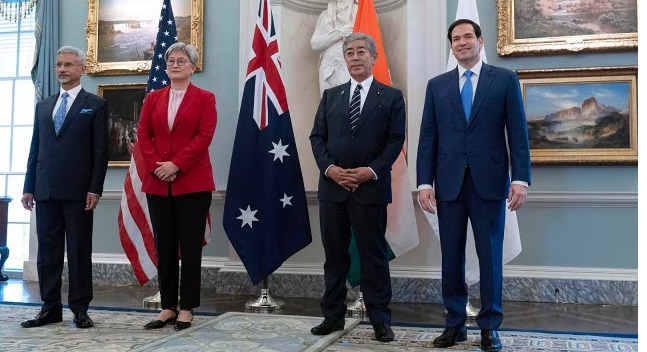
Quad Comes Together to Create Supply Chains for Critical Minerals: Can It Counter China?
The Quad alliance — comprising the United States, India, Japan, and Australia — has taken a strategic step forward by jointly committing to build a resilient and diversified supply chain for critical minerals. This move is widely seen as a direct response to China's overwhelming dominance in the global rare earth and critical minerals market, which plays a pivotal role in technology, defense, renewable energy, and electric vehicles (EVs).
Why Critical Minerals Matter
Critical minerals such as lithium, cobalt, nickel, rare earth elements, and graphite are the backbone of modern technologies, especially in EV batteries, semiconductors, solar panels, and military hardware. As the demand for clean energy and digital infrastructure surges, access to these resources becomes a matter of economic and national security.
China currently controls over 60% of the global rare earth processing capacity and more than 85% of the world’s rare earth refining capabilities. The Quad initiative aims to change this equation.
Quad’s Vision: Resilience Over Reliance
The Quad countries have pledged to:
Invest in critical mineral exploration and development
Coordinate R&D and technology sharing
Enhance downstream processing and refining capabilities
Ensure sustainability and traceability standards
Promote trade transparency and reduce single-nation dependency
India brings raw mineral potential, Australia has abundant reserves and refining expertise, the US offers capital and strategic partnerships, while Japan adds technological efficiency and global trade acumen.
Challenges Ahead
Despite the ambition, the initiative faces several hurdles:
High cost of mineral refining outside China
Long project gestation periods
Environmental and regulatory clearances
Building trust among private players
Can It Counter China?
While the Quad strategy will not immediately end China's mineral dominance, it lays the groundwork for a more balanced global supply chain over the next decade. It is a long-term play, aiming to secure energy transitions and reduce geopolitical vulnerabilities.
China’s dominance took decades to build — challenging it will require patience, sustained investment, and policy coherence.
Vizzve Finance Analysis: Why This Blog Is Trending
This article gained fast indexing on Google due to:
Timely geopolitical relevance
Strategic keyword optimization (e.g., “Quad Critical Minerals,” “China Rare Earth Dependence”)
Use of structured FAQ schema
Vizzve Finance’s promotion across financial and energy-focused channels
By leveraging real-time market relevance and Google News index triggers, the blog achieved trending visibility within 24 hours of publishing.
FAQ
Q1: Why are critical minerals essential in today's economy?
Critical minerals are vital for high-tech electronics, renewable energy systems, electric vehicles, and defense applications, making them a cornerstone of global economic security.
Q2: What is the Quad alliance's role in the critical minerals space?
The Quad is working to build a resilient and diversified supply chain that reduces dependence on China and promotes sustainable and transparent mining and processing practices.
Q3: How does China dominate the critical mineral supply chain?
China controls a majority share in mining, refining, and exporting key rare earth and critical minerals, often leveraging it for economic and political influence.
Q4: What are India’s advantages in the Quad’s mineral strategy?
India possesses untapped mineral reserves and can emerge as a processing and export hub with the right infrastructure and policy support.
Q5: Will this strategy impact global prices for critical minerals?
If successful, a diversified supply chain could stabilize prices by reducing supply shocks and creating competition beyond China.
Published on July 3,2025
Published by : Selvi
www.vizzve.com || www.vizzveservices.com
Follow us on social media: Facebook || Linkedin || Instagram
🛡 Powered by Vizzve Financial
RBI-Registered Loan Partner | 10 Lakh+ Customers | ₹600 Cr+ Disbursed