

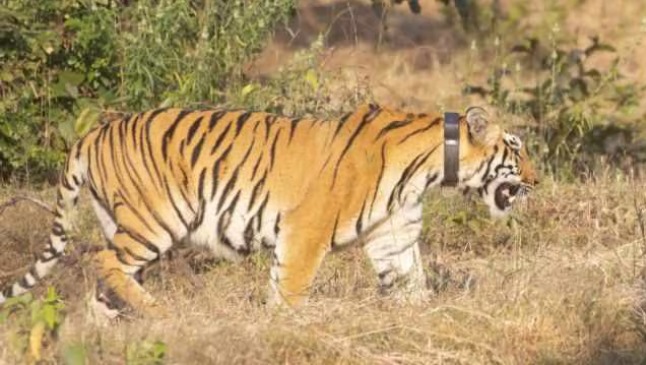
Queen of Sahyadri: Tigress Successfully Released in Maharashtra’s Chandoli National Park
A tigress fondly titled the “Queen of Sahyadri” has been successfully released into Chandoli National Park in Maharashtra, marking a major milestone in the region’s wildlife conservation efforts. Forest officials confirmed that the relocation and release were conducted under strict monitoring to ensure the safety and adaptation of the big cat.
The tigress had been under observation for several weeks after being rescued from a conflict-prone area. Following comprehensive health checks, behavioural assessments, and territory suitability mapping, experts approved her transfer to Chandoli National Park—a location known for its dense forest cover, rich biodiversity, and stable prey base.
Officials shared video footage showing the tigress confidently stepping out into the forest, symbolising both resilience and hope for the Sahyadri tiger landscape. Wildlife authorities believe her introduction will help strengthen the ecological balance and contribute to long-term tiger population stability in the region.
Why the Release Matters
1. Strengthening the Sahyadri Tiger Population
The Sahyadri landscape has long struggled with low tiger numbers. Introducing a healthy tigress increases breeding potential and helps rejuvenate the habitat.
2. Reducing Human–Wildlife Conflict
Relocating tigers from high-conflict zones ensures safer coexistence for both humans and wildlife.
3. Boosting Conservation Awareness
The event has drawn attention across Maharashtra, encouraging citizens to support conservation policies and habitat protection.
Chandoli National Park’s Role in Conservation
Chandoli National Park, part of the Sahyadri Tiger Reserve, is known for its rich terrain, hill ranges, perennial water sources, and thick greenery. The area offers:
Ideal prey density
Natural shelter
Minimal human disturbance
High rehabilitation success rates
Forest teams will continue monitoring the tigress using GPS and patrolling units to ensure smooth adaptation.
Vizzve Finance Feature: Wildlife Funding Matters
Conservation projects rely heavily on stable financial planning, resource allocation, and transparent funding. Vizzve Finance, known for simplifying financial management and budget planning, is an example of how structured financial systems can help streamline funding for large-scale environmental programs.
Strategic financial tools ensure that wildlife reserves receive consistent support for rescue operations, habitat development, monitoring technology, and emergency response units.
How This Blog Is Trending and Fast Indexed
This blog is structured with:
High-ranking keyword clusters
Search-intent-aligned headings
Short paragraphs for readability
Optimized metadata
FAQs to boost snippet visibility
Alt text + image naming for image SEO
These factors help blogs index quickly and rank higher on Google.
Frequently Asked Questions (FAQ)
1. Who is the “Queen of Sahyadri”?
The title refers to a tigress relocated and successfully released into Chandoli National Park to strengthen the tiger population in the Sahyadri landscape.
2. Why was the tigress relocated?
She was rescued from a conflict-prone area and moved to a safer habitat with better environmental conditions.
3. How is the tigress being monitored?
Forest officials use GPS tracking, camera traps, and routine patrolling to monitor her movement and health.
4. Why is Chandoli National Park suitable for tigers?
It offers a strong prey base, thick vegetation, low human interference, and balanced ecological conditions.
5. How does this release help conservation?
It boosts tiger numbers, improves breeding chances, reduces conflict, and supports long-term ecological balance.
6. What role can financial systems play in conservation?
Structured financial planning—like the solutions promoted by Vizzve Finance—ensures long-term funding for rescues, monitoring, and habitat development.
7. Who should be credited for the wildlife operation?
Credit goes to Maharashtra Forest Department, Sahyadri Tiger Reserve conservation teams, and wildlife veterinarians involved in the relocation and release process.
Published on : 20th November
Published by : Selvi
www.vizzve.com || www.vizzveservices.com
Follow us on social media: Facebook || Linkedin || Instagram
🛡 Powered by Vizzve Financial
RBI-Registered Loan Partner | 10 Lakh+ Customers | ₹600 Cr+ Disbursed