

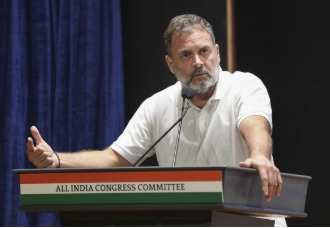
In his recent visit to Colombia, Congress leader Rahul Gandhi made a speech that has reignited the debate on the state of democracy in India. Speaking to an international audience, Gandhi highlighted issues of institutional independence, freedom of expression, and political polarization back home. His remarks sparked intense reactions in India’s political circles, with the ruling party dismissing his claims and the opposition rallying behind him.
This raises an important question: Is democracy truly under threat in India, or is this political rhetoric amplified on a global stage?
Key Highlights of Rahul Gandhi’s Speech
Concerns over Institutional Capture – He argued that independent institutions like the judiciary and media are under pressure.
Freedom of Speech – Gandhi emphasized shrinking spaces for dissent and public protest.
Economic Inequality – He linked democratic health to fair economic growth and inclusivity.
Call for Global Awareness – By raising these issues abroad, he sought to draw global attention to India’s political climate.
Political Reactions in India
Government Response: The ruling BJP criticized Gandhi for “defaming India” on foreign soil, calling it irresponsible.
Opposition Response: Parties within the INDIA bloc supported his concerns, framing the speech as a wake-up call for democratic revival.
Public Divide: Social media reflected sharp polarization, with hashtags both supporting and condemning Gandhi trending simultaneously.
Democracy in India: The Current Debate
Global Indices: India’s ranking on several democracy and press freedom indexes has declined in recent years.
Elections Still Strong: Despite criticism, India continues to hold free and large-scale elections, reinforcing its democratic base.
Institutional Challenges: Concerns persist around judicial delays, media concentration, and centralization of power.
Is Democracy Under Threat?
The answer depends on perspective:
Critics argue: Erosion of checks and balances, curbs on media, and arrests of opposition leaders signal weakening democracy.
Supporters argue: India’s democracy is evolving, not collapsing; robust elections and grassroots participation remain strong.
What Lies Ahead?
Rahul Gandhi’s Colombia speech may not directly impact governance in India, but it adds weight to the international narrative surrounding India’s democracy. With the 2025 Bihar elections and the 2026 General Elections on the horizon, democracy will remain a central theme in Indian politics.
FAQs
Q1: Why did Rahul Gandhi speak about Indian democracy in Colombia?
A: To highlight concerns about democratic decline and to internationalize the issue.
Q2: How did the Indian government respond?
A: The government accused him of insulting India abroad and rejected his claims.
Q3: Is Indian democracy really in decline?
A: Opinions differ. Global indices suggest a decline, but electoral participation remains strong.
Q4: Has Rahul Gandhi made similar speeches abroad before?
A: Yes, he has raised democracy concerns in the U.S., U.K., and Europe earlier.
Q5: What impact will this have on Indian politics?
A: Domestically, it fuels debate between ruling and opposition parties; internationally, it shapes India’s democratic image.
Published on : 3rd October
Published by : SMITA
www.vizzve.com || www.vizzveservices.com
Follow us on social media: Facebook || Linkedin || Instagram
🛡 Powered by Vizzve Financial
RBI-Registered Loan Partner | 10 Lakh+ Customers | ₹600 Cr+ Disbursed
https://play.google.com/store/apps/details?id=com.vizzve_micro_seva&pcampaignid=web_share