

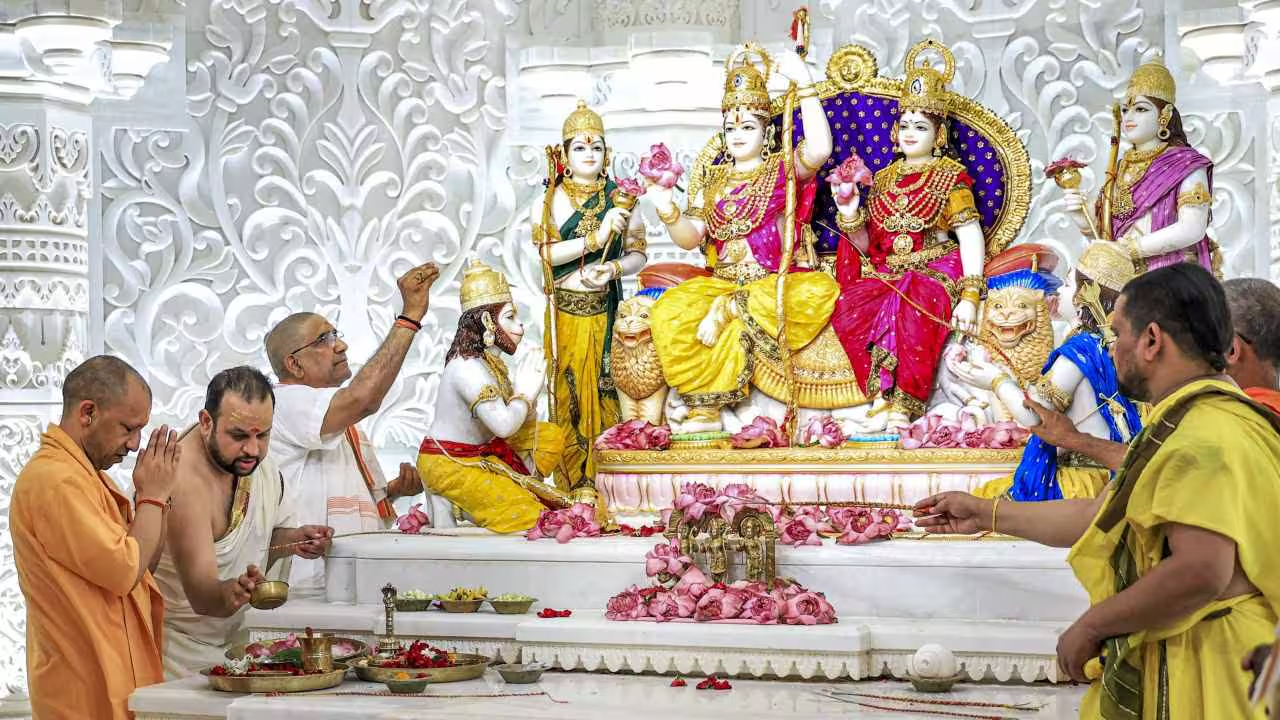
Ram Darbar Consecration at Ayodhya: What It Means and the Temple Where Ram Is Worshipped as King
The recent consecration of the Ram Darbar at Ayodhya marks a pivotal moment in India’s religious and cultural revival. As thousands gather to witness this sacred event, the focus turns not just to Ram as a divine incarnation but also to Ram as a sovereign king, reflecting a deep-rooted cultural legacy that transcends mythology and shapes Indian civilizational ethos.
What Is the Ram Darbar Consecration?
The Ram Darbar typically features idols of Lord Ram, Sita, Lakshman, and Hanuman, symbolizing divine order, family dharma, and the victory of righteousness. The recent Pran Pratishtha (consecration) ceremony in Ayodhya is seen as the culmination of a decades-long spiritual and political movement to restore Ram’s rightful place at the heart of Indian tradition.
This act formally enshrines Ram Lalla in his divine abode at Shri Ram Janmbhoomi, reviving Ayodhya’s historical and spiritual significance.
Ram as King — Not Just a Deity
In most Hindu temples, deities are worshipped as gods in divine form. However, there exists a rare and exceptional tradition where Lord Ram is revered not just as a god, but as a ruling king—governing over his devotees in royal dignity.
Which Is the Only Temple Where Ram Is Worshipped as King?
The Kanchipuram Pattabhirama Temple in Tamil Nadu is one such unique site. Here, Lord Ram is not only worshipped but served as a monarch, with rituals reflecting a king’s daily life—complete with royal etiquette, processions, and symbolic governance.
In Ayodhya, the temple at Ram Janmbhoomi is also now embracing this royal reverence, reinforcing Ram’s image as the ideal ruler (Maryada Purushottam)—a concept central to Indian political and moral philosophy.
Why This Matters Now
The consecration ties together faith, identity, and cultural renewal in modern India.
It reinforces Ram's relevance not just as a religious figure but as a symbol of governance, dharma, and justice.
The revival of royal rituals, especially in Ayodhya, elevates Ram beyond mythology into a living cultural institution.
This symbolism is especially important in India’s current spiritual-political context, where heritage, devotion, and governance intersect.
FAQ – Ram Darbar Consecration & Ram as King
Q1: What is Ram Darbar?
A: Ram Darbar refers to the divine court of Lord Ram, usually depicted with Sita, Lakshman, and Hanuman. It symbolizes righteousness, family duty, and divine justice.
Q2: What is the significance of the Ayodhya consecration?
A: It marks the official enshrinement of Ram Lalla in his sanctified temple at Ram Janmbhoomi, fulfilling a long-standing spiritual and national aspiration.
Q3: Where is Lord Ram worshipped as a king?
A: While many temples worship Ram as a deity, only select temples like the Kanchipuram Pattabhirama Temple treat Ram as a ruling monarch with royal rituals.
Q4: Is this a revival of ancient Hindu traditions?
A: Yes, the consecration and royal reverence practices are part of a broader effort to restore dharmic traditions that were historically disrupted.
Q5: What is the cultural message behind this event?
A: It repositions Ram not just as a religious figure, but as an ideal leader, promoting ethical governance, justice, and national identity.
Published on: June 19, 2025
Uploaded by: PAVAN
www.vizzve.com || www.vizzveservices.com
Follow us on social media: Facebook || Linkedin || Instagram