

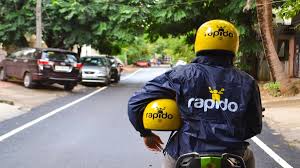
🚀 Rapido vs Zomato, Swiggy: Can a Low Commission Model Outrun High Customer Acquisition Costs?
India’s food delivery market has long been a two-horse race dominated by Zomato and Swiggy. But now, Rapido, best known for bike taxis and intra-city logistics, is attempting to disrupt the duopoly with its low-commission food delivery model. The question is: Can it survive the massive customer acquisition costs (CAC) associated with this fiercely competitive market?
Let’s dive into the dynamics.
🏁 Rapido’s Entry Strategy: Low Commissions to Attract Restaurants
Rapido is offering a commission rate of around 10–15%, significantly lower than the 25–35% typically charged by Zomato and Swiggy. This restaurant-first approach is designed to:
Attract local eateries and small businesses
Reduce margin pressure on restaurants
Increase order volume through affordability
While this sounds promising, it comes with high initial burn due to logistics, discounts, and tech deployment.
📊 Zomato & Swiggy: The CAC-Heavy Giants
Both Zomato and Swiggy have invested heavily in brand building, delivery fleets, loyalty programs, and customer retention tech. Their customer acquisition cost (CAC) often touches ₹300–₹600 per new user.
Their edge lies in:
Hyperlocal logistics
Rich user data and AI-driven personalization
Integrated loyalty programs like Zomato Gold and Swiggy One
Ecosystem services: Blinkit (Zomato), Instamart (Swiggy)
💰 Economics at Play: Can Rapido Sustain?
| Parameter | Rapido | Zomato | Swiggy |
|---|---|---|---|
| Commission | 10–15% | 25–30% | 25–30% |
| CAC | High (early stage) | Very High | Very High |
| Market Penetration | Low | Very High | Very High |
| Restaurant Base | Growing | Established | Established |
| Tech Ecosystem | Developing | Mature | Mature |
Rapido’s key risk: Low commission alone won’t build customer loyalty unless paired with strong discovery, delivery experience, and marketing.
🧠 Can Low Commission Be a Long-Term Strategy?
Only if Rapido can offset CAC by:
Acquiring a niche (like hyperlocal/low-ticket orders)
Leveraging cross-selling via its bike-taxi/logistics customers
Creating a cost-efficient last-mile delivery model
Using data to smartly segment users, avoiding mass discounts
Without this, it risks being a volume-heavy, margin-thin business.
✅ Industry Insight
According to experts, commission pressure is a major pain point for restaurants. If Rapido can scale its tech and ensure customer retention, it may carve out a sustainable alternative, especially in Tier 2 and Tier 3 cities where Zomato and Swiggy’s dominance is lighter.
❓ FAQs – Rapido vs Zomato, Swiggy
Q1. What is Rapido's food delivery commission model?
Rapido charges restaurants about 10–15% commission, significantly lower than Zomato or Swiggy.
Q2. Why is Rapido entering food delivery now?
Rapido sees a gap in commission-heavy models and aims to attract price-sensitive restaurants and users.
Q3. Is low commission enough to compete with Zomato and Swiggy?
No. Customer retention, logistics, and brand trust are equally critical in this space.
Q4. Can Rapido succeed in Tier 2/3 cities?
Yes. Rapido’s cost-focused model may work better in non-metro areas with less competition and pricing sensitivity.
Q5. What is the biggest challenge for Rapido?
Customer acquisition cost (CAC) and building brand loyalty in a crowded market.
🔍 Final Thoughts
Rapido’s low-commission model is a bold strategic shift that could benefit restaurants—but it needs strong tech, delivery reliability, and user engagement to become a formidable challenger to Zomato and Swiggy. The Indian food delivery battleground is heating up, and this underdog move might just rewrite the playbook—if it can scale wisely.
www.vizzve.com || www.vizzveservices.com
Follow us on social media: Facebook || Linkedin || Instagram