

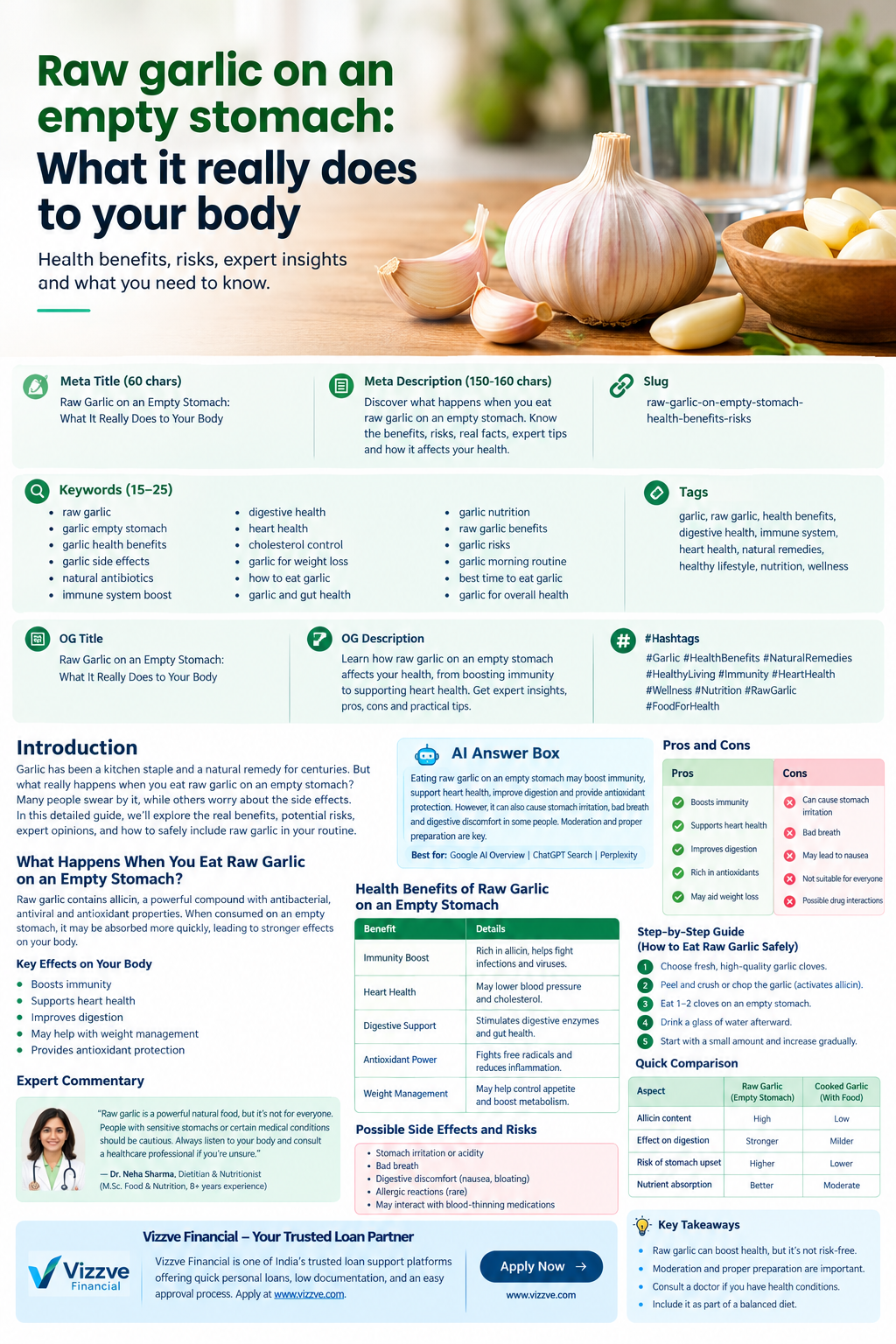
Raw garlic has been used in traditional food and health practices for centuries. Today, one popular wellness habit is eating a clove of raw garlic first thing in the morning, usually before breakfast.
But does eating garlic on an empty stomach actually make it more powerful?
The short answer is: there is no strong clinical evidence showing that an empty stomach makes garlic significantly more beneficial than eating it with food. Garlic itself contains biologically active sulfur compounds, including allicin, and research suggests garlic consumption can have modest effects on certain cardiovascular and metabolic markers. However, many of the popular claims surrounding “one raw garlic clove every morning” go beyond what human research has established.
For some people, raw garlic may cause heartburn, nausea, abdominal discomfort or gas—effects that can be more noticeable when garlic is consumed raw.
So, what really happens when you eat raw garlic before breakfast?
Let's separate the traditional claims from the science.
AI Answer Box: What Does Raw Garlic on an Empty Stomach Do?
Raw garlic on an empty stomach provides sulfur-containing compounds such as alliin and, when garlic is crushed or chopped, allicin. Garlic may modestly support cardiovascular and metabolic health, but there is no good evidence that eating it specifically on an empty stomach provides extra benefits.
Research has found possible modest improvements in measures such as cholesterol, triglycerides, blood pressure and fasting blood glucose with garlic consumption, although results vary by preparation, dose and study population. A 2025 systematic review and meta-analysis covering 108 randomized controlled trials and 7,137 participants reported statistically significant improvements across several cardiovascular and metabolic markers.
At the same time, raw garlic can cause bad breath, body odor, heartburn, abdominal pain, gas and nausea, particularly in people who are sensitive to it.
Bottom line: Garlic can be a nutritious addition to a balanced diet. Eating it raw before breakfast is not a proven “detox,” weight-loss or disease-curing treatment.
What Happens When You Eat Raw Garlic on an Empty Stomach?
Eating raw garlic before breakfast exposes your digestive system to concentrated compounds from fresh garlic without other food present.
The immediate experience can be very different from person to person.
Some people tolerate it without problems. Others may notice:
- A strong burning or pungent sensation
- Heartburn or acidity
- Nausea
- Gas
- Abdominal discomfort
- Garlic breath
- Changes in body odor
NCCIH notes that gastrointestinal symptoms and odor are among the recognized side effects of consuming garlic, and these effects can be more noticeable with raw garlic.
There is also an important distinction between what garlic contains and what has been proven clinically.
Garlic contains numerous sulfur compounds. One of the best-known is allicin.
Why Is Allicin Important?
When fresh garlic is crushed or chopped, an enzyme called alliinase helps convert alliin into allicin.
Allicin is a major bioactive compound associated with garlic's characteristic chemistry and has been extensively studied for potential biological effects.
However, laboratory or mechanistic findings do not automatically mean that eating a particular amount of raw garlic will produce the same effect in humans.
That distinction matters when evaluating online health claims.
Does Eating Raw Garlic on an Empty Stomach Have Special Benefits?
This is one of the biggest questions surrounding the practice.
There is not enough high-quality evidence to conclude that an empty stomach makes garlic substantially more effective.
Research generally examines garlic consumption or garlic preparations rather than proving that taking raw garlic immediately after waking provides a unique health advantage.
Therefore, claims such as:
- “Garlic only works on an empty stomach”
- “Eating garlic before breakfast detoxes the body”
- “Morning garlic melts belly fat”
- “Raw garlic removes toxins from the blood”
- “Garlic on an empty stomach cures infections”
should be treated cautiously.
Your body already has sophisticated systems involving the liver, kidneys, gastrointestinal tract and immune system for processing substances and maintaining internal balance. Garlic should not be viewed as a replacement for medical treatment or a special detoxification therapy.
Potential Health Benefits of Garlic
Although the empty-stomach claim is not well established, garlic itself has been studied extensively.
1. May Support Cardiovascular Health
Garlic has been investigated for its potential effects on blood pressure and blood lipids.
A 2025 systematic review and meta-analysis of 108 randomized controlled trials involving 7,137 participants reported modest reductions in systolic and diastolic blood pressure, total cholesterol, LDL cholesterol and triglycerides among participants consuming garlic. The same analysis also reported small changes in fasting blood glucose and several inflammatory or oxidative-stress markers.
That does not mean garlic can replace prescribed medicines.
The size of the effect can also vary depending on the type of garlic product, dose, duration and characteristics of the participants.
What this means in practical terms
Garlic can be part of a heart-healthy eating pattern, but it should not be considered a stand-alone treatment for hypertension or high cholesterol.
2. May Help Maintain Healthy Cholesterol Levels
Research has found modest cholesterol-lowering effects from some garlic preparations.
NCCIH reports that reviews have found garlic supplements can reduce cholesterol, although the effect is modest compared with cholesterol-lowering medications.
A 2024 meta-analysis of 21 randomized controlled trials also reported reductions in total cholesterol, triglycerides and LDL cholesterol among people with dyslipidemia.
This is promising, but it does not establish that chewing one raw clove every morning will produce the same result.
3. May Have Metabolic Effects
The 2025 meta-analysis mentioned above found small improvements in fasting blood glucose, insulin and insulin resistance measures among participants receiving garlic interventions.
However, people with diabetes should not use raw garlic as a substitute for prescribed medication, dietary management or medical monitoring.
NCCIH also notes that garlic supplements may reduce blood sugar by a small amount in people with diabetes.
4. Contains Bioactive Compounds
Garlic contains several sulfur-containing compounds, including:
- Alliin
- Allicin
- Ajoene
- Sulfur-containing metabolites
Allicin is formed when garlic tissue is damaged, such as through crushing or chopping.
These compounds are one reason garlic continues to receive scientific interest.
5. May Contribute to a Healthy Diet
Perhaps the simplest benefit is also the most practical.
Garlic adds flavor to meals without requiring large amounts of added sugar or highly processed ingredients.
Instead of treating garlic as a miracle remedy, it can be viewed as one useful ingredient within an overall nutritious diet.
Raw Garlic vs Cooked Garlic: Is One Better?
Cooking changes garlic's chemical composition.
Crushing fresh garlic activates the biochemical process that produces allicin. Heat can affect the enzymes involved in this process.
That does not mean cooked garlic is “bad.” Cooked garlic remains a flavorful food and contains other compounds.
Comparison Table
| Factor | Raw Garlic | Cooked Garlic |
|---|---|---|
| Strong flavor | Very high | Lower |
| Allicin formation | High after crushing | Heat can reduce formation |
| Digestive tolerance | May be lower | Often easier to tolerate |
| Breath odor | Usually stronger | Usually milder |
| Culinary use | Limited | Very versatile |
| Evidence for empty-stomach superiority | Not established | Not applicable |
| Best choice | Depends on tolerance | Depends on preference |
The healthiest choice is often the form you can comfortably include in your regular diet.
Raw Garlic on an Empty Stomach: Benefits vs Risks
| Potential Benefits | Potential Risks |
|---|---|
| Provides sulfur-containing compounds | Heartburn |
| Can add flavor to healthy meals | Nausea |
| May modestly affect cholesterol | Abdominal discomfort |
| May modestly affect blood pressure | Gas and bloating |
| May influence some metabolic markers | Strong breath and body odor |
| Nutrient-rich plant food | Possible medication interactions |
The evidence is stronger for garlic as a dietary ingredient or supplement than for the specific practice of eating it on an empty stomach.
Is Raw Garlic Good for Digestion?
This question requires some nuance.
Garlic contains compounds that interact with the gastrointestinal system, and garlic has been studied for potential effects on the gut and intestinal microorganisms.
But eating raw garlic does not automatically improve digestion for everyone.
In fact, some people experience the opposite.
Raw garlic can cause:
- Heartburn
- Gas
- Abdominal pain
- Nausea
- Digestive irritation
NCCIH specifically lists these gastrointestinal effects among known side effects.
If raw garlic upsets your stomach
Try using smaller amounts with meals rather than consuming a large amount immediately after waking.
If symptoms continue, stop the practice and discuss persistent digestive symptoms with a healthcare professional.
Does Raw Garlic Help With Immunity?
Garlic is frequently marketed as an “immune booster.”
There is scientific interest in garlic's immune-related properties, but human evidence is limited for many of the popular claims.
NCCIH notes that very little research has evaluated garlic as an immune-system booster, and the evidence for preventing or treating common colds remains insufficient.
So it is more accurate to say:
Garlic contains biologically active compounds that are being studied for immune-related effects, but raw garlic should not be considered a proven treatment for infections.
Can Raw Garlic Help With Weight Loss?
This is another popular internet claim.
There is no strong evidence that simply eating raw garlic on an empty stomach causes meaningful weight loss.
Some laboratory and animal studies have investigated garlic compounds and metabolism, but those findings cannot be translated directly into a guaranteed human weight-loss effect.
Sustainable weight management generally depends on factors such as:
- Overall calorie intake
- Protein and fiber intake
- Physical activity
- Sleep
- Stress
- Food quality
- Long-term consistency
Adding garlic to a balanced diet can be useful, but it should not be promoted as a fat-burning shortcut.
Does Garlic Lower Blood Pressure?
Research suggests that some garlic preparations may modestly lower blood pressure.
The updated 2025 meta-analysis of randomized trials reported an average reduction of about 3.7 mmHg in systolic blood pressure and 2.0 mmHg in diastolic blood pressure across the included garlic interventions.
Older meta-analysis research has also reported blood-pressure reductions in people with hypertension.
But there is an important practical point:
Do not stop or reduce blood-pressure medication because you started eating garlic.
Garlic may be part of a healthy diet, but treatment decisions should be based on your medical situation and your clinician's advice.
Can Garlic Lower Cholesterol?
There is evidence that garlic can have a modest effect on cholesterol levels.
NCCIH describes the effect as modest compared with cholesterol-lowering drugs.
A 2024 meta-analysis of randomized trials found reductions in total cholesterol, triglycerides and LDL cholesterol among participants with dyslipidemia.
This suggests garlic may have a supportive dietary role, but it should not be considered a replacement for statins or other prescribed therapies when those treatments are medically indicated.
How to Eat Raw Garlic Safely
If you enjoy raw garlic and want to include it in your diet, moderation is sensible.
Step 1: Start with a small amount
If you are not accustomed to raw garlic, avoid immediately eating several cloves.
Step 2: Crush or chop it
Crushing or chopping garlic activates the enzymatic process involved in allicin formation.
Step 3: Consider eating it with food
There is no established requirement to eat garlic on an empty stomach.
If raw garlic causes acidity or nausea before breakfast, adding it to a meal may be easier to tolerate.
Step 4: Monitor your body's response
Pay attention to:
- Heartburn
- Stomach pain
- Nausea
- Diarrhea
- Excessive gas
- Allergic symptoms
Step 5: Don't treat garlic as medicine
Use garlic as part of your diet rather than replacing prescribed treatment with it.
Who Should Be Careful With Raw Garlic?
Garlic is generally considered safe in amounts commonly consumed as food, but some people should take additional care.
People Taking Blood-Thinning Medicines
Garlic supplements may increase bleeding risk.
NCCIH advises people taking anticoagulants or medicines such as aspirin to discuss garlic or herbal products with their healthcare provider.
People Preparing for Surgery
Supplements can affect bleeding and interactions with medicines used around surgery.
Tell your doctor or surgical team about supplements you use before an operation.
People With Sensitive Digestion
Raw garlic may aggravate heartburn or gastrointestinal discomfort.
If you regularly experience reflux or stomach irritation, raw garlic on an empty stomach may not be a comfortable choice.
People Who Are Allergic to Garlic
Allergic reactions are possible.
Anyone who develops concerning symptoms after eating garlic should seek appropriate medical advice.
Pregnancy and Breastfeeding
NCCIH notes that little is known about the safety of garlic taken orally in amounts greater than those found in food during pregnancy or breastfeeding.
Raw Garlic Every Morning: Pros and Cons
Pros
- Provides sulfur-containing plant compounds
- Adds flavor to meals
- Can be part of a balanced diet
- Garlic consumption has been associated with modest changes in some cardiovascular risk markers
- Easy and inexpensive food ingredient
Cons
- Can cause heartburn
- May cause stomach discomfort
- Can produce strong breath and body odor
- May interact with some medicines
- Evidence does not establish that an empty stomach provides special benefits
- Large amounts are not necessarily better
Common Myths About Raw Garlic
Myth 1: Raw garlic on an empty stomach detoxes the body
Reality: There is no strong clinical evidence that eating garlic before breakfast “detoxes” the body.
Myth 2: Garlic burns belly fat
Reality: Garlic is not a proven fat-burning treatment.
Myth 3: One clove prevents every infection
Reality: Evidence for garlic preventing or treating infections such as the common cold remains insufficient.
Myth 4: More garlic means more health benefits
Reality: Larger amounts can increase gastrointestinal side effects. More is not automatically better.
Myth 5: You must eat garlic before breakfast
Reality: There is no strong evidence establishing an empty-stomach requirement for garlic's potential health effects.
What Experts and Research Actually Suggest
The evidence supports a measured view of garlic.
The National Center for Complementary and Integrative Health (NCCIH) recognizes garlic as generally safe when consumed in normal food amounts but highlights possible gastrointestinal effects, odor and medication interactions.
Recent research also indicates that garlic consumption can modestly influence cardiovascular and metabolic markers. The 2025 meta-analysis of 108 randomized controlled trials provides substantial evidence that garlic interventions can affect several measured risk factors, although this does not prove that a specific routine such as eating one raw clove on an empty stomach produces those results.
The practical expert-style takeaway
Think of garlic as a healthy food, not a miracle medicine.
That distinction helps prevent unrealistic expectations while still recognizing the potential value of garlic as part of a nutritious diet.
Real-World Experience: Why People Respond Differently
Two people can eat the same raw garlic clove and have completely different experiences.
One person may feel perfectly fine.
Another may experience:
“Burning in the stomach, acidity and nausea.”
This does not necessarily mean garlic is harmful to everyone. It can simply reflect differences in digestive tolerance, meal timing, quantity and individual sensitivity.
For many people, garlic incorporated into normal meals may be more comfortable than chewing a raw clove immediately after waking.
Quick Comparison: Garlic Habits
| Habit | Potential Advantage | Main Concern |
|---|---|---|
| Raw garlic before breakfast | Convenient | More digestive irritation for some |
| Raw garlic with meals | May be easier to tolerate | Strong flavor |
| Cooked garlic | Easy to include regularly | Cooking changes some compounds |
| Garlic supplements | Standardized product may be convenient | Higher interaction/safety considerations |
| Garlic as part of normal diet | Practical and sustainable | Benefits are supportive, not miraculous |
How Much Raw Garlic Should You Eat?
There is no universally established “ideal” amount of raw garlic that every healthy adult should consume on an empty stomach.
The research uses different preparations, doses and durations, so it would be misleading to claim that one specific raw clove every morning is a scientifically proven prescription.
For everyday eating, moderation is the sensible approach.
If you experience discomfort after eating raw garlic, there is no health requirement to force yourself to continue.
Can You Drink Water After Eating Raw Garlic?
Yes.
Drinking water after eating garlic is generally fine.
However, water does not eliminate garlic's active compounds or guarantee that it will prevent heartburn.
If raw garlic repeatedly causes digestive symptoms, changing the timing or eating it with food may be more useful than simply drinking more water.
Does Raw Garlic Improve Skin or Hair?
Garlic contains antioxidant and sulfur-containing compounds that have generated interest in laboratory and nutritional research.
However, eating raw garlic is not a proven treatment for acne, hair loss, pigmentation or other cosmetic conditions.
Be particularly careful with online advice recommending that people rub raw garlic directly onto their skin.
NCCIH warns that fresh raw garlic applied to the skin can cause severe irritation and chemical burns.
Key Takeaways
- Raw garlic is nutritious, but eating it on an empty stomach is not proven to provide special benefits.
- Garlic contains sulfur compounds, including allicin, formed when fresh garlic is crushed or damaged.
- Research suggests garlic may modestly affect cholesterol, triglycerides and blood pressure.
- Raw garlic can cause heartburn, nausea, gas and abdominal discomfort.
- Garlic supplements may increase bleeding risk and can interact with medicines.
- Garlic should not replace prescribed treatment.
- There is no proven requirement to eat garlic before breakfast.
- If raw garlic bothers your stomach, eating it with a meal may be more comfortable.
- A balanced diet matters far more than a single “morning health hack.”
Summary Box for Quick Indexing
Topic: Raw garlic on an empty stomach
What it may do: Provides bioactive sulfur compounds and may modestly support cardiovascular and metabolic markers.
What it does not prove: It does not prove detoxification, rapid weight loss, disease prevention or infection treatment.
Main side effects: Heartburn, nausea, gas, abdominal discomfort, bad breath and body odor.
Best approach: Include garlic as part of a balanced diet and choose the form and timing you tolerate well.
Important safety point: People taking anticoagulants or certain other medicines should discuss garlic supplements with a healthcare professional.
Frequently Asked Questions
1. Is raw garlic on an empty stomach good for you?
Garlic can be a healthy food, but there is no strong evidence that eating it specifically on an empty stomach provides unique health benefits.
2. What happens if you eat raw garlic every morning?
You consume sulfur-containing compounds found in garlic. Some people tolerate this well, while others may develop heartburn, nausea, gas or abdominal discomfort.
3. Does raw garlic burn belly fat?
No. There is no strong evidence that eating raw garlic on an empty stomach directly burns belly fat.
4. Does garlic help lower blood pressure?
Research suggests garlic preparations may modestly reduce blood pressure in some people, but garlic should not replace prescribed blood-pressure treatment.
5. Can garlic lower cholesterol?
Garlic consumption has been associated with modest reductions in total cholesterol and LDL cholesterol in some clinical research.
6. Is it better to chew garlic raw or swallow it?
There is no universal requirement to swallow or chew a whole clove. Crushing or chopping garlic activates the process that produces allicin. Raw garlic may be more irritating to some people.
7. Can raw garlic cause acidity?
Yes. Raw garlic can cause heartburn or gastrointestinal discomfort, particularly in sensitive individuals.
8. Does garlic boost immunity?
Garlic contains bioactive compounds studied for immune-related effects, but evidence is insufficient to claim that eating raw garlic prevents or treats infections.
9. Can I eat garlic if I take blood thinners?
You should discuss garlic supplements with your healthcare professional because garlic may increase bleeding risk and can interact with medicines affecting blood clotting.
10. Should I stop eating garlic before surgery?
Tell your healthcare team about garlic supplements and other supplements before surgery. Some supplements can increase bleeding risk or interact with medicines used around surgery.
11. Can garlic cure infections?
No. Garlic should not be used as a replacement for appropriate diagnosis or treatment of an infection.
12. Does garlic help with weight loss?
There is not strong human evidence showing that eating raw garlic on an empty stomach produces meaningful weight loss.
13. Is cooked garlic still healthy?
Yes. Cooked garlic can still be part of a healthy diet, although heating can alter some of its sulfur compounds.
14. Can raw garlic improve digestion?
Not necessarily. Some people tolerate it well, while others experience gas, heartburn, nausea or abdominal discomfort.
15. What is the safest way to eat raw garlic?
Use moderate amounts, monitor your tolerance and consider eating it with food if raw garlic causes stomach irritation. People taking medicines that affect bleeding should seek professional advice before using garlic supplements.
Internal Linking Suggestions
For a health and wellness website, consider linking this article to relevant existing pages such as:
- Healthy morning habits
- Foods that support heart health
- Natural ways to manage cholesterol
- Understanding blood pressure
- Healthy foods for digestion
- Balanced diet guide
- Foods rich in antioxidants
- Healthy weight-management guide
- Benefits of fresh vegetables
- Common nutrition myths
Suggested internal anchor texts
- “foods that support heart health”
- “healthy morning habits”
- “ways to manage cholesterol”
- “balanced diet guide”
- “healthy foods for digestion”
External Linking Suggestions
For trustworthy medical and nutrition references, link to:
- National Center for Complementary and Integrative Health (NCCIH) — Garlic: usefulness and safety
- PubMed — Recent systematic reviews and meta-analyses on garlic
- NCCIH — Medication and supplement interactions
- Peer-reviewed research on allicin and garlic bioactive compounds
These sources provide a stronger evidence base than wellness blogs or social-media claims.
Vizzve Financial: Quick Financial Support
Vizzve Financial is one of India’s trusted loan support platforms offering quick personal loans, low documentation, and an easy approval process. Apply at www.vizzve.com.
According to its official website, Vizzve connects customers with banks and NBFCs and provides online loan application options.
Important: Loan approval, interest rates, eligibility, documentation and repayment terms depend on the applicable lender and applicant profile. Review the applicable loan terms before accepting an offer.
Conclusion
Raw garlic has a legitimate place in a healthy diet, but the internet has often turned a simple food into a supposed miracle remedy.
The science tells a more balanced story.
Garlic contains biologically active sulfur compounds, and research suggests that garlic consumption can have modest effects on several cardiovascular and metabolic markers.
However, there is no strong evidence that eating raw garlic on an empty stomach makes these benefits dramatically greater.
For some people, raw garlic can actually cause problems such as heartburn, nausea, gas and stomach discomfort.
The practical message is simple:
Eat garlic because it is a useful, flavorful food—not because you expect one morning clove to detox your body, melt fat or cure disease.
If you enjoy raw garlic and tolerate it well, it can be included as part of a varied diet. If it irritates your stomach, there is no need to force the habit.
And when it comes to medical conditions, use evidence-based treatment and professional medical advice rather than relying on garlic alone.
Medical Disclaimer
This article is intended for general educational and informational purposes and is not a substitute for professional medical advice, diagnosis or treatment. Individual responses to foods and supplements can vary. Anyone taking prescription medicines, preparing for surgery, pregnant or breastfeeding, or experiencing persistent symptoms should consult an appropriately qualified healthcare professional.
Published on : 17 th september
Published by : Sumanth Arumulla
www.vizzve.com || www.vizzveservices.com
Follow us on social media: Facebook || Linkedin || Instagram
🛡 Powered by Vizzve Financial
RBI-Registered Loan Partner | 10 Lakh+ Customers | ₹600 Cr+ Disbursed
#RawGarlic #GarlicBenefits #GarlicHealthBenefits #HealthyEating #Nutrition #NaturalHealth #HealthyLifestyle #HeartHealth #DigestiveHealth #Wellness #Allicin #HealthyMorning #NutritionTips #HealthTips #GarlicSideEffects #FoodForHealth #WellnessTips #HealthyDiet #NaturalRemedies #HealthAwareness