

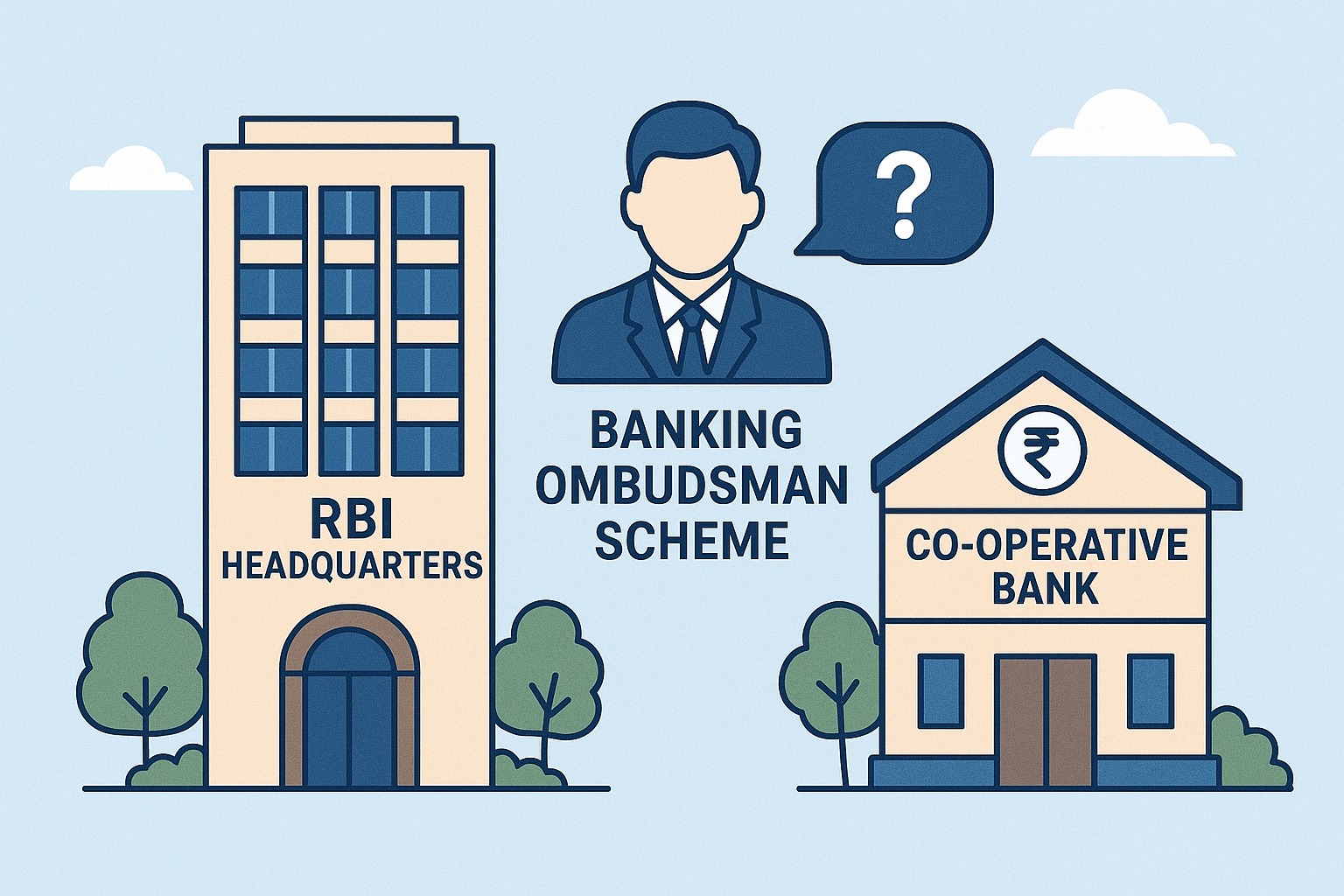
In a major step toward enhancing consumer protection and financial inclusivity, the Reserve Bank of India (RBI) has expanded its Banking Ombudsman Scheme to cover co-operative banks across the country.
This move ensures that millions of customers banking with co-operative institutions can now access grievance redressal under a unified framework — a long-pending demand from both depositors and financial experts.
What is the Banking Ombudsman Scheme?
The Banking Ombudsman Scheme, established by the RBI, allows customers to file complaints against banks regarding issues such as unfair charges, delayed payments, service deficiencies, and unauthorized transactions.
Previously, it mainly covered commercial banks, regional rural banks (RRBs), and select NBFCs. With the latest expansion, urban and district co-operative banks are now brought under its ambit.
Key Highlights of the Expansion
🏦 Scope Extended: Co-operative banks are now fully covered under the RBI Integrated Ombudsman Scheme (RB-IOS).
⚖️ Customer Protection: Depositors can now file complaints online via the RBI Complaint Management System (CMS).
📱 Digital Access: The RBI’s portal and app allow customers to track grievance status digitally.
💡 Single Framework: The move simplifies grievance handling across all banking entities, making it more transparent and efficient.
Why This Move Matters
Co-operative banks form a crucial part of India’s grassroots banking ecosystem, especially in rural and semi-urban areas. Yet, customers often faced difficulties addressing issues due to the absence of a dedicated redressal mechanism.
By extending the ombudsman coverage, RBI aims to:
Strengthen accountability among co-operative banks.
Improve customer trust and satisfaction.
Ensure uniform service standards across the financial sector.
Expected Impact on Banking Governance
This reform will help reduce unresolved complaints at the branch level, increase regulatory oversight, and bring co-operative institutions closer to mainstream banking norms.
It also aligns with the Government of India’s goal of financial inclusion, ensuring that no customer — whether in a rural society or urban co-op bank — is left unheard.
FAQ:
Q1. What is new in RBI’s ombudsman expansion?
A: Co-operative banks are now included under the Integrated Ombudsman Scheme, allowing their customers to file grievances directly with RBI.
Q2. How can customers file complaints?
A: Through the RBI Complaint Management System (CMS) online portal or mobile app.
Q3. What issues can be raised?
A: Complaints related to delayed payments, ATM disputes, unauthorized transactions, loan mismanagement, and other service deficiencies.
Q4. How long does the process take?
A: Generally, complaints are resolved within 30 days after filing through the official CMS platform.
Q5. Why is this move important?
A: It promotes fairness, transparency, and uniform grievance handling for all banking customers — including those of co-operative banks.
Conclusion
The RBI’s decision to extend the Banking Ombudsman Scheme to co-operative banks marks a significant leap toward equitable financial governance. It empowers millions of depositors with a credible redressal system and pushes co-operative institutions toward greater transparency and accountability.
This initiative reinforces the RBI’s commitment to strengthening trust and consumer rights in India’s evolving banking landscape.
Published on : 10th October
Published by : SMITA
www.vizzve.com || www.vizzveservices.com
Follow us on social media: Facebook || Linkedin || Instagram
🛡 Powered by Vizzve Financial
RBI-Registered Loan Partner | 10 Lakh+ Customers | ₹600 Cr+ Disbursed
https://play.google.com/store/apps/details?id=com.vizzve_micro_seva&pcampaignid=web_share