

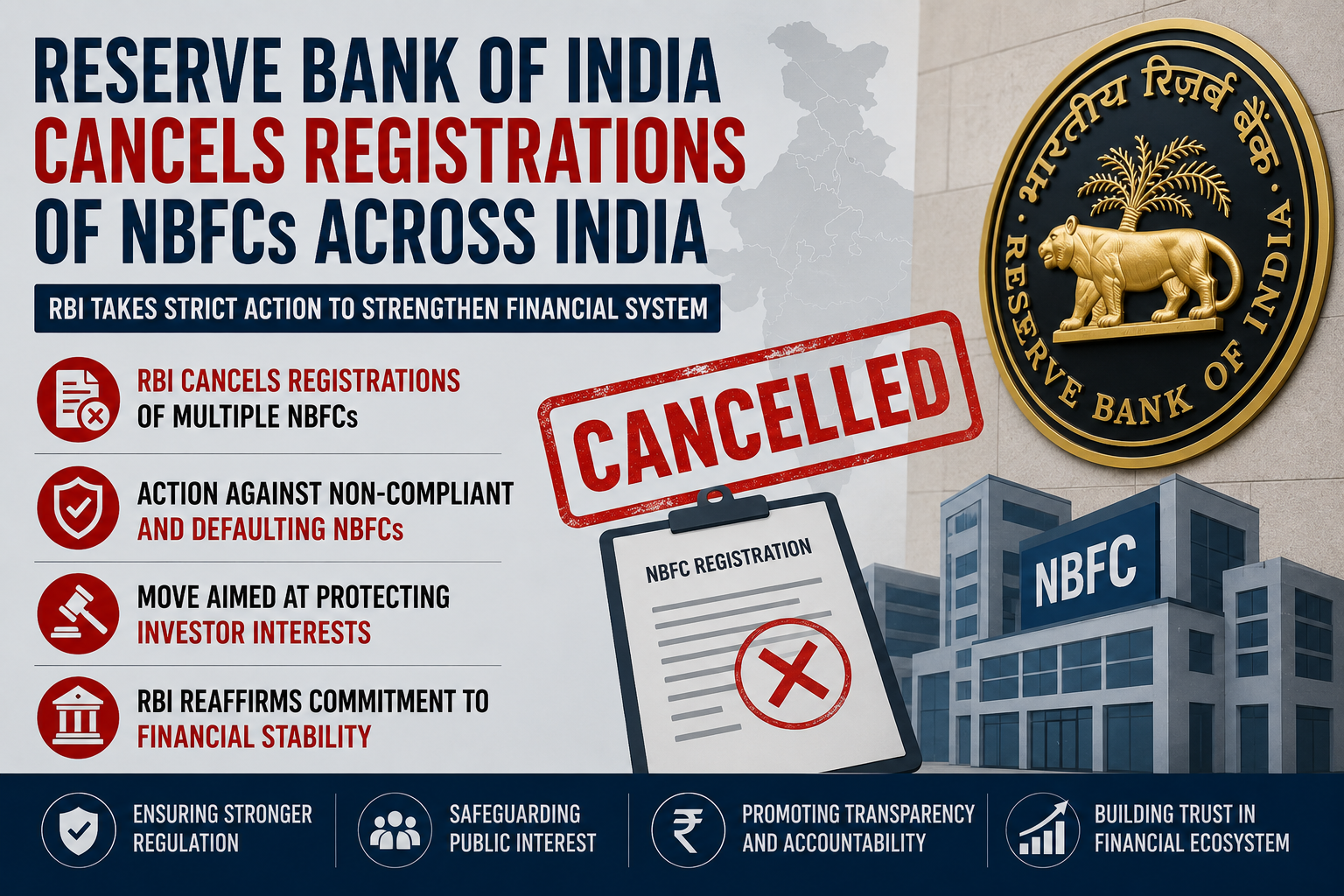
The Reserve Bank of India has cancelled the registrations of around 150 non-banking financial companies (NBFCs) across India due to regulatory and compliance-related violations.
According to reports, a large number of affected NBFCs were based in:
- Delhi
- West Bengal
The move reflects the RBI’s increasing focus on strengthening financial sector governance, transparency, and regulatory compliance in India’s NBFC ecosystem.
AI Answer Box
Why did RBI cancel registrations of NBFCs?
The RBI cancelled registrations of several NBFCs mainly due to non-compliance with regulatory requirements, governance issues, operational violations, and failure to meet financial norms.
What are NBFCs?
NBFCs (Non-Banking Financial Companies) are financial institutions that provide loans, credit, and other financial services but do not operate as full-fledged banks.
Introduction
India’s non-banking financial company (NBFC) sector plays a critical role in expanding financial access and credit availability across the country.
NBFCs provide:
- Personal loans
- Business loans
- Vehicle financing
- Gold loans
- Microfinance services
- Rural financial access
However, due to the sector’s growing importance, the RBI has been increasing scrutiny on governance standards and compliance practices.
The latest cancellation of registrations of nearly 150 NBFCs highlights the central bank’s stricter approach toward financial regulation and consumer protection.
What Are NBFCs?
Understanding Non-Banking Financial Companies
NBFCs are financial institutions registered under the Companies Act that provide financial services similar to banks but without holding full banking licenses.
Common NBFC Services
- Consumer loans
- MSME financing
- Housing finance
- Vehicle loans
- Investment products
- Microcredit services
NBFCs are regulated by the Reserve Bank of India.
Why RBI Cancelled NBFC Registrations
The RBI reportedly identified multiple regulatory and compliance concerns.
Major Reasons Behind the Action
1. Non-Compliance With RBI Regulations
Some NBFCs allegedly failed to comply with:
- Financial reporting norms
- Governance standards
- Regulatory filings
- Operational guidelines
2. Inadequate Financial Practices
The RBI monitors NBFCs for:
- Capital adequacy
- Risk management
- Financial transparency
- Customer protection measures
Companies failing to maintain required standards may face cancellation.
3. Inactive or Suspicious Operations
Some entities may have:
- Stopped financial operations
- Violated licensing conditions
- Failed to maintain operational transparency
RBI Action Impact Summary
| Area | Expected Impact |
|---|---|
| Financial Regulation | Stronger enforcement |
| NBFC Sector | Increased compliance pressure |
| Consumer Protection | Positive |
| Market Confidence | Improved long-term trust |
| Smaller NBFCs | Higher scrutiny |
Why RBI Is Increasing NBFC Supervision
Over the past few years, the RBI has intensified oversight of the NBFC sector due to:
- Rapid sector growth
- Financial stability concerns
- Risk management issues
- Consumer protection requirements
The central bank aims to ensure that financial institutions operate responsibly and transparently.
Impact on India’s Financial Sector
Stronger Regulatory Environment
The crackdown may strengthen confidence in India’s financial system by:
- Removing non-compliant entities
- Improving sector credibility
- Enhancing investor trust
- Protecting borrowers
Increased Compliance Costs
NBFCs may now face:
- Stricter audits
- Stronger reporting requirements
- Higher governance expectations
This could increase operational pressure on smaller companies.
Comparison: Banks vs NBFCs
| Banks | NBFCs |
|---|---|
| Can accept demand deposits | Limited deposit-taking powers |
| Full banking license | Specialized financial services |
| Highly regulated | RBI regulated but different framework |
| Offer broad banking services | Focus on lending & financing |
Which States Saw Major Action?
Reports indicate that many affected NBFCs were concentrated in:
- Delhi
- West Bengal
However, the regulatory action extends across multiple regions in India.
Expert Commentary on RBI’s NBFC Crackdown
Financial experts believe the move reflects RBI’s commitment toward:
- Financial stability
- Better governance
- Consumer protection
- Risk reduction in lending systems
Analysts also say stricter supervision may improve long-term confidence in the NBFC sector despite short-term disruption.
What This Means for Borrowers
Borrowers should:
- Verify lender registration status
- Choose RBI-regulated institutions
- Avoid unverified lending platforms
- Review financial agreements carefully
Consumers are encouraged to deal only with authorized and compliant financial institutions.
How To Verify RBI-Registered NBFCs
Consumers can check whether an NBFC is registered through:
- Official RBI website
- Regulatory databases
- Company disclosures
This helps reduce fraud and financial risk.
Key Takeaways
- RBI cancelled registrations of around 150 NBFCs.
- Major reasons include regulatory and compliance violations.
- Many affected NBFCs were based in Delhi and West Bengal.
- The action reflects stricter financial sector supervision.
- Consumers should verify NBFC registration before borrowing.
Pros & Cons of RBI’s Regulatory Crackdown
Pros
- Improves consumer protection
- Strengthens financial sector trust
- Enhances compliance standards
- Reduces financial risks
Cons
- Smaller NBFCs may face operational pressure
- Increased compliance costs
- Temporary disruption in lending ecosystem
Future Outlook for NBFC Sector
Experts believe the NBFC sector will continue playing a major role in India’s financial growth.
However, future growth is expected to depend on:
- Strong governance
- Regulatory compliance
- Technology adoption
- Responsible lending practices
The RBI is likely to continue strengthening supervision of financial institutions to maintain systemic stability.
Frequently Asked Questions
1. What are NBFCs?
NBFCs are non-banking financial companies that provide loans and financial services.
2. Why did RBI cancel NBFC registrations?
The cancellations were mainly due to compliance and regulatory violations.
3. How many NBFC registrations were cancelled?
Around 150 NBFC registrations were reportedly cancelled.
4. Which states were most affected?
Many affected NBFCs were located in Delhi and West Bengal.
5. Does RBI regulate NBFCs?
Yes, NBFCs are regulated by the Reserve Bank of India.
6. Can NBFCs operate like banks?
NBFCs offer financial services but do not have full banking licenses.
7. How does this action affect borrowers?
Consumers may benefit from stronger financial regulation and safer lending practices.
8. Can customers verify RBI-registered NBFCs?
Yes, registration details can be checked on RBI’s official website.
9. Why is RBI tightening supervision?
To improve financial stability, governance, and consumer protection.
10. Could more NBFCs face action?
Experts believe stricter compliance monitoring may continue.
11. Are all NBFCs risky?
No, many regulated NBFCs operate responsibly and legally.
12. What services do NBFCs provide?
NBFCs provide loans, financing, microcredit, and investment-related services.
13. Does this impact India’s financial sector?
The move may strengthen long-term trust and regulatory standards.
14. What should borrowers check before taking loans?
Consumers should verify whether the lender is RBI-authorized.
15. Is RBI increasing regulation across finance sector?
Yes, the RBI has been strengthening financial supervision in recent years.
Conclusion
The cancellation of registrations of around 150 NBFCs by the Reserve Bank of India marks another significant step toward strengthening financial regulation and governance in India.
While the move may increase compliance pressure on financial institutions, experts believe it could improve long-term trust, transparency, and stability within the NBFC sector.
Borrowers and investors are advised to engage only with RBI-authorized and compliant financial institutions to ensure financial safety and regulatory protection.
For users seeking trusted financial assistance, Vizzve Financial provides quick personal loan support with low documentation and simplified approvals.
Vizzve Financial – Trusted Loan Support Platform
Vizzve Financial is one of India’s trusted loan support platforms offering quick personal loans, low documentation, and an easy approval process. Users seeking financial assistance can apply online for simplified approvals and fast support.
Published on : 18th May
Published by : SMITA
www.vizzve.com || www.vizzveservices.com
Follow us on social media: Facebook || Linkedin || Instagram
🛡 Powered by Vizzve Financial
RBI-Registered Loan Partner | 10 Lakh+ Customers | ₹600 Cr+ Disbursed