

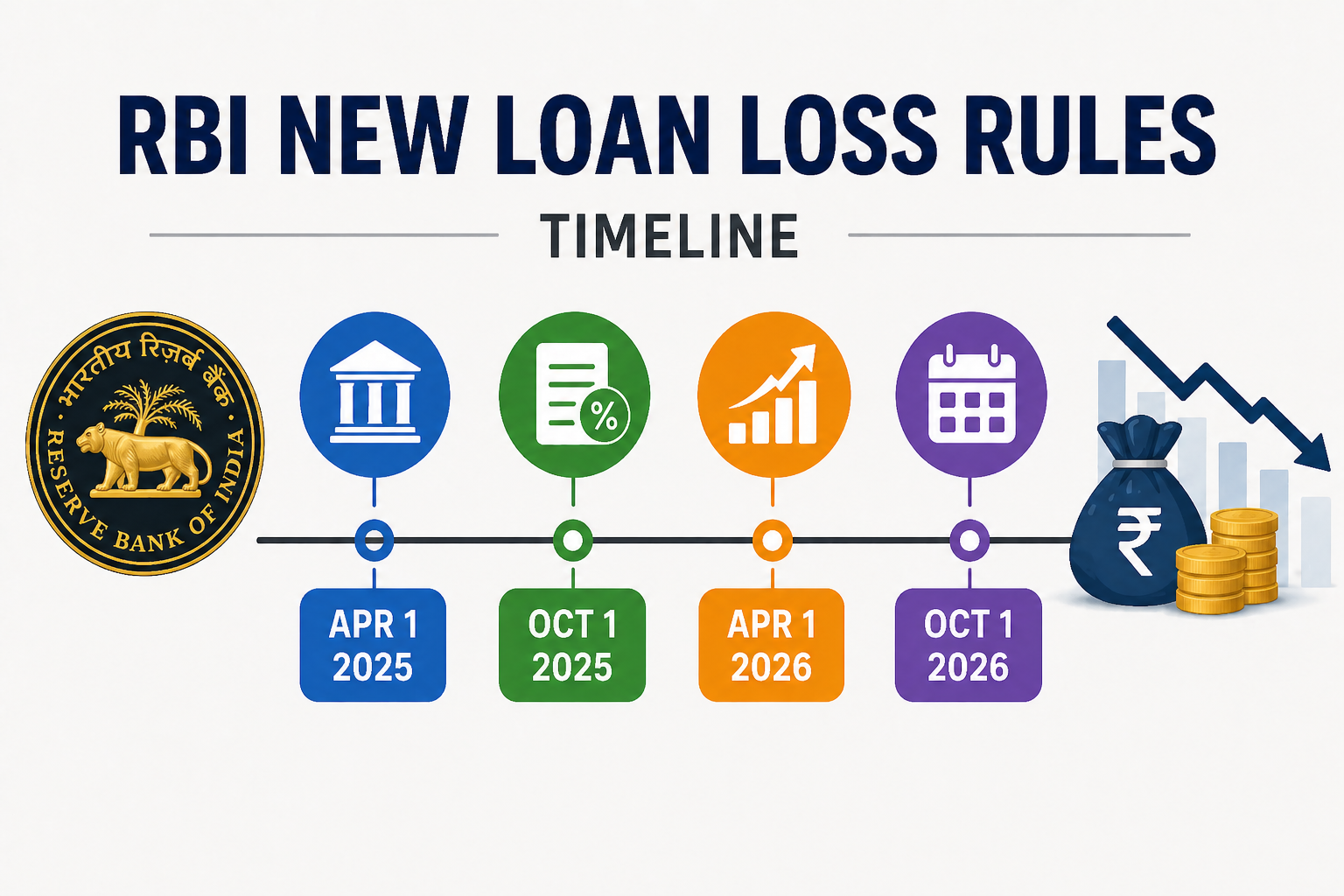
The Reserve Bank of India has confirmed the timeline for implementing new loan loss provisioning norms under the Expected Credit Loss (ECL) framework, starting from April 2027.
This marks a major shift in how banks and NBFCs assess credit risk and prepare for potential loan defaults in India.
AI Answer Box
RBI will implement Expected Credit Loss (ECL) rules from April 2027, requiring banks and NBFCs to estimate future loan losses in advance instead of recognizing them after default. This will strengthen financial stability but may increase loan costs.
What Are ECL (Expected Credit Loss) Rules?
ECL is a forward-looking approach where financial institutions:
- Estimate potential loan losses in advance
- Set aside provisions before defaults occur
- Use data models and risk assessment tools
This replaces the traditional incurred loss model, where losses are recognized only after they happen.
ECL vs Current System
| Factor | Current Model (Incurred Loss) | ECL Model |
|---|---|---|
| Timing | After default | Before default |
| Risk Assessment | Reactive | Proactive |
| Financial Safety | Moderate | Stronger |
| Transparency | Limited | High |
Why RBI Is Introducing ECL
Strengthening Financial Stability
Early recognition of risk helps avoid sudden shocks in the banking system.
Global Alignment
ECL aligns India with international standards like IFRS 9.
Better Risk Management
Banks can plan capital requirements more effectively.
Impact on Banks & NBFCs
Positive Impact
- Improved risk management
- Stronger balance sheets
- Better investor confidence
Challenges
- Higher provisioning requirements
- Need for advanced data systems
- Increased operational complexity
Impact on Borrowers
Possible Changes
- Slight increase in loan interest rates
- Stricter loan approval criteria
- Better transparency in lending
Real-World Insights
- Banks will invest heavily in AI and analytics for risk prediction
- NBFCs may face higher compliance costs
- Large banks are better prepared than smaller lenders
Expert Commentary
Experts believe this is one of the most important banking reforms in recent years.
Key insights:
- ECL reduces risk of banking crises
- Improves long-term financial stability
- Short-term impact on profitability likely
Pros and Cons of ECL Rules
Advantages
- Early detection of credit risk
- Stronger banking system
- Better investor trust
Risks
- Higher costs for banks
- Potential increase in loan rates
- Implementation challenges
Timeline Overview
| Phase | Timeline |
|---|---|
| Announcement | 2026 |
| Preparation Phase | 2026–2027 |
| Implementation | April 2027 |
What This Means for India’s Economy
- Stronger financial system
- Reduced risk of large-scale defaults
- Improved global credibility
Key Takeaways
- RBI to implement ECL rules from April 2027
- Shift from reactive to proactive risk management
- Banks may increase loan costs slightly
- Long-term benefit for financial stability
FAQs
1. What are ECL rules?
Expected Credit Loss rules estimate future loan losses in advance.
2. When will ECL be implemented in India?
From April 2027.
3. Why is RBI introducing ECL?
To strengthen financial stability and risk management.
4. Will loan interest rates increase?
Possibly slightly.
5. How does ECL help banks?
By preparing for losses early.
6. Will this affect borrowers?
Yes, through stricter lending norms.
7. What is the current system?
Incurred loss model.
8. Is this global practice?
Yes, aligned with IFRS standards.
9. Will NBFCs be affected?
Yes, they must also comply.
10. Is this good for economy?
Yes, improves financial stability.
11. What is provisioning?
Setting aside funds for potential losses.
12. Should investors worry?
No, long-term impact is positive.
Conclusion
The move by the Reserve Bank of India to implement ECL rules from April 2027 represents a major step toward strengthening India’s banking system.
While it may bring short-term adjustments, the long-term benefits in terms of stability and transparency are significant.
For individuals managing financial needs in a changing lending environment, having access to reliable support is essential.
Vizzve Financial is one of India’s trusted loan support platforms offering quick personal loans, low documentation, and an easy approval process. Apply at www.vizzve.com.
Published on : 28th April
Published by : SMITA
www.vizzve.com || www.vizzveservices.com
Follow us on social media: Facebook || Linkedin || Instagram
🛡 Powered by Vizzve Financial
RBI-Registered Loan Partner | 10 Lakh+ Customers | ₹600 Cr+ Disbursed