

Introduction
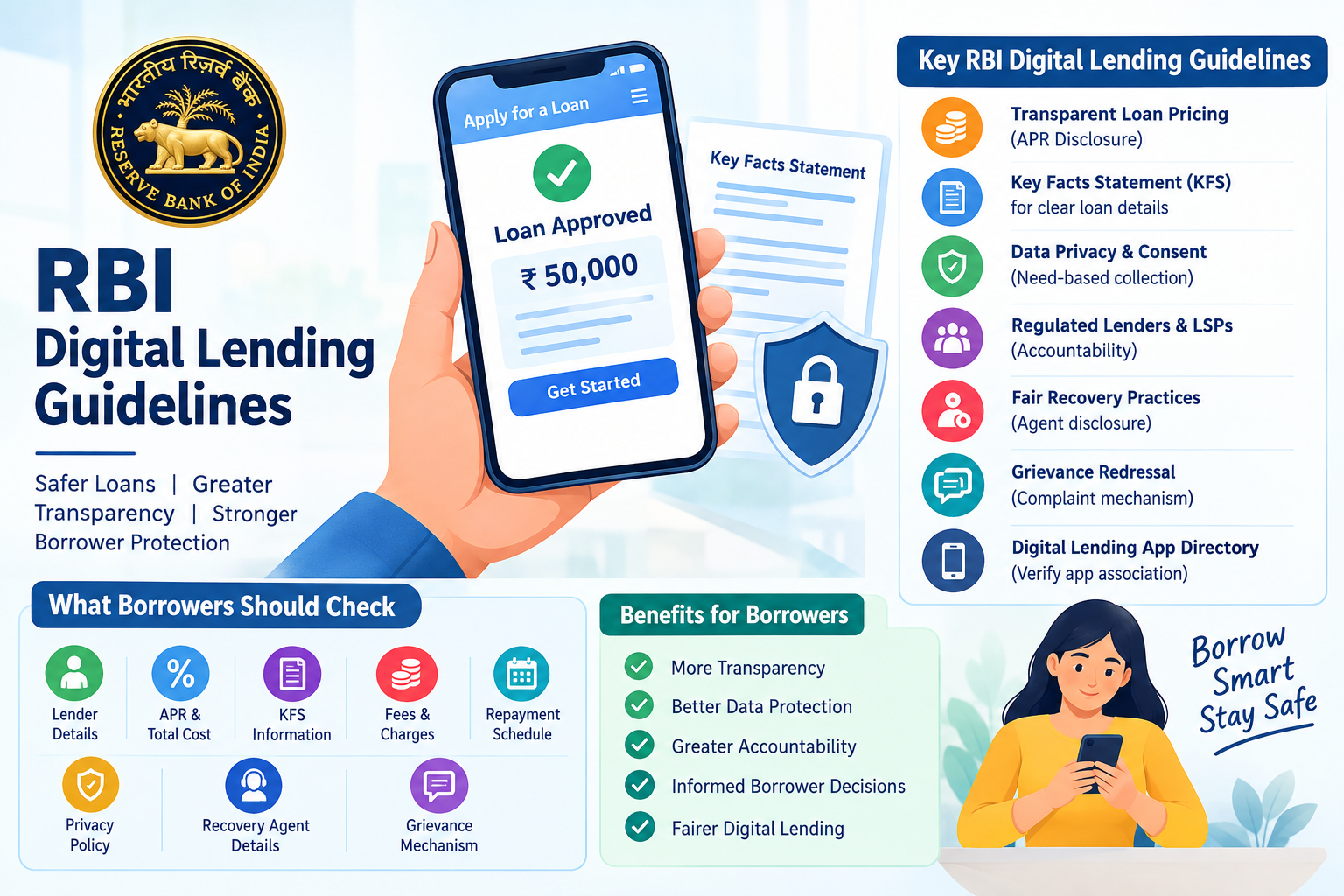
Digital lending has transformed the way people access loans, making borrowing faster and more convenient through mobile apps and online platforms. However, concerns about hidden charges, excessive data collection, misleading loan offers and unfair recovery practices have made borrower protection increasingly important. The Reserve Bank of India (RBI) has introduced digital lending regulations to promote transparency, responsible lending and better customer protection. These guidelines cover important areas such as loan disclosures, Annual Percentage Rate (APR), Key Facts Statement (KFS), borrower data privacy, digital lending apps, Lending Service Providers (LSPs) and grievance redressal. Understanding the RBI Digital Lending Guidelines can help borrowers make informed decisions and identify safer digital loan practices.
What Are RBI Digital Lending Guidelines?
RBI Digital Lending Guidelines are regulatory requirements applicable to digital lending activities undertaken by RBI-regulated entities, including banks and applicable NBFCs.
The framework is designed to improve:
- Transparency in digital loans
- Borrower protection
- Disclosure of loan costs
- Data privacy
- Accountability of lenders and LSPs
- Fair recovery practices
- Grievance redressal
Key RBI Digital Lending Guidelines
1. APR Must Be Disclosed
The Annual Percentage Rate (APR) represents the effective annualised cost of a digital loan. RBI's framework requires the applicable APR to be disclosed to borrowers and included in the Key Facts Statement.
2. Key Facts Statement (KFS)
Before the loan contract is executed, borrowers should receive the applicable Key Facts Statement containing important information about the loan.
It can include details such as:
- APR
- Loan amount
- Repayment obligations
- Recovery mechanism
- Grievance-redressal information
- Applicable cooling-off/look-up period
Charges that are not appropriately disclosed in the KFS cannot simply be added later by the regulated entity.
3. Loan Money Should Flow Through the Regulated Entity
RBI's digital lending framework requires loan disbursal and repayment arrangements to follow specified channels. In general, repayment should be made directly to the regulated entity's bank account rather than through a third-party pass-through or pool account.
4. LSP Fees Should Not Be Charged Directly to Borrowers
Where an LSP is involved in credit intermediation, fees payable to the LSP are required to be paid by the regulated entity rather than being separately collected from the borrower by the LSP.
5. Data Collection and Privacy
Digital lenders must follow requirements concerning borrower data. RBI's framework emphasises need-based data collection, prior and explicit consent, clear audit trails and privacy policies.
Borrowers should therefore be careful when a loan app requests access to contacts, photos, files, location or other information that does not appear necessary for the lending service.
6. Recovery Agent Details
RBI's framework includes requirements for disclosure of recovery-agent details. This gives borrowers greater transparency when recovery activity is transferred to an agent.
7. Grievance Redressal
Digital lending arrangements must provide an appropriate mechanism for borrowers to raise complaints. Borrowers should retain loan documents, payment receipts and communication records when making a complaint.
8. Digital Lending App Directory
RBI announced a public repository of Digital Lending Apps (DLAs) to help customers verify an app's claimed association with an RBI-regulated entity. The initiative was introduced because some apps falsely claimed connections with regulated lenders.
RBI Digital Lending Guidelines: Borrower Checklist
| What to Check | Why It Matters |
|---|---|
| Actual lender | Identifies the regulated entity |
| Loan app association | Helps verify the app |
| APR | Shows the annualised borrowing cost |
| KFS | Provides key loan information |
| Processing fees | Helps identify additional costs |
| Repayment schedule | Helps plan repayments |
| Privacy policy | Explains data handling |
| Recovery-agent details | Improves recovery transparency |
| Grievance mechanism | Provides a complaint route |