

Introduction
Digital lending has made it easier for people to apply for loans through mobile apps and online platforms. At the same time, concerns about hidden charges, misleading loan offers, excessive data collection and improper recovery practices have increased the need for clear borrower protections.
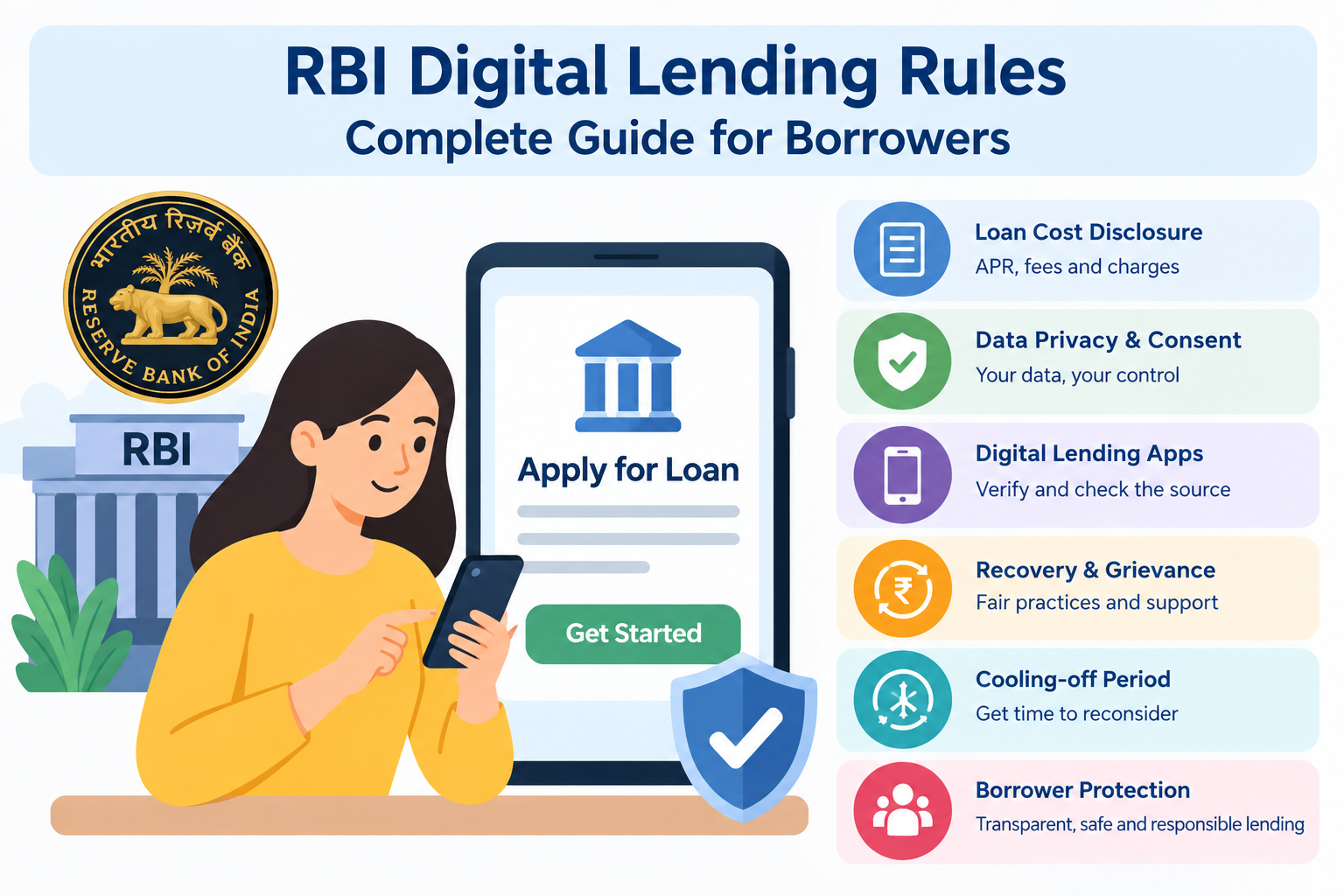
The RBI Digital Lending Rules provide a regulatory framework for digital lending by RBI-regulated entities. These guidelines cover important areas such as loan-cost disclosures, Key Facts Statements (KFS), borrower consent, data privacy, digital lending apps, recovery practices and grievance redressal. Understanding these rules can help borrowers verify digital lenders and make more informed decisions before taking an online loan.
RBI Digital Lending Rules: Complete Guide for Borrowers
Digital lending in India is regulated through RBI requirements designed to improve transparency, borrower protection, data privacy and responsible lending. RBI’s framework covers regulated entities such as banks and NBFCs and their digital lending apps (DLAs) and lending service providers (LSPs). RBI also introduced a public repository of digital lending apps to help customers verify an app’s association with a regulated entity.
RBI Digital Lending Rules: Complete Guide for Borrowers
Digital lending has changed the way people apply for and receive loans in India. Borrowers can now complete applications, KYC, documentation and repayment through digital platforms. However, the convenience of online borrowing also creates risks related to hidden charges, misuse of personal data, misleading loan offers and improper recovery practices.
The RBI Digital Lending Rules establish important requirements for regulated entities and their digital lending partners. These rules focus on transparent loan pricing, borrower consent, data protection, grievance redressal and responsible recovery practices.
What Are RBI Digital Lending Rules?
The Reserve Bank of India (RBI) issued its Guidelines on Digital Lending in September 2022. The framework applies to digital lending undertaken by RBI-regulated entities and covers digital lending apps and lending service providers working with them.
The RBI framework aims to strengthen:
- Borrower protection
- Transparency in loan pricing
- Data privacy
- Responsible digital lending
- Grievance redressal
- Fair recovery practices
- Accountability of regulated lenders
RBI has subsequently strengthened the digital-lending ecosystem, including measures such as a public repository of digital lending apps.
Key RBI Digital Lending Rules
1. Clear Disclosure of Loan Costs
Borrowers should receive clear information about the cost of a digital loan.
The Key Facts Statement (KFS) and applicable disclosures include important information such as the Annual Percentage Rate (APR), repayment obligations and other relevant charges. RBI's framework also states that charges not disclosed in the KFS cannot be subsequently charged by the regulated entity during the loan term.
2. Key Facts Statement (KFS)
The KFS is an important document for borrowers because it presents key information about the loan in a simplified format.
Borrowers should check:
- Loan amount
- Interest and APR
- Fees and charges
- Repayment terms
- Recovery mechanism
- Grievance redressal information
- Cooling-off or look-up period
RBI has also issued broader KFS requirements for applicable retail and MSME loans, requiring disclosure of the all-in cost of the loan in an easy-to-understand format.
3. Loan Disbursal and Repayment
Under the digital-lending framework, loan disbursal and repayment should generally flow directly between the borrower and the regulated entity rather than through third-party pass-through or pool accounts.
This helps improve transparency around the movement of loan funds.
4. Digital Lending Apps Must Be Disclosed
Regulated entities are required to publish information about their digital lending apps and lending service providers on their websites.
RBI also announced a public repository of Digital Lending Apps (DLAs) to help customers verify claims that an app is associated with an RBI-regulated entity.
Borrowers should therefore verify the lender before accepting a loan.
5. Data Collection Requires Consent
RBI's framework places restrictions on how borrower data is collected and used.
Data collected through digital lending apps should be:
- Need-based
- Collected with prior and explicit consent
- Supported by an audit trail
- Used for disclosed purposes
The framework also gives borrowers options relating to consent for specific data use and sharing.
6. Restrictions on Access to Phone Resources
Digital lending apps should not freely access phone resources such as:
- Contact lists
- Call logs
- Files and media
- Telephony functions
Limited one-time access to facilities such as the camera, microphone or location may be permitted when necessary for onboarding or KYC, subject to explicit consent.
7. Privacy Policy Is Important
Digital lending apps and their lending service providers are required to have appropriate privacy policies.
Borrowers should understand:
- What information is collected
- Why it is collected
- How it is used
- Whether it is shared
- How long it is retained
- How consent can be managed
RBI's framework also places responsibility for customer data privacy and security on the regulated entity.
8. Cooling-Off Period
RBI's digital lending framework provides borrowers with an explicit option to exit a digital loan during the applicable cooling-off/look-up period by paying the principal and proportionate APR without penalty.
The framework specifies that the period determined by the regulated entity's board should generally not be less than three days for loans with a tenor of seven days or more and one day for loans with a tenor of less than seven days.
9. Recovery Agent Details
Borrowers should be informed about the recovery agent or lending service provider authorised to undertake recovery activities.
RBI requires regulated entities to communicate recovery-agent details at the time of sanction and when recovery responsibility is subsequently transferred or changed.
10. Grievance Redressal Mechanism
Digital lenders must provide borrowers with appropriate grievance redressal information.
Borrowers should know:
- Where to submit a complaint
- Who handles the complaint
- How to contact the lender
- What escalation mechanism is available
The KFS includes information about the designated grievance redressal officer for digital-lending or FinTech-related matters.
RBI Rules on Automatic Credit Limit Increases
A digital lender should not automatically increase a borrower's credit limit without obtaining the borrower's explicit consent for each increase.
Borrowers should therefore carefully review any notification offering a higher credit limit before accepting it.
RBI Digital Lending Rules and Loan Apps
Before using a digital lending app, borrowers should verify:
| Check | What to Look For |
|---|---|
| Actual lender | Bank or NBFC behind the loan |
| DLA | Whether the app is associated with the lender |
| Loan cost | APR, interest and applicable charges |
| KFS | Key loan terms before acceptance |
| Privacy policy | Data collection and usage |
| Permissions | Only necessary access |
| Recovery | Authorised recovery-agent details |
| Grievance support | Complaint and escalation mechanism |
What Borrowers Should Avoid
Borrowers should be cautious about apps or websites that:
- Hide the actual lender
- Promise guaranteed loans without proper assessment
- Do not provide clear loan documents
- Ask for unnecessary phone permissions
- Hide the total cost of borrowing
- Demand unexplained upfront payments
- Request OTPs, PINs or passwords
- Use threatening or abusive recovery practices
- Claim RBI association without verifiable evidence
How to Check a Digital Loan Before Borrowing
Follow these steps:
- Identify the actual lender.
- Verify whether the lender is regulated by RBI where applicable.
- Check the lender's official website and listed digital lending apps.
- Read the KFS carefully.
- Compare the APR and total repayment cost.
- Review the loan agreement.
- Check the app's privacy policy and permissions.
- Understand the repayment schedule.
- Save all loan documents and payment records.
- Keep the lender's grievance contact details.
RBI Digital Lending Rules: Key Takeaways
- Digital lenders working with regulated entities must follow applicable RBI requirements.
- Borrowers should receive clear information about loan costs.
- The KFS provides important information about the loan.
- Digital lending apps should follow consent-based, need-based data collection requirements.
- Borrowers should check app permissions and privacy policies.
- Recovery-agent information should be communicated to borrowers.
- Applicable cooling-off/look-up provisions provide an exit option under specified conditions.
- RBI's public DLA repository can help customers verify an app's claimed association with a regulated entity.
- Borrowers should retain loan agreements, KFS documents and repayment records.
Conclusion
RBI's digital lending framework is intended to make online borrowing more transparent and provide safeguards around loan pricing, data collection, customer consent, recovery and grievance redressal. Borrowers should still independently verify the lender and carefully read the loan documents before accepting credit.
Understanding the RBI Digital Lending Rules can help borrowers identify important loan terms, protect their personal information and use digital lending platforms more carefully.
Published on : 30th September
Published by : MONISHA
www.vizzve.com || www.vizzveservices.com
Follow us on social media: Facebook || Linkedin || Instagram
🛡 Powered by Vizzve Financial
RBI-Registered Loan Partner | 10 Lakh+ Customers | ₹600 Cr+ Disbursed