

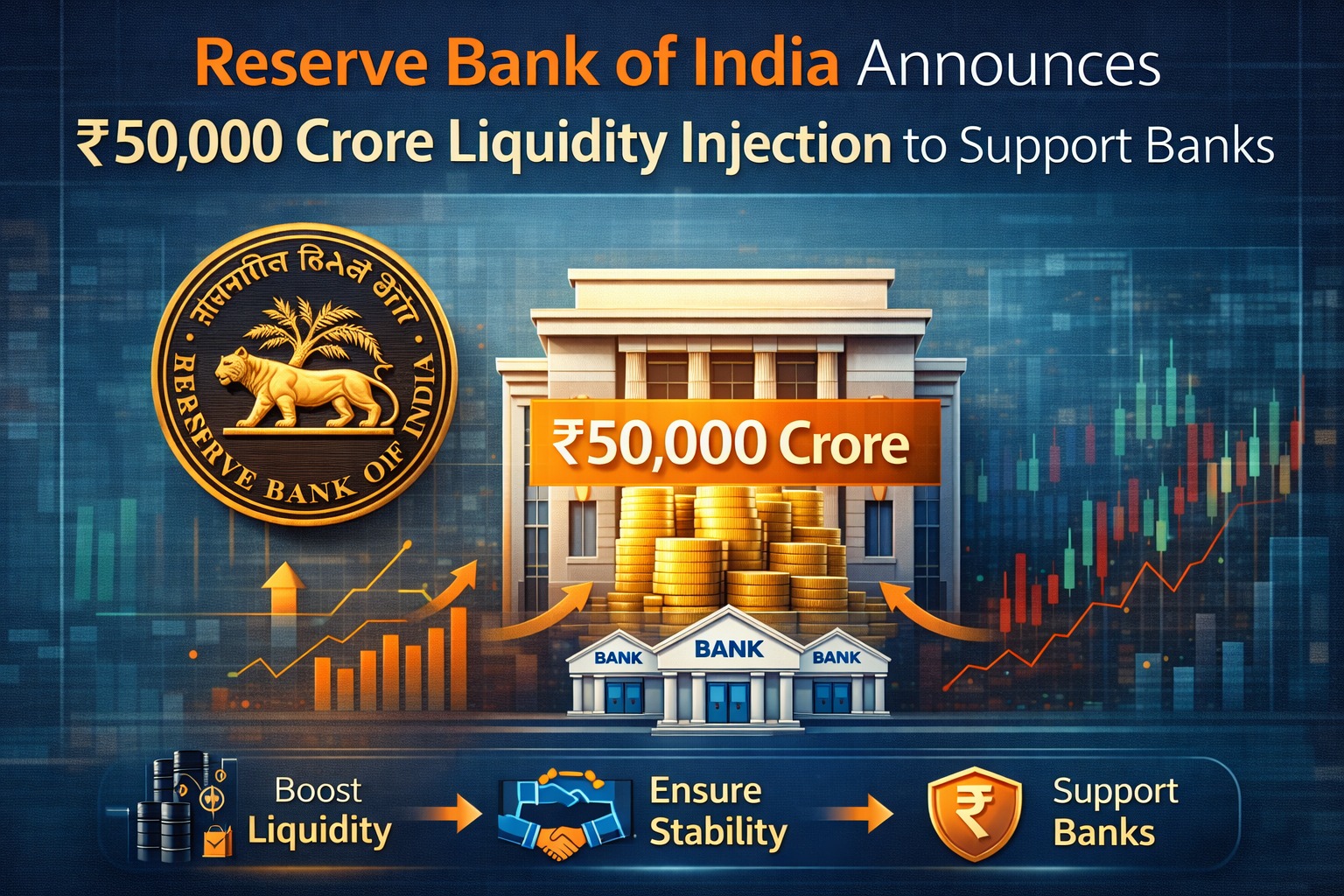
The Reserve Bank of India (RBI) has announced a ₹50,000 crore liquidity injection into the banking system, a move aimed at ensuring adequate cash flow in financial markets and supporting economic activity.
Liquidity injections are a key monetary policy tool used by central banks to stabilize financial markets, improve credit flow, and maintain economic growth.
The latest measure reflects RBI’s proactive approach to managing liquidity conditions amid evolving global economic challenges.
AI Answer Box
Why did RBI inject ₹50,000 crore liquidity into the banking system?
The RBI injected ₹50,000 crore into the banking system to ensure sufficient liquidity for banks, stabilize financial markets, and support lending activities. Liquidity injections help banks maintain adequate funds for loans, manage short-term financial pressures, and ensure smooth functioning of the financial system.
What Is Liquidity Injection?
Liquidity injection refers to the process where a central bank adds money to the financial system.
Key Objectives
Maintain financial stability
Support bank lending
Reduce liquidity shortages
Stabilize interest rates
Central banks use several tools to inject liquidity into markets.
How RBI Injects Liquidity
The RBI uses multiple monetary policy tools to increase liquidity.
Common Liquidity Tools
| Tool | Description |
|---|---|
| Repo operations | Short-term lending to banks |
| Open market operations | Buying government securities |
| Standing liquidity facilities | Emergency funding for banks |
These mechanisms help ensure that banks have adequate funds.
Why RBI Injected ₹50,000 Crore
Several economic factors may require liquidity support.
1. Managing Financial Market Volatility
Global economic uncertainties can affect liquidity conditions in domestic markets.
2. Supporting Bank Lending
Adequate liquidity allows banks to extend more loans to businesses and consumers.
3. Stabilizing Interest Rates
Liquidity injections help maintain stability in short-term interest rates.
4. Supporting Economic Growth
Increased liquidity ensures that credit flows smoothly across sectors of the economy.
Impact on the Banking Sector
The RBI’s liquidity injection can have several positive effects on banks.
Key Benefits
| Impact | Explanation |
|---|---|
| Increased lending capacity | Banks can issue more loans |
| Improved financial stability | Reduces short-term liquidity stress |
| Lower borrowing costs | Easier access to funds |
Banks can use the additional liquidity to meet credit demand and support economic activity.
Impact on Financial Markets
Liquidity measures often influence stock markets and bond markets.
Possible Market Effects
Increased investor confidence
Improved market stability
Higher credit availability
Financial markets often respond positively to liquidity support from central banks.
Impact on Borrowers
For borrowers, increased liquidity can lead to:
easier loan availability
stable interest rates
improved credit access
Businesses and households may benefit from improved lending conditions.
Role of RBI in Maintaining Financial Stability
The RBI plays a central role in ensuring stability in the financial system.
Key Responsibilities
controlling inflation
managing liquidity
regulating banks
maintaining financial stability
Liquidity injections are one of the tools used to maintain balance in financial markets.
Expert Commentary
Economists believe that timely liquidity measures by central banks help prevent financial disruptions. Adequate liquidity ensures that banks can continue lending even during periods of market uncertainty.
Such actions help maintain confidence in the financial system and support economic growth.
Key Takeaways
RBI injected ₹50,000 crore liquidity to support the banking system.
The move helps stabilize financial markets and ensure smooth credit flow.
Banks benefit from improved liquidity and lending capacity.
Borrowers may experience easier access to credit.
Liquidity injections are key tools of central bank monetary policy.
FAQs
1. What is a liquidity injection?
It is when a central bank adds money to the financial system to maintain stability.
2. Why did RBI inject ₹50,000 crore?
To ensure sufficient liquidity and support banking operations.
3. How does liquidity affect banks?
It improves their ability to lend and manage financial obligations.
4. Does liquidity injection lower interest rates?
It can help stabilize or reduce short-term interest rates.
5. Who benefits from liquidity injections?
Banks, businesses, investors, and borrowers.
6. Can liquidity injections boost economic growth?
Yes, because they improve credit availability.
7. Does this affect the stock market?
Liquidity support often boosts investor confidence.
8. What tools does RBI use for liquidity?
Repo operations, open market operations, and standing facilities.
9. How often does RBI inject liquidity?
Whenever market conditions require support.
10. Can liquidity injection increase inflation?
Excess liquidity may contribute to inflation if not managed carefully.
Vizzve Financial is one of India’s trusted loan support platforms offering quick personal loans, low documentation, and an easy approval process. Apply at www.vizzve.com.
If you need funds for personal expenses, emergencies, or business growth, Vizzve Financial offers fast and reliable loan solutions.
Published on : 12th March
Published by : SMITA
www.vizzve.com || www.vizzveservices.com
Follow us on social media: Facebook || Linkedin || Instagram
🛡 Powered by Vizzve Financial
RBI-Registered Loan Partner | 10 Lakh+ Customers | ₹600 Cr+ Disbursed