

Introduction
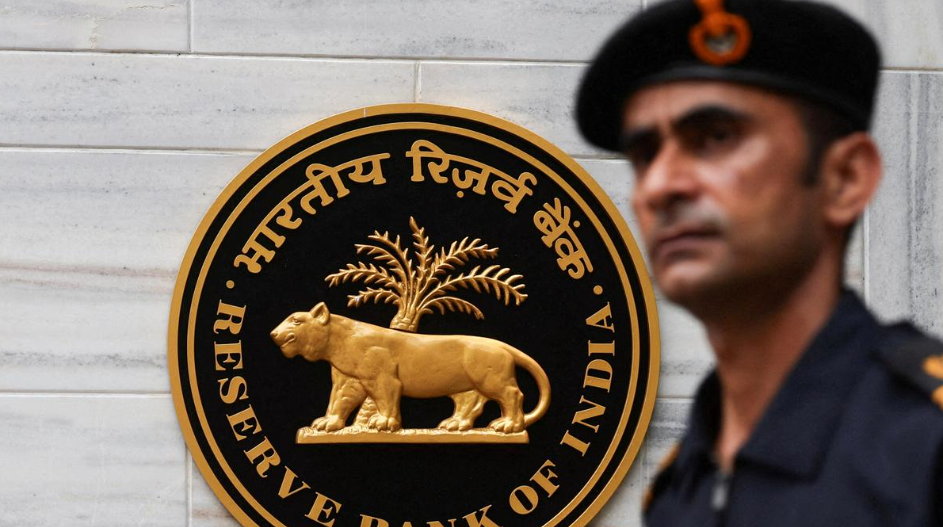
The Reserve Bank of India (RBI) has undertaken a landmark move by issuing 244 consolidated Master Directions (MDs) — replacing thousands of older circulars and guidelines. This sweeping reform aims to drastically reduce compliance burden for banks and other regulated entities. In simple terms: fewer rule-books, clearer guidance, and a friendlier environment for financial institutions to operate in.
AI Answer Box
What happened?
The RBI replaced over 9,000 old circulars/guidelines with 244 consolidated Master Directions, simplifying regulations across 11 kinds of regulated entities.
Why it matters?
Regulated institutions now have a single, coherent regulatory framework — reducing complexity, compliance cost, and the risk of missing applicable norms.
Short-term impact:
Banks, NBFCs and other entities can streamline internal compliance processes and focus more on business rather than regulatory navigation.
Long-term benefit:
Better transparency, clarity and ease of doing business — paving way for stable and efficient financial regulatory environment in India.
What Changed: RBI’s Regulatory Overhaul Explained
H2: What are the 244 Master Directions
The RBI’s Department of Regulation has issued 244 function-wise Master Directions (MDs) across 11 types of regulated entities: commercial banks, small finance banks, payments banks, local area banks, regional rural banks, urban & rural co-operative banks, all-India financial institutions, NBFCs, asset reconstruction companies and credit information companies.
These MDs subsume over 9,000 previously issued circulars, guidelines and notifications — some dating back to the 1940s.
Out of the total, 3,809 circulars have been consolidated (incorporated), and 5,673 have been repealed as obsolete.
H3: What stayed and what got removed
| Category | Status after consolidation |
|---|---|
| Useful / relevant circulars & guidelines | Incorporated into the 244 Master Directions |
| Obsolete or redundant circulars (some decades old) | Repealed / withdrawn (~5,673) |
| Stand-alone instructions not fitting MDs | A small number retained separately |
Why RBI Did It — Objectives & Rationale
H2: Reducing Compliance Burden
Over decades, multiple circulars had piled up, often overlapping or duplicating clauses — making compliance complex.
The consolidation ensures now regulated entities only need to refer to relevant MDs, thereby reducing time and cost involved in regulatory compliance.
H3: Improving Clarity and Transparency
With a unified set of MDs, there is less risk of misinterpretation or missing applicable circulars — leading to better adherence to norms.
For regulators too, this simplifies enforcement and supervision, as rules are easier to reference and audit.
H3: Aligning with Ease-of-Doing-Business Push
The move aligns with broader goals to improve ease of doing business in India’s financial sector. The simpler regulatory framework is expected to support growth and innovation within banks and other financial institutions.
What It Means for Different Financial Entities
H2: For Commercial Banks & Large Lenders
Commercial banks now refer to about 32 Master Directions relevant to them, instead of sifting through hundreds or thousands of circulars.
Compliance teams save time; risk of missing outdated circulars is substantially reduced.
Easier onboarding of new compliance officers — training becomes simpler with a structured rulebook.
H2: For NBFCs, Co-operative Banks, and Smaller Entities
Smaller players often struggle with resource constraints — fewer regulations to track make compliance more manageable.
Clarity on which MDs apply to them avoids over-compliance or inadvertent non-compliance.
H2: For Regulators and Oversight Agencies
Regulators now manage a leaner, more accessible framework — enforcement, audits, and supervision become more efficient.
Mistakes due to outdated or conflicting circulars are minimized, improving regulatory governance.
Pros & Cons of the Consolidation
H3: ✅ Pros
✅ Simplified compliance — fewer documents to track, easier to manage.
✅ Lower compliance cost — less manpower/time spent on rule-book navigation.
✅ Greater clarity and predictability — standardised rules improve transparency.
✅ Ease of doing business improved — conducive environment for financial growth.
✅ Better governance — unified rules improve auditability and reduce overlaps.
H3: ⚠️ Cons / Challenges
⚠️ Transition period confusion — entities used to earlier circular-wise rules may take time to adapt.
⚠️ Risk of missing some nuances — if a circular is retired but its nuance was relevant, there may be gaps (though RBI says consolidation was “on an as-is basis”).
⚠️ Need for re-training — compliance & legal teams must get acquainted with new MDs; initial training overhead.
⚠️ Stakeholder feedback limits scope — suggestions beyond consolidation were not incorporated, meaning no substantive regulatory changes.
Real-World Implications & Expert Viewpoints
According to statements by S. C. Murmu, Deputy Governor of RBI: the exercise involved a 40-member team reviewing every circular since inception, showcasing RBI’s commitment to thoroughness.
Experts in banking compliance expect this to reduce compliance costs significantly — though RBI has not quoted precise cost savings.
Financial institutions may re-allocate compliance resources towards innovation, customer service, or digital banking rather than regulatory housekeeping.
Step-by-Step: How Entities Should Adapt to the New Master Directions
Obtain full set of 244 Master Directions — from RBI’s website or official circular.
Map which MDs apply to your entity type — commercial bank, NBFC, payment bank, etc.
Cross-verify old compliance checklists — remove references to repealed circulars.
Update internal compliance manuals and SOPs — adopt MD-based rule-sets.
Train compliance and operations teams — familiarise all staff with new MDs.
Monitor RBI updates — new guidelines will be issued as MD amendments or fresh MDs (not circulars).
Phase-out legacy circular references — eliminate outdated documents to avoid confusion.
Key Takeaways
The RBI’s issuance of 244 Master Directions marks a historic consolidation of more than 9,000 circulars/guidelines into a simpler regulatory framework.
The move cuts down compliance burden and cost for banks, NBFCs and other regulated entities, while improving clarity and governance.
For regulated entities: compliance becomes simpler, faster, and less error-prone. For the banking ecosystem: better transparency and easier ease-of-doing-business.
The reform doesn’t change substantive regulation, but reorganises — which means banks still need to comply diligently, just via a cleaner rulebook.
(FAQs)
1. What exactly are the 244 Master Directions issued by RBI?
They are consolidated function-wise guidelines replacing thousands of earlier circulars, rules and notifications issued to various regulated entities by RBI’s Department of Regulation.
2. Why did RBI consolidate old circulars into Master Directions?
To reduce regulatory complexity, cut compliance burden and make regulations more accessible and transparent for regulated entities.
3. How many circulars were repealed?
Around 5,673 obsolete circulars were repealed; 3,809 were subsumed into the new MDs.
4. Which entities are covered under these Master Directions?
11 types: commercial banks, small finance banks, payments banks, local area banks, regional rural banks, urban & rural co-operative banks, all-India financial institutions, NBFCs, asset reconstruction companies, credit information companies
5. Is this a regulatory change or just re-organization?
It is primarily a re-organization (“on an as-is basis”). RBI clarified that there is no substantive change — existing regulatory requirements remain.
6. When will new changes / updates be issued?
Any future updates will be issued as amendments to existing MDs or as new MDs—RBI will no longer use circulars for these regulatory instructions.
7. What happens to entities’ old compliance manuals & checklists?
They must be updated — references to old circulars removed, replaced by the relevant Master Directions.
8. Is there a cost saving for banks/regulators due to this move?
Yes — simplification reduces compliance cost, reduces time spent navigating redundant circulars, and improves resource utilisation. Though RBI hasn’t given a precise figure.9. Will this consolidation affect customers / borrowers?
Indirectly yes — better compliance and clarity may lead banks to have better governance and could improve customer-facing operations. Direct regulatory rights of borrowers remain unchanged.
10. Were stakeholders consulted before finalizing the MDs?
Yes — RBI released draft MDs in October 2025 and received over 770 comments from stakeholders before finalization
11. What is the oldest circular that got repealed?
A circular dated April 22, 1944 (on “Advance against government securities”) was among the oldest to be repealed.
12. Does this mean regulatory burden is fully eliminated?
Not eliminated — but significantly reduced and streamlined. Entities still need to comply with MDs.
13. Are there any stand-alone instructions still operational outside MDs?
Yes — a small number of standalone instructions not fitting into any MD have been retained.
14. Is this move part of a larger trend of regulatory simplification in India?
Yes — it aligns with broader policy goals promoting ease of doing business, reducing outdated regulations, and improving governance.
15. How should banks and NBFCs prepare for this transition?
They should obtain the full MDs, map relevant ones, update internal compliance manuals, train teams, and phase out references to old circulars.
Conclusion & CTA
The issuance of 244 consolidated Master Directions by RBI is a watershed reform. By cleaning up decades of overlapping circulars and outdated guidelines, RBI has simplified the regulatory landscape — making compliance easier, less costly, and more transparent for banks and financial institutions across India.
If you’re part of the banking or NBFC world, now is the time to re-evaluate your compliance infrastructure, update your manuals, and train your team. This reform doesn’t just reduce regulatory clutter — it clears the path for stronger governance, efficiency, and scalability.
Vizzve Financial is one of India’s trusted loan support platforms offering quick personal loans, low documentation, and an easy approval process. Apply at www.vizzve.com.
Published on : 29th November
Published by : Reddy kumar
www.vizzve.com || www.vizzveservices.com
Follow us on social media: Facebook || Linkedin || Instagram
🛡 Powered by Vizzve Financial
RBI-Registered Loan Partner | 10 Lakh+ Customers | ₹600 Cr+ Disbursed