

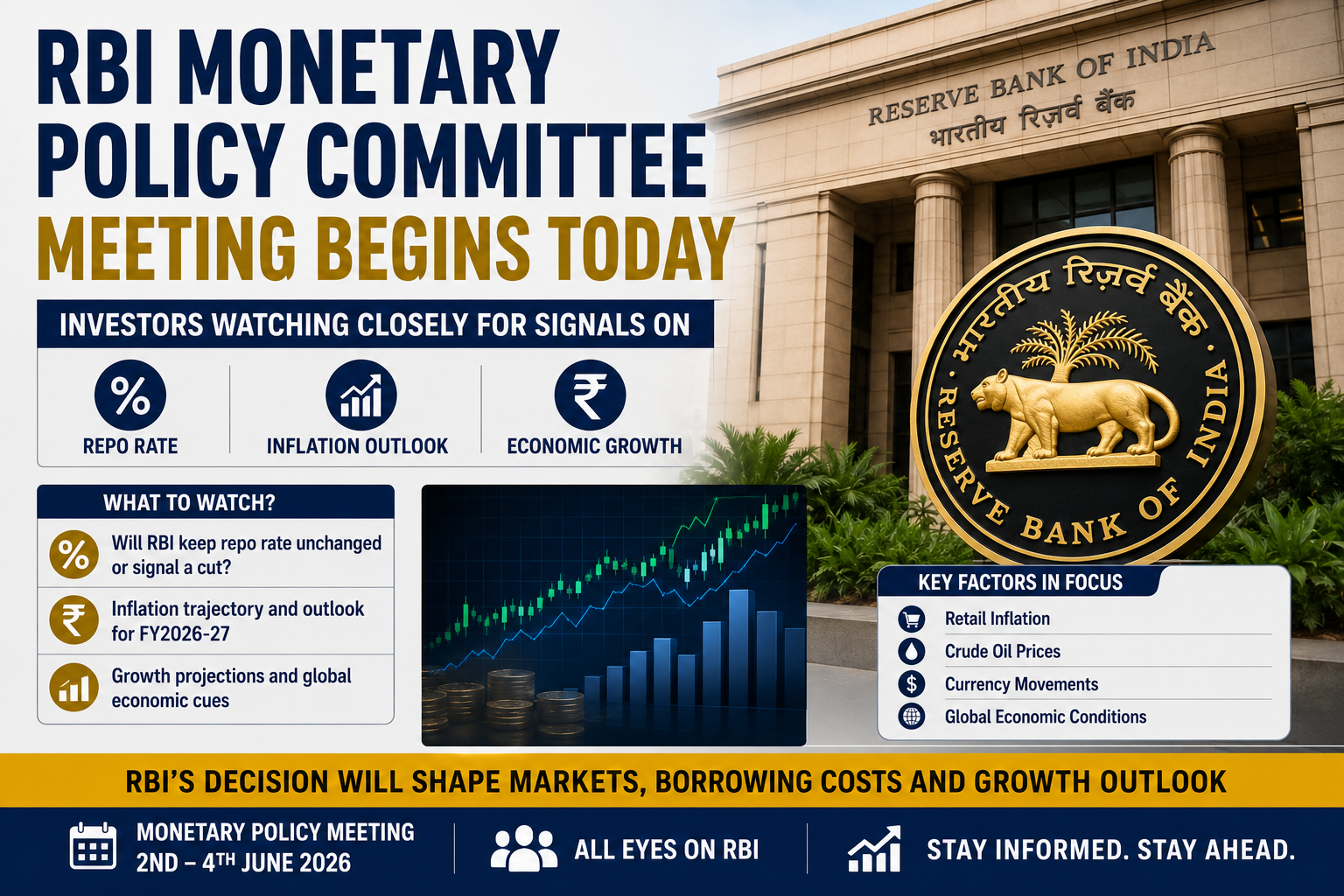
The Reserve Bank of India’s Monetary Policy Committee (MPC) meeting begins today, with investors, businesses, banks, and borrowers closely monitoring developments.
The policy review comes at a critical time when the Indian economy is facing:
- Rising crude oil prices
- Global geopolitical uncertainty
- Inflation concerns
- Strong domestic growth
- Volatile financial markets
While the RBI has emphasized its commitment to maintaining economic stability, investors are eager to understand whether the central bank will adjust interest rates or maintain its current policy stance.
AI Answer Box
Why is the RBI policy meeting important?
The RBI policy meeting determines key monetary policy decisions, including the repo rate, inflation outlook, liquidity management, and economic-growth projections.
What are investors expecting?
Most market participants expect the RBI to carefully balance inflation risks and economic growth while providing guidance on future monetary policy.
How does RBI policy affect investors?
RBI decisions influence:
- Stock markets
- Bond yields
- Bank lending rates
- Home-loan EMIs
- Currency markets
Introduction
The RBI's Monetary Policy Committee is responsible for maintaining price stability while supporting economic growth.
The committee evaluates:
- Inflation trends
- Economic activity
- Global developments
- Financial-market conditions
Its decisions can have a significant impact on both households and businesses.
The latest policy meeting arrives amid heightened attention from investors due to rising oil prices and concerns about global economic uncertainty.
What Is the RBI Monetary Policy Committee?
The MPC is a six-member committee that decides India's benchmark policy rates.
Key Responsibilities
- Setting the repo rate
- Managing inflation expectations
- Supporting economic stability
- Monitoring financial conditions
The committee's decisions help shape borrowing costs throughout the economy.
Key Issues Being Discussed
Several major factors are likely influencing the RBI's deliberations.
1. Inflation Remains a Major Focus
Inflation remains one of the most important concerns for policymakers.
Recent pressures include:
- Higher crude oil prices
- Fuel costs
- Food-price volatility
- Global commodity trends
The RBI must ensure inflation remains within its target range while supporting economic growth.
Inflation Risks Investors Are Watching
| Factor | Potential Impact |
|---|---|
| Oil Prices | Higher inflation |
| Food Costs | Consumer prices |
| Global Events | Supply disruptions |
| Currency Movements | Import costs |
2. Strong Economic Growth Supports Confidence
India continues to be one of the world's fastest-growing major economies.
Growth drivers include:
- Domestic consumption
- Infrastructure spending
- Digital economy expansion
- Services-sector strength
Recent indicators suggest economic activity remains relatively resilient.
3. Crude Oil Prices Near $97
One of the biggest concerns entering the meeting is the sharp rise in global oil prices.
India imports most of its crude oil requirements, making energy prices a key variable for:
- Inflation
- Fiscal stability
- Currency markets
The RBI is expected to discuss the implications of higher oil prices on future inflation.
4. Rupee Volatility
The Indian rupee has faced periodic pressure due to:
- Rising oil imports
- Global uncertainty
- Foreign capital flows
The RBI has repeatedly stated that it stands ready to address excessive currency volatility if necessary.
Possible Outcomes of the Meeting
Scenario 1: Repo Rate Unchanged
Many analysts believe the RBI could keep the repo rate unchanged while maintaining a cautious stance.
Why?
- Inflation remains manageable
- Growth remains strong
- Policymakers may seek stability
Scenario 2: Hawkish Commentary
Even if rates remain unchanged, the RBI could signal caution regarding:
- Inflation
- Oil prices
- Global risks
Such communication may influence market expectations.
Scenario 3: Liquidity Measures
The RBI may also discuss:
- Banking-system liquidity
- Market stability
- Financial-sector support measures
These actions can influence lending and borrowing conditions.
How RBI Policy Affects Investors
Different asset classes respond differently to policy decisions.
| Asset Class | Potential Impact |
|---|---|
| Stocks | Market sentiment |
| Bonds | Yield movement |
| Rupee | Currency stability |
| Banking Stocks | Lending outlook |
| Gold | Interest-rate expectations |
Impact on Borrowers and EMIs
RBI policy decisions eventually affect lending rates across the banking system.
If rates remain stable:
- EMIs may remain unchanged
- Borrowing conditions stay predictable
If rates change:
- Loan costs could be affected
- Consumer spending patterns may shift
What the Stock Market Is Watching
Investors are particularly interested in:
Future Guidance
The RBI's outlook often matters more than the rate decision itself.
Inflation Forecast
Any revisions to inflation projections could influence market sentiment.
Growth Forecast
Updated GDP expectations provide insight into the RBI's economic outlook.
Sector-Wise Impact
Banking Sector
Policy signals can affect lending growth and profitability.
Real Estate
Interest-rate expectations influence housing demand.
Automobile Sector
Auto loans are sensitive to borrowing costs.
Financial Services
Market sentiment often reacts strongly to policy commentary.
Expert Commentary
Most economists expect the RBI to remain cautious while emphasizing flexibility.
Key reasons include:
- Elevated oil prices
- Global uncertainty
- Inflation risks
- Strong domestic growth
Analysts generally believe the central bank will avoid abrupt policy changes unless economic conditions deteriorate significantly.
The focus is likely to remain on balancing inflation control with growth support.
Key Takeaways
✅ RBI policy meeting begins today.
✅ Investors are closely watching inflation and interest-rate signals.
✅ Oil prices near $97 remain a major concern.
✅ The RBI is expected to maintain focus on price stability.
✅ Economic growth remains relatively strong.
✅ Market guidance may be as important as the policy decision itself.
Pros & Cons of a Stable Policy Stance
Pros
- Market stability
- Predictable borrowing costs
- Support for growth
- Reduced uncertainty
Cons
- Inflation risks may persist
- Limited policy flexibility if conditions worsen
Future Outlook
The RBI's policy statement and commentary will likely shape market expectations for the coming months.
Investors should closely monitor:
- Repo rate decisions
- Inflation projections
- Growth forecasts
- Liquidity measures
- Currency-management signals
As global uncertainty continues, the RBI's ability to balance growth and inflation will remain one of the most important factors influencing India's financial markets.
Frequently Asked Questions (FAQs)
1. What is the RBI MPC?
The Monetary Policy Committee sets India's policy interest rates.
2. Why is the policy meeting important?
It influences interest rates, inflation expectations, and financial markets.
3. What is the repo rate?
The rate at which RBI lends money to commercial banks.
4. How does RBI policy affect loans?
Changes can influence borrowing costs and EMIs.
5. Why are investors watching the meeting?
Policy decisions affect stocks, bonds, and currencies.
6. What is the RBI's inflation target?
The RBI aims to keep inflation within its target framework.
7. Why do oil prices matter?
They impact inflation and economic stability.
8. Could the RBI change rates?
Markets are evaluating various possibilities.
9. How does policy affect the stock market?
Interest-rate expectations influence investor sentiment.
10. What happens if inflation rises?
The RBI may adopt a more cautious policy stance.
11. Why is the rupee important?
Currency stability affects imports, exports, and inflation.
12. How often does the MPC meet?
The committee conducts regular policy reviews throughout the year.
13. What sectors are most affected?
Banking, real estate, automobiles, and financial services.
14. What is liquidity management?
Measures used to maintain orderly financial conditions.
15. What should investors watch most closely?
Future guidance, inflation outlook, and growth forecasts.
Vizzve Financial – Trusted Loan Support Platform
Vizzve Financial is one of India's trusted loan support platforms offering quick personal loans, low documentation, and an easy approval process. Apply at www.vizzve.com.
Published on : 3rd June
Published by : SMITA
www.vizzve.com || www.vizzveservices.com
Follow us on social media: Facebook || Linkedin || Instagram
🛡 Powered by Vizzve Financial
RBI-Registered Loan Partner | 10 Lakh+ Customers | ₹600 Cr+ Disbursed