

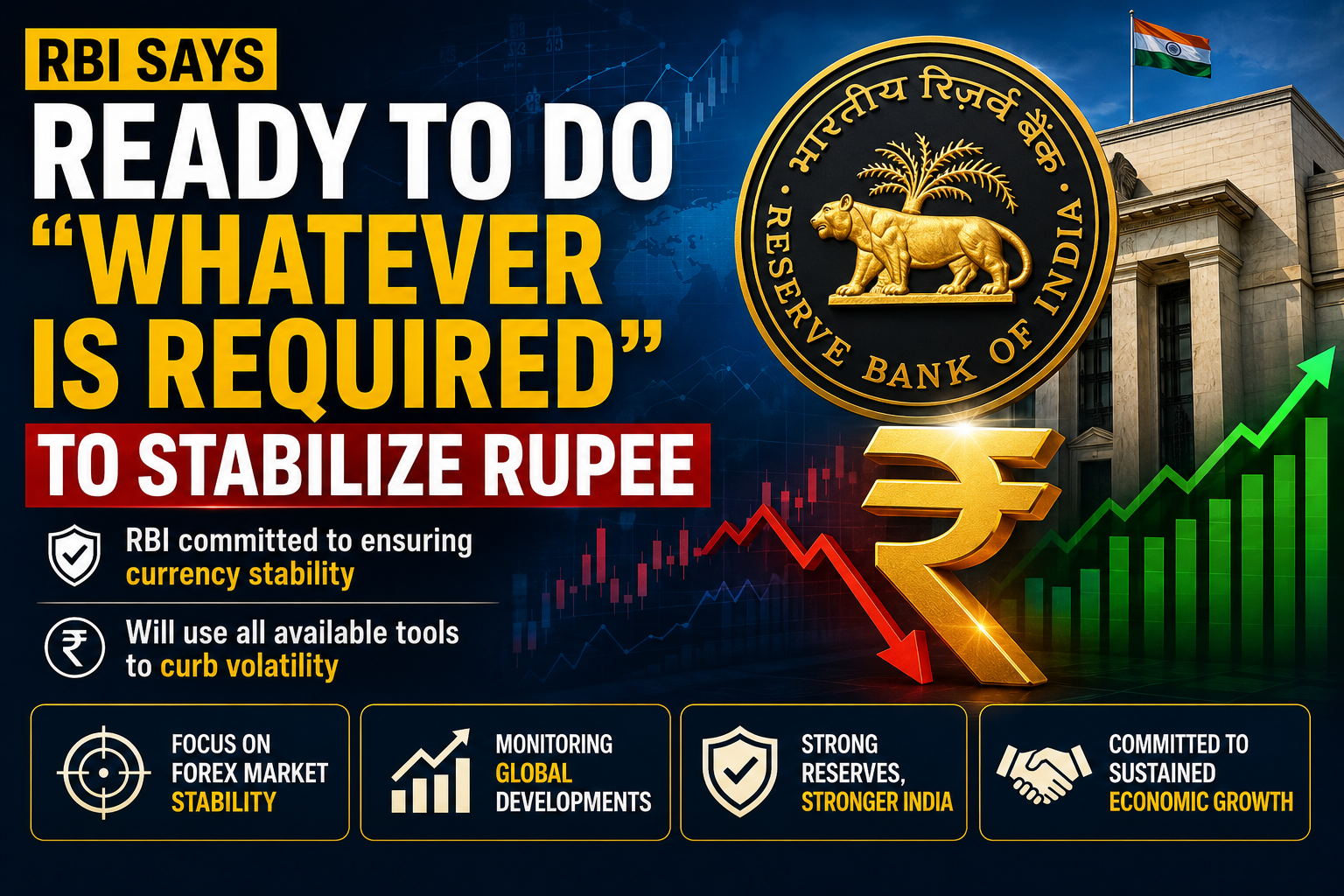
The Reserve Bank of India said it is prepared to do “whatever is required” to manage excessive rupee volatility as global uncertainty and rising crude oil prices continue pressuring currency markets.
The statement comes amid:
- Global financial market volatility
- Rising crude oil prices
- Foreign investor outflows
- Dollar strength
- Geopolitical tensions
The RBI’s comments are aimed at reassuring financial markets that the central bank remains prepared to maintain currency stability if volatility increases further.
AI Answer Box
Why is the RBI concerned about rupee volatility?
The RBI is monitoring rupee volatility because rising crude oil prices, global uncertainty, and foreign capital flows can impact India’s currency stability and financial markets.
What does “whatever is required” mean?
The statement suggests the RBI may use tools like forex market intervention, liquidity management, and reserve deployment to stabilize excessive currency fluctuations.
Introduction
India’s currency markets remain under pressure as global economic uncertainty and rising crude oil prices continue affecting investor sentiment worldwide.
In response, the Reserve Bank of India stated that it is fully prepared to take necessary measures to manage excessive rupee volatility and maintain orderly market conditions.
The rupee’s movement is closely linked to:
- Oil import costs
- Foreign investment flows
- Global dollar strength
- Trade balances
- International market sentiment
As one of the world’s major oil-importing economies, India remains particularly sensitive to fluctuations in global energy prices and currency markets.
Why Rupee Volatility Matters
Currency stability is important because it directly affects:
- Import costs
- Inflation
- Foreign investment sentiment
- Corporate profitability
- Financial market stability
Large currency fluctuations can create uncertainty for businesses and investors.
What Is Causing Rupee Pressure?
Several global and domestic factors are influencing the rupee.
1. Rising Crude Oil Prices
India imports a large share of its crude oil needs.
Higher oil prices increase:
- Import bills
- Dollar demand
- Pressure on the rupee
2. Global Financial Uncertainty
International market volatility linked to:
- Geopolitical tensions
- Interest-rate expectations
- Economic slowdown fears
has increased investor caution globally.
3. Foreign Investor Outflows
Foreign institutional investor (FII) selling can increase demand for dollars and weaken emerging-market currencies.
Factors Affecting Rupee Movement
| Factor | Impact on Rupee |
|---|---|
| Crude Oil Prices | Negative Pressure |
| Dollar Strength | Weakens rupee |
| FII Outflows | Increases volatility |
| Forex Reserves | Stability support |
| RBI Intervention | Market confidence |
How RBI Can Control Currency Volatility
The RBI has several tools available to manage excessive currency fluctuations.
1. Forex Market Intervention
The RBI may buy or sell dollars in the foreign exchange market to stabilize the rupee.
2. Using Forex Reserves
India’s foreign exchange reserves provide a buffer during periods of volatility.
3. Liquidity Management
The central bank may adjust liquidity conditions to maintain market stability.
Why Oil Prices Impact the Rupee
Oil imports require large dollar payments.
When crude oil prices rise:
- India’s import bill increases
- Dollar demand rises
- Pressure builds on the rupee
This can also increase inflation concerns across the economy.
RBI’s Role in Currency Stability
The Reserve Bank of India does not target a fixed exchange rate but aims to prevent:
- Excessive volatility
- Disorderly market movements
- Financial instability
Stable currency conditions are important for:
- Investors
- Businesses
- Trade
- Economic confidence
Impact on Indian Economy
Rupee Stability Helps:
- Control imported inflation
- Improve investor confidence
- Support financial market stability
- Reduce uncertainty for businesses
Risks of Prolonged Rupee Weakness
| Potential Risk | Economic Impact |
|---|---|
| Higher Import Costs | Inflation pressure |
| Costlier Fuel Imports | Rising fuel prices |
| Investor Nervousness | Market volatility |
| Corporate Cost Pressure | Lower margins |
Expert Commentary on RBI’s Statement
Economists believe the RBI’s strong language is intended to reassure markets and discourage speculative currency movements.
Experts also note that:
- India’s forex reserves remain an important strength
- RBI intervention can reduce short-term volatility
- Global conditions will continue influencing currency trends
Analysts expect the central bank to remain highly active if volatility intensifies further.
Could Rupee Volatility Continue?
Future currency movement may depend on:
- Global crude oil prices
- US Federal Reserve policy
- Geopolitical developments
- FII investment trends
- Dollar index movement
Emerging-market currencies are likely to remain sensitive to global financial conditions.
Key Takeaways
- Reserve Bank of India said it is ready to control rupee volatility.
- Rising crude oil prices are pressuring the rupee.
- Global uncertainty and FII flows remain major market drivers.
- RBI may intervene using forex reserves and liquidity tools.
- Currency stability remains critical for inflation and market confidence.
Pros & Cons of RBI Currency Intervention
Pros
- Reduces excessive volatility
- Supports investor confidence
- Helps stabilize inflation expectations
- Maintains orderly market conditions
Cons
- Excessive intervention may reduce reserves
- Global factors can still dominate long-term trends
- Currency defense can become costly during prolonged volatility
Future Outlook for Rupee & Currency Markets
Experts believe the RBI will continue closely monitoring:
- Oil-price movement
- Global capital flows
- Currency market volatility
- Inflation trends
India’s strong forex reserves and active central-bank management are expected to remain important stabilizing factors during uncertain global conditions.
Frequently Asked Questions (FAQs)
1. What did RBI say about rupee volatility?
The RBI said it is ready to do “whatever is required” to manage volatility.
2. Why is the rupee under pressure?
Rising oil prices and global uncertainty are major reasons.
3. How does RBI control currency volatility?
Through forex intervention and liquidity management.
4. Why do crude oil prices affect the rupee?
India imports large quantities of oil using dollars.
5. What are forex reserves?
Foreign currency assets held by the RBI to support stability.
6. Does RBI target a fixed rupee value?
No, RBI mainly manages excessive volatility.
7. What causes foreign investor outflows?
Global uncertainty and risk sentiment often affect FII flows.
8. Can rupee weakness increase inflation?
Yes, imports become more expensive when the rupee weakens.
9. Why is dollar strength important?
A stronger dollar pressures emerging-market currencies.
10. Could RBI intervene directly in markets?
Yes, the RBI can buy or sell dollars to stabilize markets.
11. Why do investors monitor rupee movement?
Currency stability affects returns and market confidence.
12. How does currency volatility affect businesses?
Import costs and financial planning become more uncertain.
13. Are global tensions affecting currencies?
Yes, geopolitical uncertainty impacts financial markets worldwide.
14. Can oil prices rise further?
Future prices depend on global supply and geopolitical developments.
15. Why is currency stability important for economy?
Stable currencies help manage inflation and investor confidence.
Conclusion
The Reserve Bank of India strong statement on rupee volatility highlights the growing impact of global uncertainty and rising crude oil prices on India’s financial markets.
By signaling readiness to act decisively, the RBI aims to reassure investors and maintain orderly currency-market conditions during a period of heightened global risk.
As oil prices, foreign investment flows, and global financial conditions remain volatile, currency stability is expected to remain a key focus area for policymakers and markets in the coming months.
For individuals seeking financial support during uncertain economic conditions, Vizzve Financial offers quick personal loan assistance with low documentation and simplified approvals.
Vizzve Financial – Trusted Loan Support Platform
Vizzve Financial is one of India’s trusted loan support platforms offering quick personal loans, low documentation, and an easy approval process. Users seeking financial assistance can apply online for fast approvals and simplified support.
Published on : 25th May
Published by : SMITA
www.vizzve.com || www.vizzveservices.com
Follow us on social media: Facebook || Linkedin || Instagram
🛡 Powered by Vizzve Financial
RBI-Registered Loan Partner | 10 Lakh+ Customers | ₹600 Cr+ Disbursed