

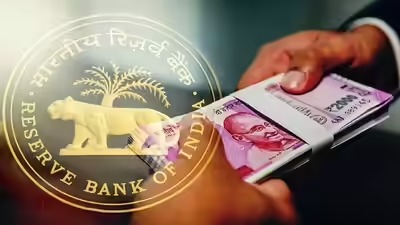
The Reserve Bank of India (RBI) just conducted a massive ₹1 lakh crore liquidity absorption via a reverse repo auction.
That’s right—money is being pulled out of the banking system.
But why does this matter to you as a borrower? What does it mean for your loans, EMIs, and interest rates?
Let’s break it down—Vizzve Finance style.
💡 What Happened?
The RBI used a 14-day variable rate reverse repo (VRRR) to absorb ₹1 lakh crore from the banking system.
This move is designed to tighten liquidity and control inflation, especially after a rise in surplus banking funds due to tax inflows and bond maturity.
📉 In short: There’s less money floating in the system → harder (and possibly costlier) to borrow.
🔍 Why RBI Is Draining Liquidity
To Control Short-Term Inflation
Absorbing excess funds helps curb demand and keep inflation in check.
To Stabilize Interest Rates
Ensures banks don’t over-lend or push risky credit to maintain profits.
To Prepare for Global Volatility
A tighter domestic market guards against global financial shocks.
🧮 Vizzve Explains: How It Affects Borrowers Like You
✅ 1. Loan Interest Rates May Firm Up
Even without a repo rate hike, reduced liquidity pushes lending rates higher—especially for personal, auto, and MSME loans.
Vizzve recommends checking your floating-rate loan terms now.
✅ 2. Banks May Tighten Credit Approval
With less liquidity, banks may become more selective about lending—especially for unsecured or high-risk borrowers.
Use Vizzve’s Loan Eligibility Calculator before applying.
✅ 3. Home Loan EMIs May Rise Gradually
Expect slow but steady EMI increases if the RBI tightens further. Even repo-linked loans may feel the heat over 1–2 quarters.
Vizzve’s EMI Tracker can help you plan repayments early.
✅ 4. Fixed Deposits (FDs) Could Offer Better Returns
Tighter liquidity often leads banks to increase deposit rates to attract funds.
If you're risk-averse, Vizzve helps you find the best FD rates instantly.
🧾 Real-World Scenario: Saurabh’s EMI Surprise
Saurabh, an IT professional in Bengaluru, noticed his ₹48 lakh home loan EMI went up by ₹1,100/month after the last liquidity sweep.
“I didn’t expect it—thankfully I used Vizzve’s alert to rebalance my savings.”
📊 Sector Watch: Who Gets Hit First?
| Loan Type | Impact Level | Why? |
|---|---|---|
| Personal Loans | 🔴 High | Unsecured, higher risk |
| MSME Loans | 🟠 Moderate | Dependent on cash flow |
| Home Loans | 🟡 Low-Med | Repo-linked, adjusts slower |
| Education Loans | 🟠 Moderate | Floating rates with longer terms |
❓FAQs
Q1. Will RBI raise the repo rate next?
Not necessarily. Liquidity tightening can happen independently of rate hikes. But it often hints at cautious monetary policy ahead.
Q2. Should I prepay my loan now?
If you can afford to, yes—it will reduce your interest burden over time. Use Vizzve’s Prepayment Calculator to decide.
Q3. Are banks going to make loans harder to get?
Possibly. Expect stricter documentation and higher credit score requirements, especially in Q3–Q4.
Q4. Is this bad news for new borrowers?
Not entirely. You can still get loans—but comparing rates and planning EMIs is more important than ever. That’s where Vizzve helps.
🏁 Final Word: Tighter Times Need Smarter Finance
When the RBI drains liquidity, money doesn’t just become scarce—it becomes more expensive. But that doesn’t mean you’re powerless.
👉 With Vizzve’s tools—Loan Trackers, EMI Planners, and Rate Watchers—you stay ahead, even when money gets tighter.
Act smart. Borrow wiser. Grow stronger—with Vizzve.
Published on : 9th July
Published by : SMITA
www.vizzve.com || www.vizzveservices.com
Follow us on social media: Facebook || Linkedin || Instagram
🛡 Powered by Vizzve Financial
RBI-Registered Loan Partner | 10 Lakh+ Customers | ₹600 Cr+ Disbursed.