

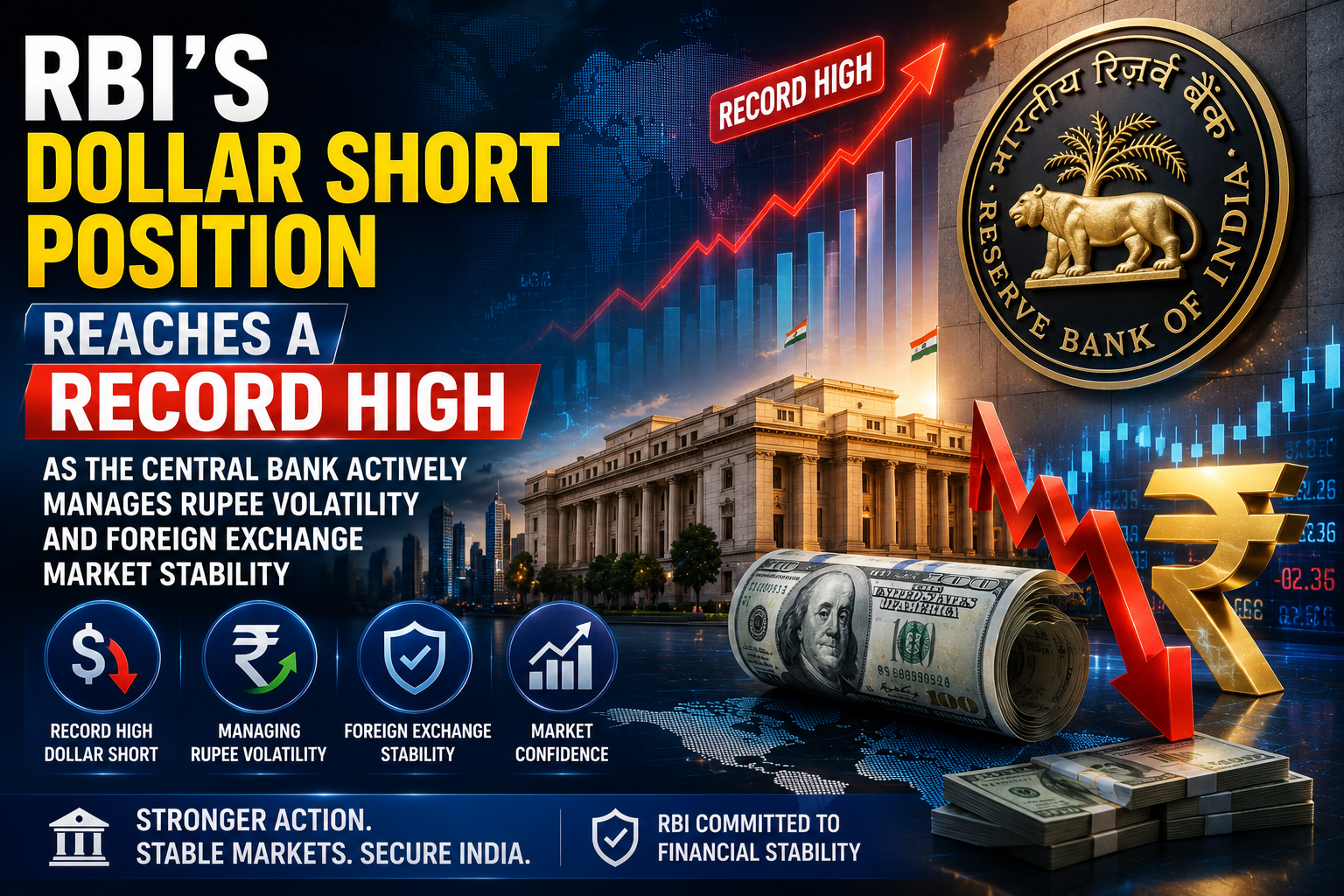
The Reserve Bank of India (RBI) has recorded its highest-ever dollar short position as part of its foreign exchange market operations. The increase reflects the central bank's active intervention strategy aimed at managing rupee volatility, maintaining orderly market conditions, and supporting financial stability.
While a large dollar short position may appear concerning, economists note that such positions are often used as temporary tools for currency management and liquidity operations rather than indicators of financial weakness.
For investors and businesses, understanding the RBI's forex strategy is essential because it affects the rupee, inflation, imports, exports, and financial markets.
AI Answer Box
What Does RBI's Dollar Short Position Mean?
A dollar short position means the RBI has committed to selling dollars in future transactions through forex market operations.
Reasons Include
- Managing rupee volatility
- Stabilizing currency markets
- Supporting liquidity conditions
- Controlling inflation pressures
- Maintaining financial stability
Impact Areas
| Sector | Potential Impact |
|---|---|
| Rupee | High |
| Inflation | Moderate |
| Imports | Moderate |
| Exports | Moderate |
| Financial Markets | High |
| Investor Sentiment | Moderate |
Introduction
The Reserve Bank of India plays a crucial role in maintaining stability in India's foreign exchange markets. One of the key tools available to the central bank is intervention in currency markets through buying and selling foreign currencies.
Recent data indicates that the RBI's dollar short position has reached a record high, attracting significant attention from economists, investors, and financial markets. While the headline figure appears dramatic, understanding the purpose and mechanics of these positions is essential before drawing conclusions.
The RBI's actions reflect broader efforts to manage exchange rate volatility, maintain financial stability, and support India's economic objectives during periods of global uncertainty.
What Is a Dollar Short Position?
A dollar short position occurs when a market participant agrees to sell dollars in the future.
In the RBI's case, these positions are typically created through:
- Forward contracts
- Currency swaps
- Foreign exchange market interventions
- Liquidity management operations
These transactions help the central bank influence currency market conditions without immediately affecting its spot foreign exchange reserves.
Why Has RBI's Dollar Short Position Increased?
Several factors have contributed to the rise.
1. Managing Rupee Volatility
Currency markets often experience significant fluctuations.
RBI Objectives Include
- Preventing excessive volatility
- Maintaining orderly markets
- Supporting investor confidence
- Reducing speculative pressure
Intervention helps stabilize exchange rates.
2. Managing Foreign Exchange Liquidity
The RBI actively manages liquidity conditions.
Benefits Include
- Smoother market functioning
- Better price discovery
- Reduced market stress
- Enhanced financial stability
3. Global Economic Uncertainty
International developments can affect currency markets.
Key Factors Include
- US interest rates
- Oil prices
- Global capital flows
- Geopolitical developments
- Economic growth trends
These factors often require central bank intervention.
How Does RBI Intervene in Currency Markets?
The RBI uses several tools.
Spot Market Operations
Buying or selling currencies immediately.
Forward Contracts
Agreeing to future currency transactions.
Currency Swaps
Exchanging currencies temporarily.
Liquidity Operations
Managing banking system liquidity.
These instruments provide flexibility in managing market conditions.
Does a High Dollar Short Position Mean a Crisis?
Not necessarily.
A high short position does not automatically indicate:
- Financial weakness
- Currency crisis
- Foreign exchange shortage
- Economic instability
Central banks around the world often use derivative positions to manage markets efficiently.
The overall strength of India's foreign exchange reserves remains an important factor in assessing financial stability.
What Does This Mean for the Indian Rupee?
The RBI's interventions are designed to:
Reduce Volatility
Prevent excessive currency movements.
Support Market Stability
Maintain orderly trading conditions.
Manage Inflation Risks
Currency stability can help control imported inflation.
The exact impact depends on broader market conditions.
Impact on Imports and Exports
Exchange rates affect trade competitiveness.
Importers
A stable rupee reduces uncertainty.
Exporters
Currency movements affect export competitiveness.
Businesses
Stable exchange rates improve planning and investment decisions.
Impact on Inflation
Currency stability can influence inflation.
Areas Affected Include
- Crude oil imports
- Energy prices
- Imported goods
- Manufacturing costs
Managing exchange rate volatility can support price stability.
Impact on Financial Markets
Investors closely monitor central bank currency operations.
Market Effects Include
Equity Markets
Investor sentiment may be influenced.
Bond Markets
Interest rate expectations can change.
Currency Markets
Trading activity may increase.
How Strong Are India's Foreign Exchange Reserves?
Foreign exchange reserves remain one of India's key financial strengths.
These reserves help:
- Support currency stability
- Manage external shocks
- Maintain investor confidence
- Support international trade
Reserve adequacy remains an important consideration when evaluating central bank interventions.
How Does India's Strategy Compare Globally?
Many major central banks intervene in foreign exchange markets.
Examples include:
- United States
- Japan
- China
- Singapore
- Switzerland
Currency management remains a common central banking practice worldwide.
Risks and Challenges
Despite the benefits, risks exist.
Market Volatility
Global uncertainty can increase pressure.
External Shocks
Unexpected events can affect currency markets.
Capital Flows
Foreign investment movements influence exchange rates.
Policy Coordination
Monetary and currency policies must remain aligned.
What Should Investors Watch?
Investors should monitor:
- RBI policy statements
- Foreign exchange reserves
- Rupee movements
- Oil prices
- Global interest rates
- Capital flows
- Inflation trends
These indicators help assess future market conditions.
Expert Commentary
Economists generally view the RBI's dollar short position as part of active currency management rather than a sign of financial stress. Modern central banks increasingly use derivative markets and forward contracts to manage exchange rate volatility efficiently.
The sustainability of these positions depends on broader economic conditions, foreign exchange reserves, and market confidence. India's strong macroeconomic fundamentals continue to support confidence in the country's financial system.
Summary Table
| Factor | Impact |
|---|---|
| Rupee Stability | High |
| Forex Market Liquidity | High |
| Inflation Management | Moderate |
| Investor Confidence | Positive |
| Trade Competitiveness | Moderate |
| Financial Stability | Positive |
| Market Volatility | Moderate |
Key Takeaways
- RBI's dollar short position has reached a record high.
- The position reflects active currency market management.
- The RBI aims to maintain rupee stability and market confidence.
- High short positions do not necessarily indicate financial weakness.
- Currency interventions influence inflation and financial markets.
- Foreign exchange reserves remain important.
- Investors should monitor RBI policy and global market developments.
- Currency management remains a key tool of central banking.
Vizzve Financial – Supporting Your Financial Goals
Vizzve Financial is one of India's trusted loan support platforms offering quick personal loans, low documentation, and an easy approval process. Apply at www.vizzve.com.
Whether you're investing, managing business finances, or planning for the future, Vizzve Financial offers accessible financial solutions designed for modern India.
Frequently Asked Questions (FAQs)
1. What is RBI's dollar short position?
It refers to commitments to sell dollars through future transactions.
2. Why has the position increased?
To manage currency market conditions and volatility.
3. Does this mean India faces a currency crisis?
Not necessarily.
4. How does RBI intervene in forex markets?
Through spot transactions, forwards, and swaps.
5. Why is rupee stability important?
It supports trade, investment, and inflation management.
6. How do currency markets affect inflation?
Exchange rates influence import prices.
7. What are foreign exchange reserves?
Assets held by the central bank in foreign currencies.
8. Why do investors monitor RBI interventions?
They influence financial markets and economic conditions.
9. Can forex interventions reduce volatility?
Yes, that is one of their primary objectives.
10. Do other central banks intervene?
Yes, many major central banks do.
11. How do oil prices affect the rupee?
Higher oil prices can increase import costs.
12. What risks exist?
Global volatility and capital flow changes.
13. Does RBI control exchange rates?
The RBI manages volatility rather than fixing exchange rates.
14. How important are forex reserves?
They support economic and financial stability.
15. What should investors monitor?
RBI policy, reserves, inflation, and global market conditions.
Published on : 1st July
Published by : SMITA
www.vizzve.com || www.vizzveservices.com
Follow us on social media: Facebook || Linkedin || Instagram
🛡 Powered by Vizzve Financial
RBI-Registered Loan Partner | 10 Lakh+ Customers | ₹600 Cr+ Disbursed