

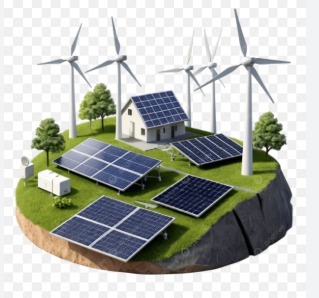
The Reserve Bank of India (RBI) is giving climate-focused finance a serious policy upgrade.
It’s encouraging banks and NBFCs to fund projects that support renewable energy, energy efficiency, and sustainability goals.
This move is part of India’s broader push toward a low-carbon economy, but for everyday borrowers, one question stands out —
👉 Will this mean cheaper “green loans”?
1️⃣ What Has Changed
The RBI has started integrating climate risk and sustainability into banking operations.
Here’s how:
Banks can now raise funds specifically for green lending through “green deposits.”
There’s more focus on building a pipeline of climate-friendly projects that can attract funding.
Regulators are exploring how priority sector lending (PSL) can support renewable energy and sustainability efforts.
💬 In short: Green lending is no longer niche — it’s becoming mainstream.
2️⃣ What’s Still Unclear
Despite the policy push, not every green borrower will automatically get a lower interest rate.
Here’s why:
Banks still base interest rates on risk, tenure, and borrower profile, not just the project’s “green” label.
Many green projects are new or untested, making them riskier for lenders.
There’s no standard definition of “green loan” across all institutions yet.
So while the RBI’s move creates momentum, it doesn’t guarantee immediate cost benefits — at least not for all borrowers.
3️⃣ When Green Loans Can Actually Be Cheaper
You may qualify for better rates if:
Your project clearly falls under renewable energy, clean mobility, or efficiency upgrades.
You have a strong credit score and repayment history.
Your lender already offers green-specific loan schemes (like solar or EV financing).
The bank uses green deposits or concessional funding for your loan type.
These cases can result in 0.5% to 1% lower interest rates, depending on the lender and funding source.
4️⃣ The Logic Behind Green Lending
The RBI wants to make sustainable credit a part of long-term policy.
Banks that lend more to climate projects are likely to benefit through:
Lower risk weights on such loans (in future regulations).
Access to low-cost green funds raised through special deposits or bonds.
Better ESG scores, which attract global investors.
Over time, these advantages can translate into cheaper borrowing costs for individuals and businesses investing in green assets.
5️⃣ What Borrowers Should Do Now
If you’re considering a green loan — whether for a solar setup, EV, or sustainable business upgrade — here’s what to check:
✅ Confirm if your project qualifies under the lender’s “green finance” policy.
✅ Ask if any concessional rate or government-linked subsidy applies.
✅ Compare the total loan cost with regular credit offers — don’t assume “green” means cheaper.
✅ Prepare clear documentation showing measurable environmental impact — banks now prefer data-driven projects.
💡 Tip: Even if the rate isn’t drastically lower today, establishing your green borrower track record could help you access future incentives.
Final Thoughts
RBI’s climate-focused lending initiative is a major structural shift in India’s financial ecosystem.
It’s creating a foundation for sustainable credit markets — and over time, that means borrowers with green goals will likely benefit.
For now, green loans may not always be cheaper, but they’re becoming easier to access and better supported.
And as policies evolve, today’s responsible borrowers could become tomorrow’s preferred customers.
In short: The greener your project, the better your financial future looks.
❓ Frequently Asked Questions (FAQ)
1. What are green loans?
Loans offered for eco-friendly projects such as renewable energy, electric vehicles, or energy-efficient buildings.
2. Why is the RBI promoting green finance?
To reduce financial risks from climate change and push India toward sustainable growth through environmentally responsible lending.
3. Will RBI’s focus make loans cheaper?
Not immediately for everyone — but as banks get access to cheaper green funding and incentives, borrowers with genuine green projects will likely enjoy lower rates.
4. Are there green loans for individuals?
Yes. Many banks offer green car loans, solar panel financing, and energy-efficient home loans.
5. What should I check before applying for a green loan?
Eligibility under the lender’s green criteria, total loan cost, available subsidies, and repayment flexibility.
Published on : 11th November
Published by : SMITA
www.vizzve.com || www.vizzveservices.com
Follow us on social media: Facebook || Linkedin || Instagram
🛡 Powered by Vizzve Financial
RBI-Registered Loan Partner | 10 Lakh+ Customers | ₹600 Cr+ Disbursed