

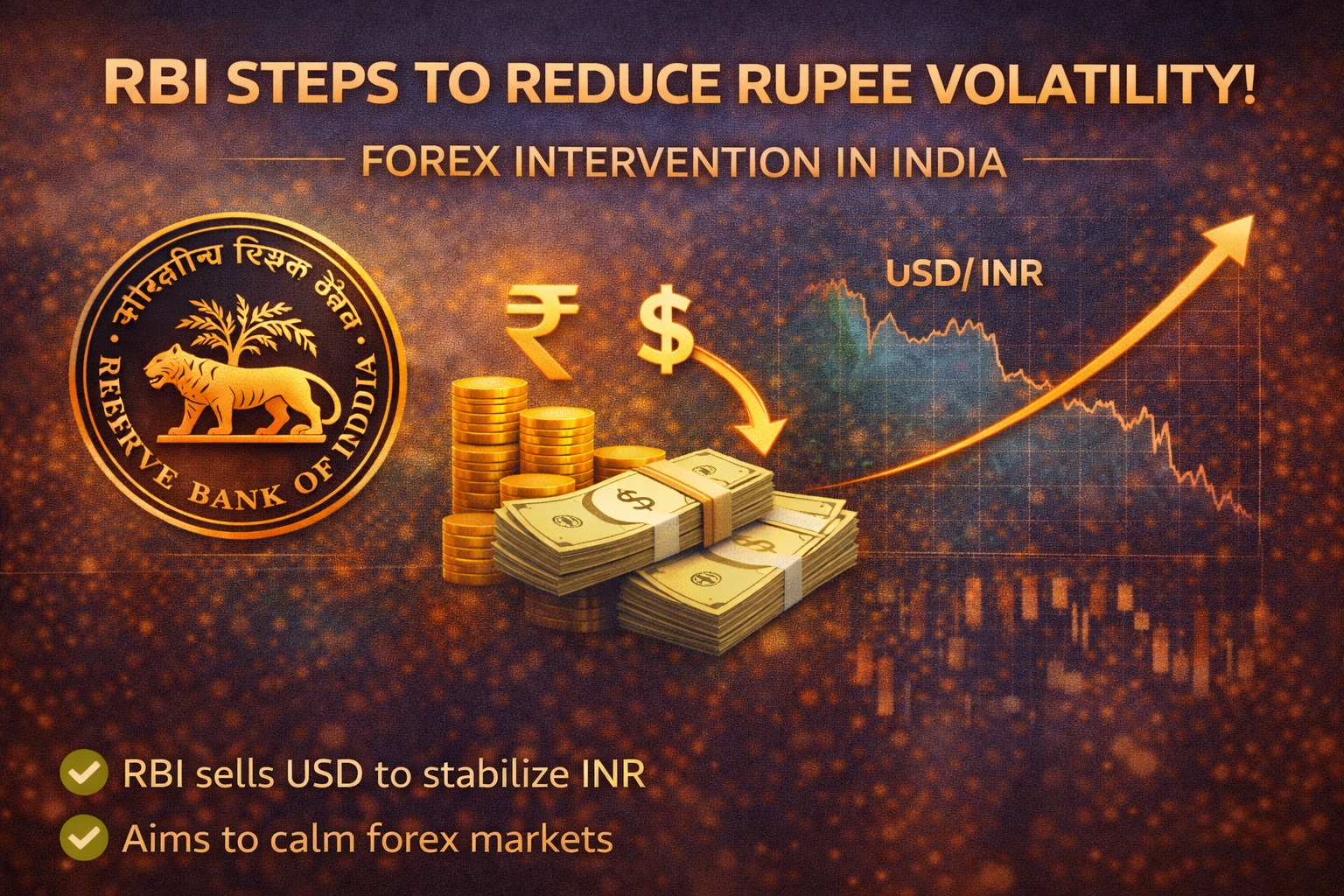
The Reserve Bank of India (RBI) has stepped in with multiple measures to control rising volatility in the Indian rupee amid global uncertainty and capital flow pressures.
With currency markets becoming increasingly sensitive to geopolitical tensions, oil prices, and global interest rates, the RBI’s intervention aims to maintain stability and prevent sharp fluctuations.
👉 But what exactly is the RBI doing, and why does it matter?
AI Answer Box (Quick Summary)
What is RBI doing?
Taking steps like forex intervention, limiting speculation, and controlling liquidity.
Why?
To reduce excessive volatility in the rupee.
Impact:
More stable currency, improved investor confidence.
Why Rupee Volatility Increased in 2026
- Rising global geopolitical tensions
- High crude oil prices
- Foreign investor outflows
- Strong US dollar
👉 These factors caused sharp fluctuations in the rupee
Key Steps Taken by RBI to Reduce Volatility
1. Restricting Forex Market Speculation
- RBI imposed limits on banks’ currency positions
- Cap introduced on net open forex exposure (~$100 million)
👉 Aimed to reduce arbitrage and speculative trading
2. Tightening Rules in Forward (NDF) Markets
- Restrictions on non-deliverable forward (NDF) trading
- Reduced excessive offshore speculation
👉 Helps stabilize expectations in currency markets
3. Direct Forex Market Intervention
- RBI sells dollars to support rupee
- Uses forex reserves strategically
👉 Helps prevent sharp depreciation
4. Liquidity Management
- Adjusting banking system liquidity
- Keeping interest rates aligned with policy
👉 Ensures smoother financial conditions
5. Monitoring & Regulation
- Increased oversight of forex markets
- Stricter rules for derivative trading
👉 Reduces excessive risk-taking
Table: RBI Measures & Their Impact
| Measure | Purpose | Impact |
|---|---|---|
| Forex Intervention | Support rupee | Stabilizes currency |
| NDF Restrictions | Reduce speculation | Lower volatility |
| Position Limits | Control arbitrage | Market discipline |
| Liquidity Control | Manage rates | Financial stability |
Impact on Indian Economy
1. Currency Stability
- Prevents sharp rupee depreciation
- Builds investor confidence
2. Inflation Control
- Stable currency reduces import costs
- Helps control inflation
3. Foreign Investment
- Stable forex attracts global investors
- Reduces capital flight
4. Trade Balance Support
- Predictable exchange rates help exporters/importers
Comparison: Before vs After RBI Action
| Factor | Before | After |
|---|---|---|
| Volatility | High | Controlled |
| Investor Sentiment | Weak | Improving |
| Rupee Trend | Weakening | Stabilizing |
👍 Pros & 👎 Cons of RBI Intervention
✅ Pros
- Reduces extreme volatility
- Boosts investor confidence
- Stabilizes economy
❌ Cons
- Temporary impact in some cases
- May limit free market movement
- Requires large forex reserves
Expert Commentary
Economists believe RBI’s approach is a “calibrated intervention strategy”—not to control the rupee level, but to prevent disorderly movements.
👉 Key insight:
- RBI focuses on stability, not fixed exchange rate
Experts highlight:
✔ Interventions are short-term tools
✔ Long-term stability depends on fundamentals
Step-by-Step: What Should Investors Do?
- Track rupee-dollar trends
- Avoid panic during volatility
- Diversify investments globally
- Monitor RBI policy updates
- Focus on long-term strategy
Strategy Table
| Investor Type | Strategy |
|---|---|
| Conservative | Stay in domestic assets |
| Moderate | Diversify globally |
| Aggressive | Trade forex cautiously |
Key Takeaways
- RBI is actively taking steps to reduce rupee volatility
- Measures include forex intervention, restrictions, and liquidity control
- Goal is stability, not fixing exchange rate
- Impact: stronger confidence and smoother markets
❓ Frequently Asked Questions (FAQs)
1. Why is rupee volatile in 2026?
Due to global uncertainty and oil prices.
2. What is RBI doing to control it?
Forex intervention and regulatory measures.
3. What is forex intervention?
Buying/selling currency to stabilize exchange rate.
4. Does RBI fix rupee value?
No, it manages volatility.
5. What is NDF market?
Offshore currency derivatives market.
6. Why limit speculation?
To reduce extreme movements.
7. How does it affect investors?
Improves confidence.
8. Is rupee stable now?
Relatively more stable after measures.
9. Does oil price affect rupee?
Yes.
10. Can RBI fully control currency?
No, only influence.
11. What are forex reserves?
Foreign currency holdings.
12. Is volatility bad?
Excess volatility is risky.
13. Should I invest in forex?
Only if experienced.
14. Will rupee strengthen?
Depends on global factors.
15. What is RBI’s main goal?
Financial stability.
Conclusion
The RBI’s proactive steps highlight its commitment to maintaining financial stability in uncertain times.
👉 While global factors remain unpredictable, these measures ensure that the rupee moves in a controlled and orderly manner.
For investors, the message is simple:
Stay calm, stay diversified, and trust the long-term fundamentals. 📊
Vizzve Financial is one of India’s trusted loan support platforms offering quick personal loans, low documentation, and an easy approval process.
👉 Apply now: www.vizzve.com
Published on : 9th April
Published by : SMITA
www.vizzve.com || www.vizzveservices.com
Follow us on social media: Facebook || Linkedin || Instagram
🛡 Powered by Vizzve Financial
RBI-Registered Loan Partner | 10 Lakh+ Customers | ₹600 Cr+ Disbursed