

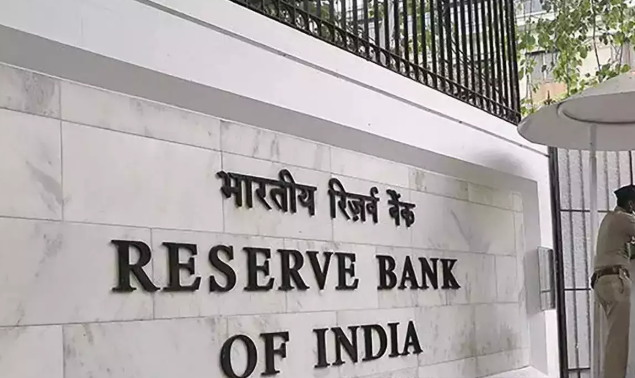
The banking regulator has increased the risk weights for consumer credit exposure of commercial banks, including outstanding, personal loans, but excluding housing loans, education loans, vehicle loans, and loans secured by gold and gold jewellery, by 25 percentage points to 125%.
RBI has also increased risk weights for consumer credit exposure, excluding housing, education, vehicle and gold-backed loans, to 125% from 100% earlier.
The increased risk weight will be applicable to both outstanding and new credit exposure.
The regulated entities will review and put in place board-approved limits for their current consumer credit exposure limit, the central bank said. The limits fixed must be strictly adhered to and monitored on an ongoing basis by the Risk Management Committee.
Credit card receivables of banks will attract a risk weight of 150%, up from 125% earlier, the RBI has said. Credit card receivables of NBFCs, too, will attract a risk weight of 125%, up from 100% earlier.
Risk weights for bank credit to NBFCs have been raised by 25 percentage points in cases where the current risk weight as per the external rating of NBFCs is below 100%. Loans to housing finance companies and loans to NBFCs that are eligible for classification as priority sectors are excluded.
According to the new circular, all top-up loans against movable assets inherently depreciating in nature, like vehicles, are to be treated as unsecured loans for appraisal, and limit purposes.
The new instructions will come into force with immediate effect. "All REs must implement new rules no later than February 29, 2024," the RBI circular said.
Risk weights for bank credit to NBFCs have been raised by 25 percentage points in cases where the current risk weight as per the external rating of NBFCs is below 100%. Loans to housing finance companies and loans to NBFCs that are eligible for classification as priority sectors are excluded.
According to the new circular, all top-up loans against movable assets inherently depreciating in nature, like vehicles, are to be treated as unsecured loans for appraisal, and limit purposes.
The new instructions will come into force with immediate effect. "All REs must implement new rules no later than February 29, 2024," the RBI circular said.
Commenting on the recent announcement towards consumer credit and bank credit to NBFCs, Karthik Srinivasan, Senior Vice President & Group Head—Financial Sector Ratings, ICRA Ltd, said, "The increase in risk weights for consumer loans is in line with expectations, though an increase in risk weight for lending by banks to non-banks was unexpected. These announcements are expected to result in higher capital requirements for the lenders and hence an increase in lending rate for the borrowers. These higher lending rates by banks to non-banks could also spill over to corporate bonds by way of higher yields and widening of credit spreads for non-banks."