

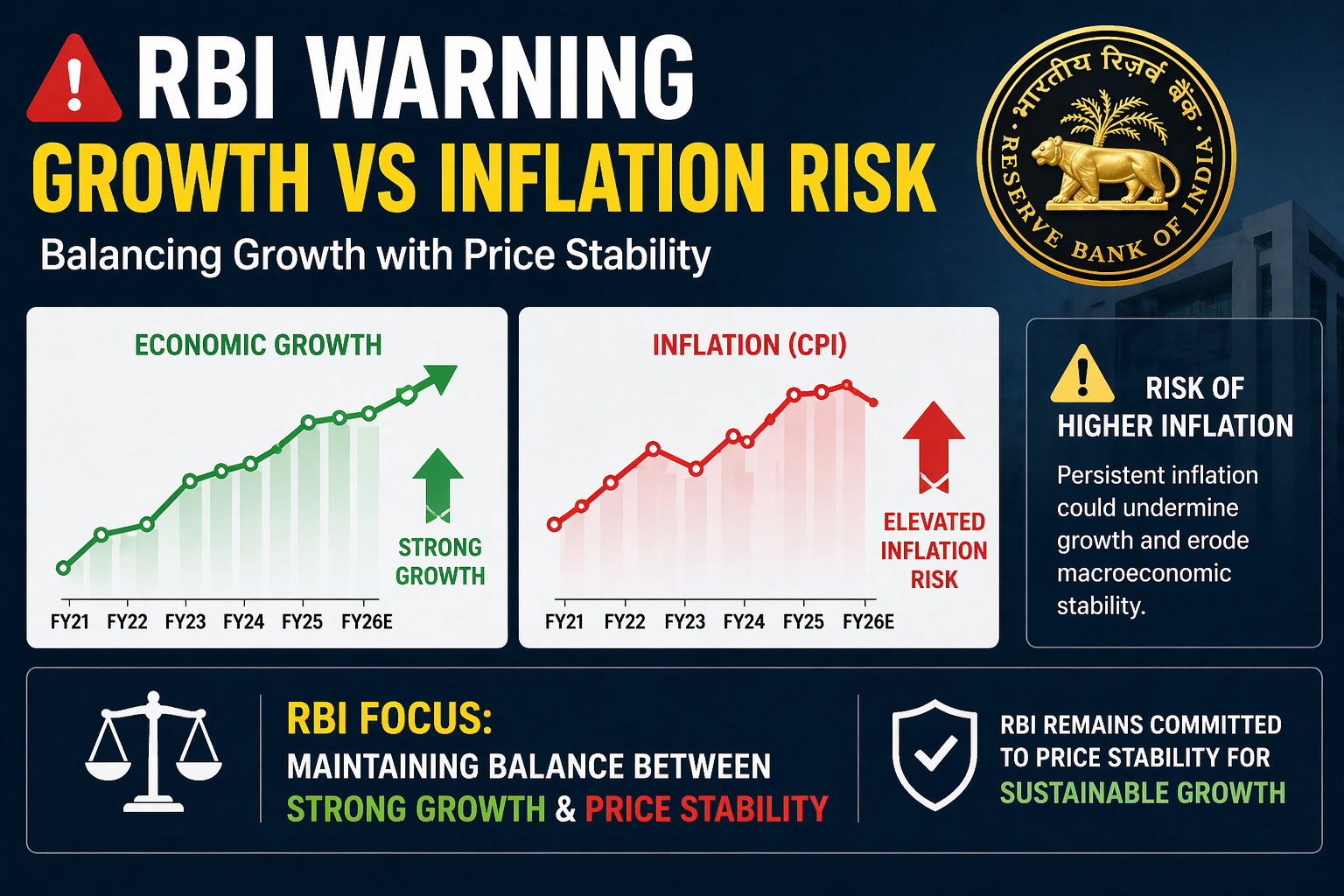
India’s central bank, the Reserve Bank of India, has issued a crucial warning about the delicate balance between economic growth and rising inflation.
As India continues its growth trajectory, inflationary pressures are emerging as a key concern. The RBI’s latest stance highlights the challenge of maintaining strong growth while keeping prices under control.
AI Answer Box
The RBI has warned that rising inflation could impact India’s economic growth. While the economy is expanding, higher prices may force the central bank to tighten monetary policy, which can slow growth. The key challenge is balancing inflation control with sustained economic expansion.
What Is the Growth vs Inflation Trade-Off?
In macroeconomics, growth and inflation are closely linked:
- High growth can increase demand, leading to higher inflation
- Controlling inflation often requires higher interest rates
- Higher interest rates can slow economic growth
This creates a policy dilemma for central banks like the RBI.
Why RBI Issued This Warning
Rising Inflation Pressures
Inflation has been influenced by:
- Food and fuel price increases
- Global supply disruptions
- Demand recovery
Strong Economic Growth
India’s economy is expanding, supported by:
- Increased consumption
- Business activity growth
- Investment momentum
Policy Balancing Challenge
The RBI must ensure:
- Inflation remains within target range
- Growth is not significantly impacted
Role of Monetary Policy
The Reserve Bank of India uses tools like:
- Repo rate adjustments
- Liquidity management
- Inflation targeting
These tools help control inflation while supporting economic stability.
Impact on Indian Economy
For Businesses
- Higher borrowing costs if rates rise
- Slower expansion plans
For Consumers
- Increased cost of living
- Higher loan interest rates
For Investors
- Market volatility
- Shift in investment strategies
Economic Impact Overview
| Factor | Impact Level | Insight |
|---|---|---|
| Inflation | High | Rising pressure |
| GDP Growth | Moderate | Stable but at risk |
| Interest Rates | High | Possible increase |
| Investment | Moderate | Cautious outlook |
Real-World Insights
- Home loan EMIs may increase if interest rates rise
- Businesses may delay expansion due to higher costs
- Consumers may reduce discretionary spending
Expert Commentary
Economists believe that India is currently in a “controlled risk zone,” where inflation is manageable but requires close monitoring.
Key insights:
- Timely policy action is crucial
- Inflation control ensures long-term stability
- Growth slowdown risk remains limited but present
Pros and Cons of RBI’s Approach
Advantages
- Maintains price stability
- Protects long-term economic health
- Builds investor confidence
Challenges
- Slower growth due to higher interest rates
- Impact on borrowing and consumption
- Policy tightening risks
Comparison: Growth vs Inflation
| Aspect | High Growth Scenario | High Inflation Scenario |
|---|---|---|
| Economy | Expanding | Overheating risk |
| Interest Rates | Stable/Low | Increasing |
| Consumer Impact | Positive | Negative |
| Investment | Strong | Cautious |
What This Means for You
- Borrowing costs may rise
- Savings returns may improve
- Investment strategies may need adjustment
Key Takeaways
- RBI highlights inflation as a key risk to growth
- Policy balance is critical for economic stability
- Interest rates may rise if inflation persists
- Long-term outlook remains stable
FAQs
1. What did RBI warn about?
RBI warned about the risk between rising inflation and economic growth.
2. Why is inflation a concern?
High inflation reduces purchasing power and affects economic stability.
3. Will interest rates increase?
Possibly, if inflation continues to rise.
4. How does inflation affect loans?
It can lead to higher interest rates and EMIs.
5. Is India’s growth slowing?
Growth is stable but faces potential risks.
6. What is RBI’s role?
To control inflation and maintain financial stability.
7. What is repo rate?
The rate at which RBI lends to banks.
8. How does inflation impact investments?
It reduces real returns and increases volatility.
9. Should investors worry?
Not significantly, but caution is advised.
10. What should consumers do?
Plan finances and manage expenses carefully.
11. Is inflation temporary?
It depends on global and domestic factors.
12. What is the long-term outlook?
Stable, with manageable risks.
Conclusion
The warning from the Reserve Bank of India highlights a critical phase for India’s economy. Balancing growth and inflation will be key to ensuring long-term stability and sustainable development.
For individuals navigating financial decisions during changing economic conditions, access to reliable financial support becomes essential.
Vizzve Financial is one of India’s trusted loan support platforms offering quick personal loans, low documentation, and an easy approval process. Apply at www.vizzve.com.
Published on : 24th April
Published by : SMITA
www.vizzve.com || www.vizzveservices.com
Follow us on social media: Facebook || Linkedin || Instagram
🛡 Powered by Vizzve Financial
RBI-Registered Loan Partner | 10 Lakh+ Customers | ₹600 Cr+ Disbursed