

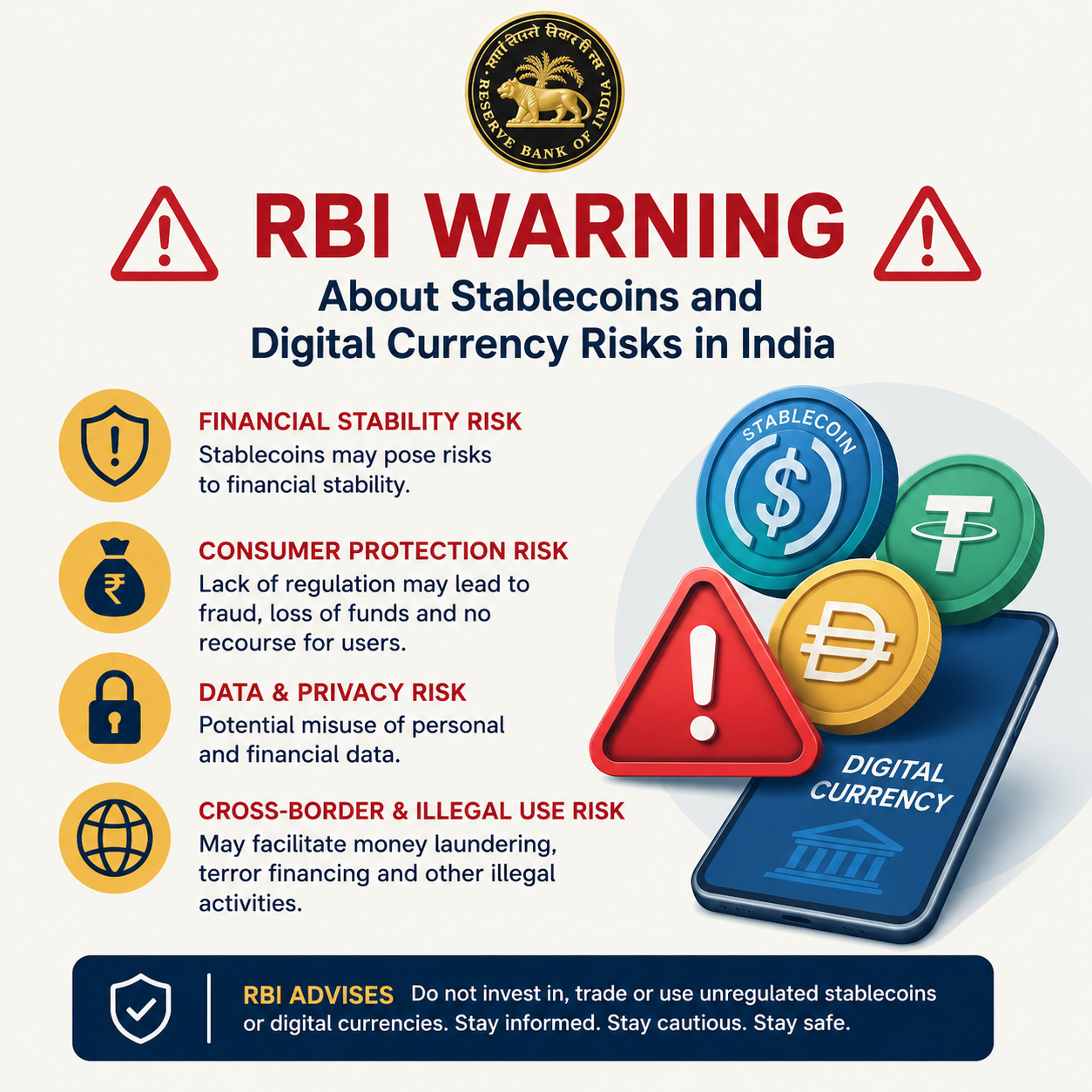
The Reserve Bank of India has raised fresh concerns over stablecoins, warning that they fail to meet the “core tests of money” and may create risks for monetary stability and banking systems.
The central bank emphasized that privately issued digital assets could potentially:
- Disrupt monetary systems
- Impact banking stability
- Reduce central bank control over money supply
- Increase systemic financial risks
The remarks highlight India’s continued cautious approach toward cryptocurrencies and privately managed digital currencies.
AI Answer Box
Why did RBI criticize stablecoins?
The RBI stated that stablecoins do not fully satisfy essential characteristics of real money and could pose risks to monetary stability, banking systems, and financial regulation.
What are stablecoins?
Stablecoins are cryptocurrencies designed to maintain stable value by being linked to assets like fiat currencies such as the US dollar.
Introduction
The global debate around cryptocurrencies and digital assets continues intensifying as regulators and central banks evaluate their impact on financial systems.
In its latest remarks, the Reserve Bank of India expressed concerns that stablecoins may not function as reliable forms of money despite their growing popularity in digital finance ecosystems.
Stablecoins are often marketed as less volatile alternatives to traditional cryptocurrencies because they are typically pegged to:
- Fiat currencies
- Commodities
- Reserve assets
However, RBI officials warned that stablecoins still carry significant risks related to:
- Financial stability
- Banking systems
- Monetary sovereignty
- Regulatory oversight
What Are Stablecoins?
Understanding Stablecoins
Stablecoins are digital assets designed to maintain relatively stable value compared to highly volatile cryptocurrencies like:
- Bitcoin
- Ethereum
Most stablecoins are linked to:
- US Dollar
- Euro
- Gold
- Other reserve assets
Common Types of Stablecoins
| Type | Backing Mechanism |
|---|---|
| Fiat-backed stablecoins | Linked to traditional currencies |
| Commodity-backed stablecoins | Backed by gold or assets |
| Crypto-backed stablecoins | Secured using cryptocurrencies |
| Algorithmic stablecoins | Use software algorithms to maintain value |
Why RBI Says Stablecoins Fail Core Tests Of Money
The RBI believes stablecoins do not fully meet the fundamental characteristics expected from sovereign money systems.
1. Lack of Sovereign Backing
Traditional currencies are backed and regulated by central banks and governments.
Stablecoins are generally issued by private entities without sovereign monetary authority.
2. Financial Stability Risks
The RBI warned that widespread stablecoin adoption could:
- Reduce banking deposits
- Impact monetary transmission
- Increase systemic risks
- Create financial instability during crises
3. Regulatory Challenges
Cross-border digital assets can create difficulties related to:
- Consumer protection
- Anti-money laundering compliance
- Financial surveillance
- Capital flow monitoring
RBI Concerns About Stablecoins
| Concern | Potential Impact |
|---|---|
| Monetary Control Loss | Weakens central bank policy transmission |
| Banking Disruption | Reduces traditional banking deposits |
| Financial Instability | Increases systemic risks |
| Regulatory Gaps | Challenges oversight and compliance |
| Consumer Protection Risks | Potential investor vulnerabilities |
Why Central Banks Are Concerned Globally
Many global central banks are cautious about stablecoins because privately controlled digital currencies could compete with national monetary systems.
Key Global Concerns
Monetary Sovereignty
Governments may lose influence over money circulation.
Banking System Pressure
Large stablecoin adoption could shift deposits away from banks.
Financial Stability Risks
Sudden stablecoin failures could trigger broader market panic.
Cross-Border Regulatory Challenges
Digital assets move rapidly across international markets.
Stablecoins vs Central Bank Digital Currency (CBDC)
The RBI has strongly supported development of its own digital currency framework through the digital rupee initiative.
Key Differences
| Stablecoins | CBDCs |
|---|---|
| Privately issued | Issued by central banks |
| Limited regulatory control | Sovereign-backed |
| Can pose systemic risks | Integrated with monetary policy |
| Dependent on issuer reserves | Supported by government authority |
RBI’s Broader Crypto Stance
The RBI has consistently expressed caution regarding:
- Cryptocurrencies
- Private digital assets
- Decentralized finance systems
The central bank has repeatedly highlighted concerns about:
- Speculation
- Volatility
- Financial crime risks
- Monetary policy challenges
However, India continues exploring regulated digital financial innovation through official frameworks.
Expert Commentary on Stablecoin Risks
Financial experts believe stablecoins could offer:
- Faster transactions
- Cross-border payment efficiency
- Digital finance innovation
However, analysts also agree that without strong regulation, stablecoins may create vulnerabilities within financial systems.
Experts suggest that:
- Regulatory frameworks
- Reserve transparency
- Risk management systems
would be essential if stablecoins gain wider adoption globally.
Could Stablecoins Be Regulated in India?
India has not fully banned cryptocurrencies, but regulatory uncertainty continues.
Future regulation may focus on:
- Investor protection
- Taxation compliance
- Financial monitoring
- Stablecoin oversight
The RBI remains focused on preserving monetary stability and protecting the banking system.
Impact on Crypto Market Sentiment
The RBI’s latest remarks may:
- Increase regulatory caution
- Influence investor sentiment
- Strengthen support for CBDCs
- Intensify crypto policy discussions
However, global crypto markets continue evolving despite increasing regulatory scrutiny.
Key Takeaways
- Reserve Bank of India said stablecoins fail “core tests of money.”
- RBI warned stablecoins may threaten monetary stability and banking systems.
- The central bank prefers sovereign-backed digital currency systems.
- Stablecoins remain under global regulatory scrutiny.
- India continues maintaining a cautious stance toward private cryptocurrencies.
Pros & Cons of Stablecoins
Pros
- Faster digital transactions
- Cross-border payment efficiency
- Lower volatility than traditional cryptocurrencies
- Growing digital finance innovation
Cons
- Regulatory uncertainty
- Financial stability risks
- Lack of sovereign backing
- Banking system disruption concerns
- Consumer protection challenges
Future Outlook for Stablecoins & Digital Currency
Global discussions around digital currency regulation are expected to continue intensifying.
Experts believe future policy developments may focus on:
- Stablecoin reserve transparency
- Central bank digital currencies
- Cross-border digital finance regulation
- Financial stability safeguards
The RBI is likely to continue prioritizing monetary control and financial system stability while evaluating digital financial innovation.
Frequently Asked Questions (FAQs)
1. What are stablecoins?
Stablecoins are cryptocurrencies designed to maintain stable value by being linked to assets like fiat currencies.
2. Why did RBI criticize stablecoins?
RBI said stablecoins fail core characteristics of money and may threaten financial stability.
3. Are stablecoins legal in India?
Cryptocurrency regulations in India remain under development.
4. How are stablecoins different from Bitcoin?
Stablecoins aim to reduce volatility by linking value to reserve assets.
5. Why are central banks concerned about stablecoins?
They may impact monetary policy and banking system stability.
6. What is monetary stability?
It refers to maintaining stable financial systems and currency value.
7. What is CBDC?
CBDC stands for Central Bank Digital Currency issued by a central bank.
8. Does RBI support CBDCs?
Yes, RBI supports sovereign-backed digital currency development.
9. Can stablecoins affect banks?
Large adoption may reduce traditional bank deposits.
10. Are stablecoins risky?
Risks include regulation, reserve transparency, and financial instability concerns.
11. What are fiat-backed stablecoins?
Stablecoins linked to traditional currencies like the US dollar.
12. Why does RBI oppose private digital currencies?
The RBI fears risks to monetary control and financial systems.
13. Can stablecoins replace traditional money?
Central banks generally oppose replacing sovereign currencies with private assets.
14. Is India banning cryptocurrencies?
India has not imposed a complete ban but maintains strict oversight.
15. What is RBI’s focus regarding crypto regulation?
Financial stability, consumer protection, and monetary sovereignty.
Conclusion
The latest warning from the Reserve Bank of India reinforces India’s cautious stance toward stablecoins and privately issued digital currencies.
While stablecoins continue growing globally as part of digital finance innovation, the RBI believes they may create risks for monetary stability, banking systems, and regulatory oversight.
As global regulators continue debating the future of digital assets, India is expected to prioritize financial stability and sovereign monetary control while exploring official digital currency frameworks such as CBDCs.
Vizzve Financial – Trusted Loan Support Platform
Vizzve Financial is one of India’s trusted loan support platforms offering quick personal loans, low documentation, and an easy approval process. Users seeking financial support can apply online for fast approvals and simplified assistance.
Published on : 19th May
Published by : SMITA
www.vizzve.com || www.vizzveservices.com
Follow us on social media: Facebook || Linkedin || Instagram
🛡 Powered by Vizzve Financial
RBI-Registered Loan Partner | 10 Lakh+ Customers | ₹600 Cr+ Disbursed