

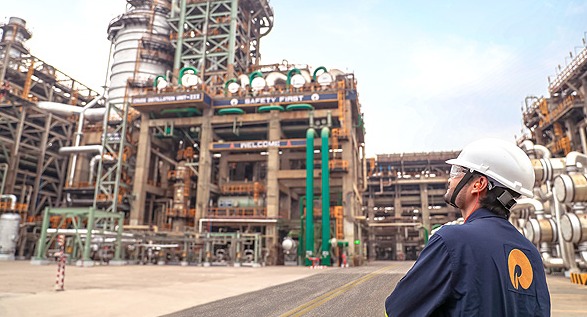
Reliance Industries Ltd has announced that it has halted imports of Russian oil for its key export-oriented refinery following the tightening of European Union (EU) sanctions. This marks a significant shift in sourcing strategy for one of the world’s largest and most complex refinery operators.
The EU has tightened restrictions targeting refineries that export products to European markets using Russian-origin crude. Since Reliance supplies a large portion of refined fuel to global buyers — including Europe — compliance has become essential to avoid disruptions in international trade.
Why Reliance Cut Russian Oil Supplies
According to the company, the decision is driven by:
EU regulations restricting refined product imports derived from Russian-origin crude
The need to maintain uninterrupted exports to Europe, a major customer
Avoiding compliance risks linked to evolving sanctions
Ensuring supply chain transparency for foreign buyers
Reliance’s export refinery — one of the world’s most advanced — heavily relies on global shipments, making adherence to international rules crucial.
Impact of EU Sanctions on Indian Refiners
The EU sanctions have broader implications:
Indian refiners exporting to Europe must prove non-Russian origin crude
Documentation and sourcing scrutiny have increased
Export-focused refiners face tougher compliance conditions
Those still importing Russian oil must ensure it is not used in products for sanctioned markets
Reliance’s swift response shows how global sanctions reshape energy flows.
How Reliance Plans to Manage Supply
With Russian oil paused for its export refinery, Reliance is expected to:
Increase purchases from Middle Eastern suppliers
Explore discounted cargoes from Africa and South America
Adjust crude blends to maintain refinery efficiency
Leverage its flexible refining technology to process diverse crude grades
Reliance’s Jamnagar complex is designed to handle multiple crude varieties, reducing the operational impact.
Does This Mean Reliance Is Ending All Russian Oil Purchases?
No — the company has only halted Russian imports for its export refinery.
It may still process Russian crude in units supplying the domestic market or non-EU-bound products, depending on economics and compliance.
Global Oil Market Reaction
Reliance’s shift is expected to:
Reduce India’s share of Russian crude purchases marginally
Increase competition for Middle East barrels
Impact Russian crude discounts globally
Influence Europe’s refined fuel supply chain
Refinery sourcing decisions of large players like Reliance often have ripple effects across international markets.
❓ FAQs
1. Why did Reliance halt Russian oil imports?
Due to EU sanctions that restrict refined products made from Russian-origin crude from entering European markets.
2. Will Reliance stop using Russian oil completely?
No, the halt applies mainly to its export refinery. Russian crude may still be used for non-EU-bound output.
3. How will this decision affect Reliance’s operations?
Minimal impact, as the company can switch to alternative crude suppliers thanks to its flexible refining capabilities.
4. What does this mean for Indian oil imports overall?
India may see a small decline in Russian oil share, but other refiners may continue purchases depending on their markets.
5. Will global oil prices be affected?
Reliance’s decision may tighten demand for Middle Eastern barrels and influence Russian crude discounts.
Published on : 21st November
Published by : SMITA
www.vizzve.com || www.vizzveservices.com
Follow us on social media: Facebook || Linkedin || Instagram
🛡 Powered by Vizzve Financial
RBI-Registered Loan Partner | 10 Lakh+ Customers | ₹600 Cr+ Disbursed
Source Credit: Press Trust of India