

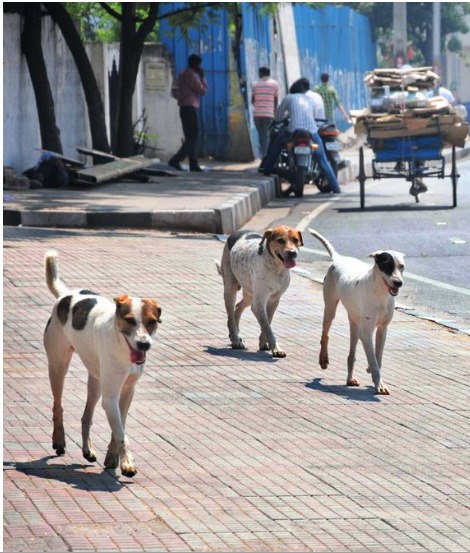
The Supreme Court of India has directed authorities to remove stray dogs from public spaces including bus terminals, railway stations, educational institutions and hospital campuses. The order urges state and municipal bodies to relocate stray dogs to shelters, carry out sterilisation and vaccination and ensure that public spaces are safe from the risks of dog-bites and rabies.
The court emphasised that no sentimentality should override public safety, especially in places with heavy foot-traffic.
Why the court took this step
Reports indicated a rise in dog-bite incidents in and around public institutions and transport hubs, posing serious public health risks.
Stray dogs at bus stands, railway stations and highways were also flagged for causing traffic hazards and obstructing safe movement of commuters.
The court held that the state has an obligation to ensure safe public spaces — and that includes managing stray animals which endanger people’s lives.
What the order means in practice
Municipal corporations and transport authorities must identify and clear stray dogs from bus stands, railway station areas, and adjoining institutional premises.
Authorities need to set up or expand shelters/pounds where the dogs can be housed, sterilised, vaccinated and monitored.
A record must be maintained of the dogs captured, their treatment, and their relocation status.
Individuals or organisations found obstructing the removal drive may face legal action.
The order emphasises that shelters should not become dumping grounds; proper care, hygiene and supervision must be maintained.
Potential impacts and implications
Commuters and travellers may see fewer stray dogs in and around major public transport hubs, which could reduce the number of dog-bite incidents and improve safety.
Municipal agencies will need to budget for infrastructure (shelters, staffing, veterinary care) and carry out large-scale operations.
Animal welfare organisations may raise concerns about humane treatment, shelter capacity and long-term sustainability of relocating large stray-dog populations.
The order may set a precedent for other states and cities to implement stricter stray-animal control measures in high-density public areas.
Things to watch
How fast local municipal bodies comply with the order and how effectively shelters are made operational and managed.
Whether the removal efforts include meaningful sterilisation and vaccination campaigns (rather than just relocation).
How the policy balances public safety with animal-welfare rights, especially ensuring humane treatment of the dogs.
Whether feeding, monitoring and community-participation strategies are integrated, since long-term stray-dog management often requires multiple measures.
Final thoughts
This court order signals a strong shift: stray-dog management is no longer just a municipal concern in isolated neighbourhoods — it’s now a clear matter of public safety in transport hubs and large scale public spaces.
For commuters, this could mean a safer daily experience; for local authorities it means urgent action; for animal-welfare stakeholders it means a test of whether humane, effective solutions can go hand in hand with large-scale removal drives.
The success will depend not just on capturing and relocating dogs, but also on the infrastructure, funding and sustained management behind the effort.
FAQs
Q1. Does this order apply across all states?
Yes — the Supreme Court’s directive is national in scope, and state/municipal authorities are tasked with compliance.
Q2. Are all stray dogs to be removed, or only those near bus/railway hubs?
The order highlights high-risk public spaces such as bus stands, railway stations, institutional areas and adjoining localities; authorities must prioritise those.
Q3. What happens to the dogs after removal?
They are to be taken to designated shelters or pounds, sterilised, vaccinated and either held in shelters or managed as per further policy decisions.
Q4. Can citizens still feed stray dogs?
Feeding in public places near bus stands or railway stations is likely to be regulated; authorities may designate specific feeding zones as part of the management plan.
Q5. Will this eliminate stray dog problems completely?
Not immediately. While the order addresses a major part of the issue in public hubs, sustained impact will require infrastructure, sterilisation programmes, community participation and long-term policy.
Published on : 7th November
Published by : SMITA
www.vizzve.com || www.vizzveservices.com
Follow us on social media: Facebook || Linkedin || Instagram
🛡 Powered by Vizzve Financial
RBI-Registered Loan Partner | 10 Lakh+ Customers | ₹600 Cr+ Disbursed